 Ferndale
 Decks Near Lummi Nation Take a Different Kind of Beating
Homes around Lummi Nation sit close enough to the water that the air itself works against a deck. Salt-laden moisture rides in on the wind off Bellingham Bay and the Strait, settles into wood grain and metal fasteners, and never fully lets go before the next system rolls through. Add Whatcom County's long, wet winters and the shade cover common on lots near the shoreline and tree lines, and you get a deck that stays damp for weeks at a stretch. That combination of salt exposure, driving rain, and a moss season that can run from October into April is harder on a deck than almost anywhere else in the county.
We're not describing a hypothetical. It's the same pattern we see on repair calls throughout the Ferndale area, and decks near Lummi Nation tend to show it sooner because of the added salt-air factor. Fasteners corrode faster. Ledger boards hold moisture longer. Moss doesn't just grow on the surface — it works into seams and joints where it holds water against the wood year-round.
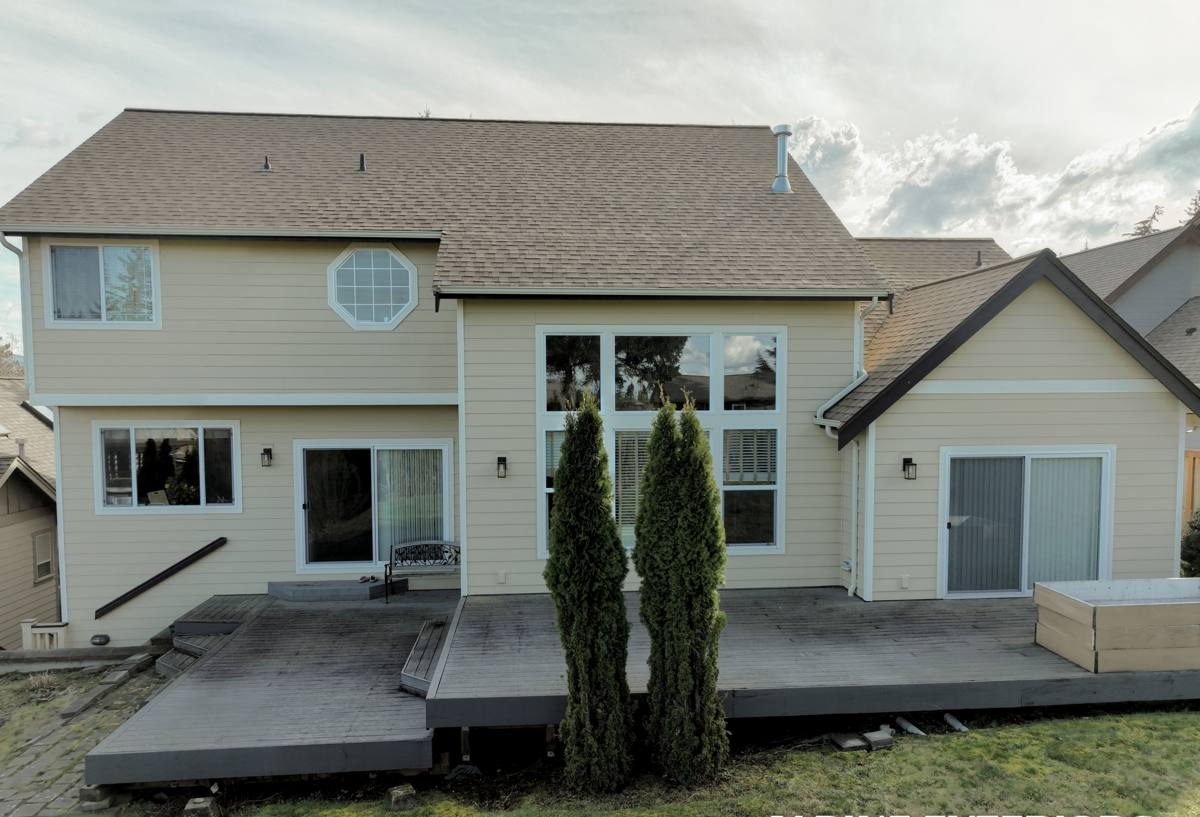
What Salt Air, Rain, and Moss Actually Do to a Deck
Salt Air and Metal Fasteners
Standard deck screws, joist hangers, and bolts that aren't rated for coastal exposure corrode faster near the water. Once a fastener starts rusting, it loses grip strength and can stain the surrounding wood. On an older deck, corroded hardware is often the real reason boards feel loose or bouncy — not the boards themselves.
Driving Rain and Water Intrusion
Whatcom County rain doesn't always fall straight down. Wind-driven rain pushes water sideways into gaps, under flashing, and behind ledger boards attached to the house. That's where the most serious damage tends to hide — not on the open deck surface where you can see it, but at the ledger connection and support posts, where trapped moisture leads to rot that's invisible until a board or post fails.
Moss and Prolonged Dampness
Moss thrives in the shade and moisture common near Lummi Nation's tree-lined lots. It holds water against decking boards long after the rain stops, which softens wood fibers over time and makes the surface slick and unsafe underfoot. Left alone through a full moss season, it can also work into board gaps and accelerate rot at the joints.
Signs Your Deck Needs Repair, Not Just Cleaning
- Boards that feel spongy, soft, or flex more than they used to when you walk on them
- Rust streaks running down from screws, nails, or metal connectors
- Gaps or separation where the deck ledger meets the house
- Persistent moss or algae that comes back within weeks of cleaning
- Railings or posts that wiggle when pushed, even slightly
- Discoloration or dark staining at board ends and around fasteners
- A musty smell coming from underneath the deck
- Visible daylight or gaps where flashing should be sealing a joint
Any one of these on its own might be minor. Two or three together usually mean moisture has been getting into the structure for a while, and it's worth having someone look underneath, not just at the surface.
What a Correct Deck Repair Actually Involves
A lot of deck "repairs" amount to replacing the board someone can see and calling it done. That fixes the symptom, not the cause. A repair that holds up in this climate starts with finding out why that board failed in the first place.
Inspection Before Repair
We check the ledger board connection, the flashing behind it, the support posts and footings, and the framing underneath — not just the visible decking. On a deck near Lummi Nation, we're specifically looking for corrosion on fasteners and connectors, soft spots at the ledger, and moss or organic buildup trapped between boards or under the structure.
Matching Repair to Root Cause
If the problem is corroded hardware, replacing boards without upgrading to corrosion-resistant fasteners just resets the clock on the same failure. If the problem is water intrusion at the ledger, board replacement alone won't stop the rot from coming back. We address the actual cause — flashing, fastener grade, drainage — alongside any board or framing replacement.
Structural vs. Cosmetic Work
Some repairs are cosmetic: worn boards, faded rail caps, surface graying. Others are structural: rotted joists, failing ledger connections, undersized or corroded footings. We're upfront about which category your repair falls into, because the two require very different levels of urgency and different budgets.
Repair or Replace: How We Help You Decide
| Factor | Leans Toward Repair | Leans Toward Replacement |
|---|---|---|
| Extent of rot | Isolated to a few boards or one section | Widespread across framing and decking |
| Ledger condition | Solid, dry, properly flashed | Soft, stained, or improperly flashed |
| Deck age | Under 15 years, built to code | Older, outdated fastening or footing methods |
| Fastener condition | Mostly sound, some spot corrosion | Widespread rust and failing connections |
| Budget goal | Extend usable life affordably | Long-term durability and design update |
Most decks we look at near Lummi Nation fall somewhere in the middle — sound framing with a handful of problem areas from moisture and salt exposure. In those cases, targeted repair is usually the honest recommendation. We'll tell you plainly if we think a full rebuild makes more financial sense than chasing repairs on a deck that's fighting its structure.
Materials That Hold Up in This Climate
What you rebuild with matters as much as the repair itself. In a salt-air, high-moisture environment, the small material decisions make the difference between a repair that lasts and one you're revisiting in three years.
- Fasteners: stainless steel or coated fasteners rated for coastal/marine exposure resist corrosion far longer than standard deck screws.
- Flashing: proper ledger flashing that directs water away from the house rather than letting it pool against the framing.
- Framing lumber: pressure-treated lumber rated for ground contact where moisture exposure is high, even on above-ground framing.
- Decking: both quality wood and composite decking can perform well here — the right choice depends on your maintenance preferences, budget, and how much shade and moss exposure the deck gets.
We don't push one decking material as universally "better." Wood needs regular sealing and cleaning but is easier to spot-repair board by board. Composite resists moss and moisture better but costs more upfront and can't always be patched as invisibly. We'll walk through the honest trade-offs for your specific deck rather than defaulting to whatever's easiest to sell.
Our Repair Process
1. On-Site Assessment
We inspect the full structure — surface, framing, ledger, posts, footings — and identify every area of concern, not just the obvious one.
2. Clear Explanation and Estimate
You get a straightforward rundown of what's failing, why, and what it takes to fix it correctly, along with an honest cost range before any work starts.
3. Repair or Rebuild
We replace only what needs replacing when repair is the right call, and we're direct with you if a section or the whole structure needs a full rebuild instead.
4. Moisture and Corrosion Protection
Every repair includes attention to the underlying causes — flashing, fastener grade, drainage — so the fix addresses this climate's specific demands, not just the visible damage.
5. Final Walkthrough
We check the work with you, point out any maintenance steps that will extend the deck's life, and answer questions before we consider the job done.
Why It Matters to Hire a Crew That Already Works This Area
Deck repair techniques that work fine in a drier inland climate can fall short near Lummi Nation. A crew unfamiliar with coastal Whatcom conditions might use standard hardware where corrosion-resistant fasteners are needed, or miss that a ledger issue is being driven by wind-driven rain rather than a one-time leak. We work throughout Ferndale and the surrounding Whatcom County coastline regularly, so we're not guessing at how salt air, seasonal moss, and driving rain interact with a deck's structure over time — we see the results of that combination on a routine basis and build repairs to hold up against it.
That local familiarity also means a more accurate first assessment. We know which failure patterns show up most in this specific environment, which speeds up diagnosis and keeps you from paying for guesswork.
Maintenance That Extends Your Repair
A well-done repair still needs some upkeep in this climate. A few habits go a long way:
- Clean moss and debris off the deck surface at least once during the wet season, not just in spring
- Keep gutters and downspouts near the deck clear so runoff isn't draining directly onto or under it
- Check fasteners and connectors for early rust once a year, especially on rail posts and stair stringers
- Reseal or re-stain wood decking on the manufacturer's recommended schedule — salt air shortens the interval compared to inland homes
- Trim back overhanging branches or vegetation that keep sections of the deck shaded and damp longer than the rest
If your deck near Lummi Nation is showing soft spots, rust streaks, stubborn moss, or just feels less solid than it used to, we're happy to take a look. We offer free, no-pressure estimates — you'll get a straight answer about what's actually going on and what it would take to fix it right. The form below is the easiest way to get started.