 Ferndale
 Decks Near Lummi Nation Face a Tougher Climate Than Most
Homes in and around Lummi Nation sit close to the water — Bellingham Bay and the Strait of Georgia are right there, and that proximity changes what a deck has to survive. It's not just rain. It's salt-laden air moving off the water, moisture that lingers in shaded, low-lying yards, and a moss season that in Whatcom County can run from October through May. A deck built to a generic spec sheet, without accounting for that combination, will show corrosion, soft spots, and slick, mossy surfaces years before it should.
We build and repair decks in Ferndale and the surrounding areas, including the Lummi Nation community, and the difference in how we spec a job here versus a drier inland site is real. This page walks through what that means in practice — materials, hardware, framing details, and the maintenance a coastal-climate deck actually needs.
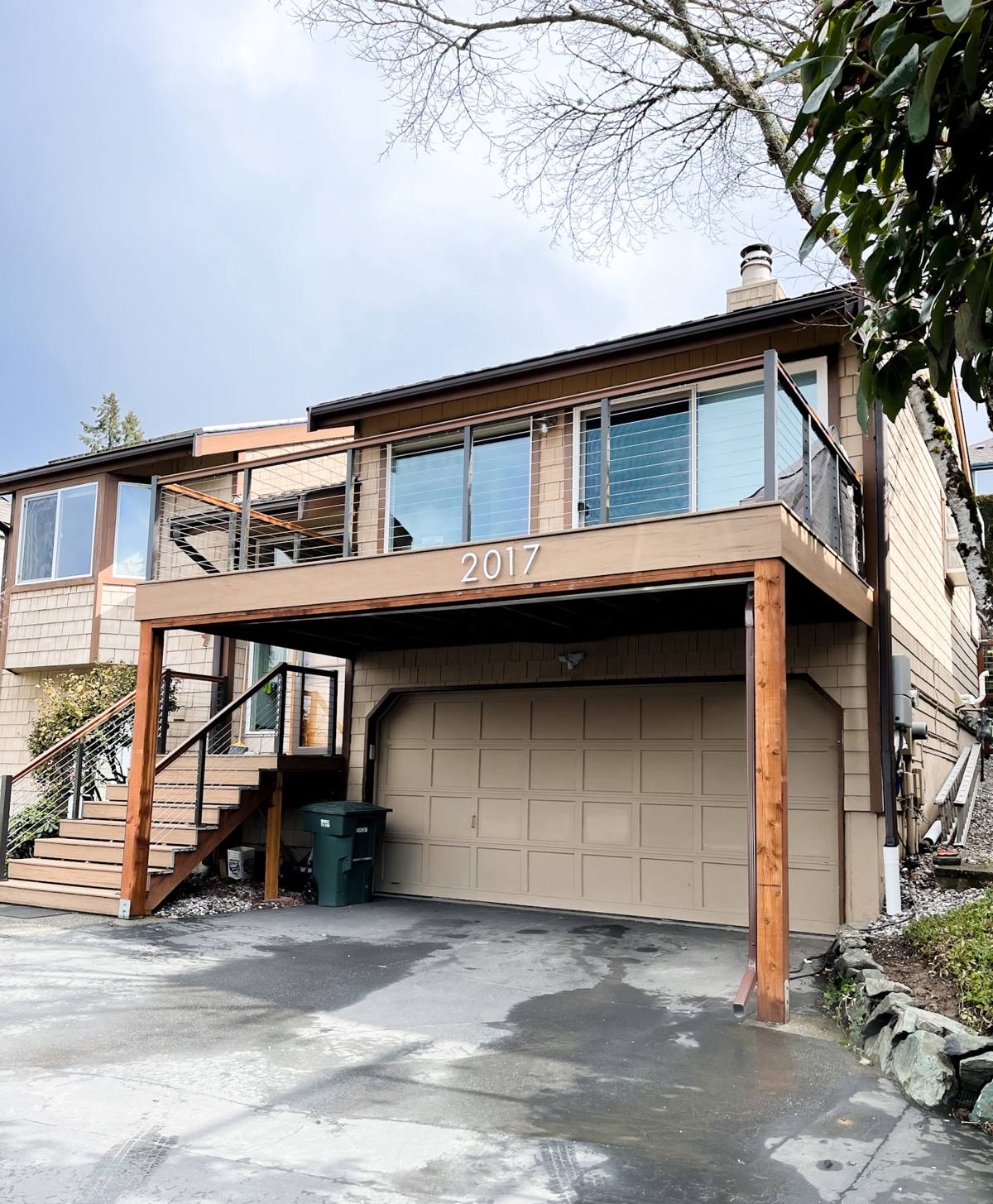
What Salt Air, Driving Rain, and Moss Actually Do to a Deck
Salt Air
Airborne salt doesn't just affect boats and siding. It accelerates corrosion on any exposed metal — nails, screws, joist hangers, post bases, railing brackets. Once a fastener starts rusting, it weakens, stains the wood around it, and eventually fails. On a deck, that's a structural problem, not a cosmetic one.
Driving Rain
Wind-driven rain gets pushed sideways and upward, into places a flat roof or a simple lap joint would never see water. On decks, that means end grain, ledger connections, and stair stringers take on more moisture than the field of the decking itself. Wood that isn't sealed or detailed correctly at those points rots from the inside, often before it's visible from above.
Moss and Algae
A long, damp, low-light season is exactly what moss and algae need. On decking, that growth isn't just unsightly — it holds moisture against the board surface and turns the deck slick and dangerous underfoot, especially on any north-facing or heavily shaded section.
Choosing a Decking Material for This Climate
There's no single "right" decking material for every budget, but in a salt-air, high-moisture environment the trade-offs matter more than they would somewhere drier. Here's how the common options actually perform here, not just on paper.
| Material | Moisture/Salt Performance | Maintenance | Typical Lifespan Here |
|---|---|---|---|
| Pressure-treated pine/fir | Good if sealed and re-sealed regularly; end cuts need field treatment | Annual cleaning, re-seal every 1-3 years | 15-25 years with upkeep |
| Western red cedar | Naturally rot- and insect-resistant; still needs UV/moisture protection | Cleaning plus periodic oil or stain | 20-30 years with upkeep |
| Composite decking | Excellent — doesn't absorb moisture or salt, resists rot | Periodic washing to keep algae/pollen off; no sealing needed | 25-30+ years, manufacturer-warrantied |
| PVC decking | Excellent — fully synthetic, immune to rot and salt corrosion | Lowest of the group; occasional washing | 25-30+ years, manufacturer-warrantied |
We install all of the above. What we push back on is skipping the maintenance plan that goes with whichever one you choose — a cedar or pressure-treated deck left unsealed in this climate will age fast, and that's on the upkeep schedule, not the material itself.
Framing, Footings, and Ledger Attachment
The parts of a deck nobody sees are the parts that determine whether it lasts. A few things we hold to a higher standard on jobs near the water:
Footings in Wet Ground
Whatcom County soils, especially closer to the coast, hold water longer than inland ground. Footings need to be sized and set to local frost depth and bearing requirements, and we don't shortcut the concrete cure or backfill compaction just to move faster — a footing that shifts even slightly telegraphs into a bouncy or uneven deck within a few seasons.
Ledger Board Flashing
Where a deck attaches to the house is the single most common source of hidden rot on any deck, anywhere — and in a high-rain climate it's the detail we're least willing to rush. That means proper flashing that sheds water away from the house band board, not just a bead of caulk, and correct spacing so the ledger isn't trapping moisture against the siding.
Joist and Beam Protection
Cut ends of pressure-treated lumber need field-applied preservative — the factory treatment doesn't penetrate a fresh cut. We also favor joist tape or a comparable membrane on top of joists under the decking to keep standing water off the framing lumber long-term.
Fasteners and Hardware: The Detail Most Decks Get Wrong
This is where salt air does the most damage, and it's also where corners get cut most often because the difference isn't visible on installation day.
- Stainless steel or coated (double-dipped galvanized, at minimum) fasteners for anything exposed — standard zinc-coated screws corrode faster near salt water
- Joist hangers, post bases, and hurricane ties rated for the same exposure — mismatched metals against each other can accelerate corrosion through galvanic reaction
- Hidden fastener systems where appropriate, which reduce the number of exposed metal points on the decking surface
- Stainless or coated hardware on railings and stair stringers, since these get the most direct rain exposure
- Lag bolts and structural screws at the ledger connection matched to the manufacturer's engineering spec, not swapped for whatever's on hand
None of this is exotic — it's standard marine-grade practice that costs a bit more upfront and saves a full hardware failure down the line.
Drainage, Airflow, and Keeping Moss Off the Deck
A deck that drains and breathes well will fight moss far better than any cleaning product applied after the fact.
Under-Deck Drainage
Low decks with little clearance to grade trap moisture underneath, which keeps the framing damp and feeds moss growth on the underside of boards. Where clearance allows, we grade and, if needed, add gravel or a drainage system underneath to keep water moving instead of pooling.
Board Spacing
Gapping between boards has to account for both drainage and the wood's seasonal swelling — too tight and water sits on the surface; too wide and it's a hazard and looks poorly built. We set spacing to the specific material's movement characteristics.
Sun and Shade
We can't move the sun, but layout and railing choices affect how much light and airflow reach different sections of the deck. Solid-panel railings look great but can shade a north-facing deck enough to keep moss thriving in that section year-round — worth discussing before you commit to a rail style.
How We Approach a Custom Deck Build
- On-site walk to assess grade, drainage, sun exposure, and how the deck ties into the house structure
- Material and layout discussion based on your budget, maintenance appetite, and how the space will actually be used
- Design and, where required, permitting handled before any demo or excavation starts
- Footings, framing, ledger flashing, and hardware installed to the standards above — not a stripped-down version of them
- Decking, railing, and stairs installed with attention to spacing, fastening, and finish details
- Final walkthrough covering how to maintain the specific material you chose for this climate
Permitting Near Lummi Nation
Depending on exactly where a property sits, permitting and building requirements can fall under Whatcom County or tribal authority rather than a single standard process. We don't guess on this — we confirm jurisdiction and requirements for your specific site before design work locks in, so there are no surprises once construction starts. If you're not sure which applies to your property, that's a conversation worth having early, and we're glad to help sort it out.
Maintaining a Coastal Deck
Whatever material you choose, a few habits go a long way in this climate:
- Rinse salt residue and debris off the deck surface a few times a year, more often close to the water
- Clear leaves and organic debris from between boards before they trap moisture
- Check railing and stair hardware annually for early corrosion, especially at ground-contact points
- Re-seal or re-stain wood decking on the schedule the product actually needs — don't stretch it to save a season
- Keep gutters and downspouts near the deck clear so runoff isn't draining directly onto or under it
- Address moss with a deck-safe cleaner before it builds up into a slip hazard, not after
Why Local Experience Matters for This Job
A deck built by a crew that's never worked a salt-air site will often look identical to one built by a crew that has — until year three or four, when the fasteners start bleeding rust and the ledger connection starts to soften. We work in Ferndale and the communities around it, including Lummi Nation, regularly enough to know which details actually matter here versus a drier, inland build. That's not a sales pitch — it's the reason we spec hardware, flashing, and drainage the way we do on every coastal job, whether it shows up in the estimate or not.
If you're planning a new deck or need to know whether an existing one is holding up the way it should, we're happy to take a look. Reach out for a free, no-pressure estimate using the form below.