 Ferndale
 Deck Repair in Sumas: A Job That's Different Than It Looks From the Street
From the top, a deck in Sumas might look fine — boards are down, railings are up, nothing's obviously broken. The real damage almost always starts underneath, where moisture sits against ledger boards, joists, and post bases long after the surface has dried. Whatcom County's weather is hard on any outdoor structure, but decks take it worse than siding or roofing because they're horizontal. Rain doesn't run off a deck the way it runs off a wall — it pools in low spots, soaks into end grain, and gets trapped between boards where it can't evaporate quickly.
Add in the marine air that moves inland off the Salish Sea through the county, long stretches of driving rain, and a moss season that can run from fall through spring, and you've got a structure that's fighting moisture almost year-round. Sumas sits in a lower valley setting with its own microclimate on top of that — mornings often hold fog and dampness longer than surrounding areas, which means deck surfaces and framing stay wet for extra hours before they get a chance to dry out. That extra dwell time is exactly what rot and moss need to get established.
This page is specifically about repairing decks in Sumas — not a general deck-building overview. If you're seeing soft spots, moss buildup, loose railings, or a deck that just doesn't feel as solid as it used to, here's what's actually going on and what a correct repair looks like.
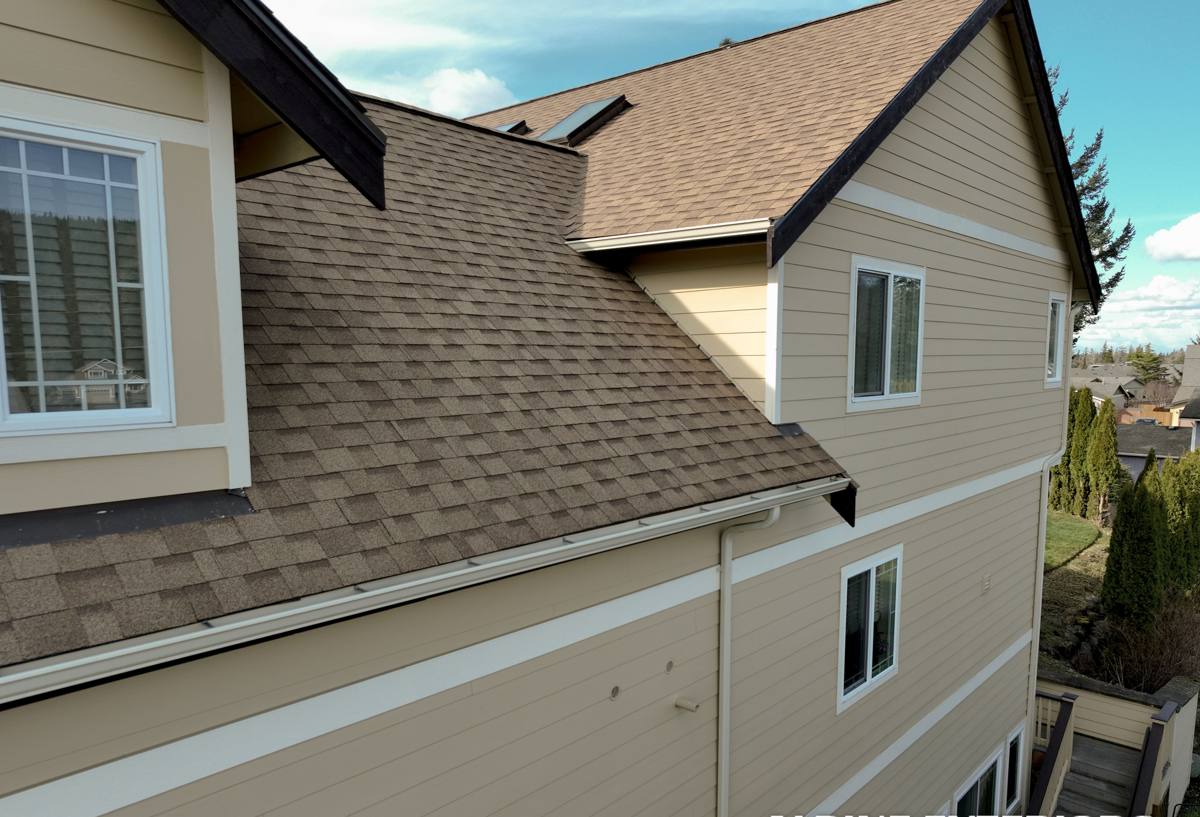
What Sumas's Climate Actually Does to a Deck
Moss Isn't Just Cosmetic
Moss on a deck surface is often treated as a cleaning problem, but it's really a moisture problem with a green symptom. Moss holds water against the wood or composite surface constantly, blocking airflow and sunlight that would otherwise help the deck dry between rain events. On boards with any existing cracking or worn finish, moss-trapped moisture works its way into the wood fibers and accelerates rot from the top down, not just from underneath.
Driving Rain Finds the Weak Points
Wind-driven rain in this part of Whatcom County doesn't fall straight down — it gets pushed sideways and up under railings, around post connections, and behind ledger boards where the deck attaches to the house. Those are the exact spots that are hardest to inspect from a casual walk-around and the most common places we find hidden rot when we open a deck up for repair.
Freeze-Thaw and Valley Dampness
Sumas gets cold snaps that Bellingham and the coastal parts of the county don't feel as sharply. Water that's soaked into a crack or joint, then freezes, expands and widens that crack — so a small split that would stay small in a drier climate gets worse every winter here. Combined with the valley's tendency to hold morning dampness, wood components get more freeze-thaw cycles per season than you'd expect.
Signs a Sumas Deck Needs Repair — Not a Full Rebuild
A lot of homeowners assume any deck problem means a full teardown. Most of the time it doesn't. Here's what we actually look for when we're deciding whether a deck can be repaired:
- Soft or spongy decking boards — usually isolated to a few boards near a downspout, planter, or shaded corner, not the whole deck.
- Persistent moss or algae staining that keeps coming back within weeks of cleaning.
- Loose or wobbly railings and posts — often a connection or hardware issue, not a structural failure of the whole railing system.
- Gaps opening up between ledger board and house siding — a sign water may be getting behind the ledger flashing.
- Nail heads popping up or fasteners rusting through — common on older decks built before corrosion-resistant hardware was standard.
- Stair stringers or the bottom few inches of posts showing dark staining or crumbling wood — these sit closest to standing water and splashback.
If the framing underneath is sound and the damage is contained to specific boards, connections, or surface areas, repair is almost always the right call — it's faster, less expensive, and doesn't disturb parts of the deck that are still performing fine.
What a Correct Deck Repair Actually Involves
A repair that just swaps a rotten board for a new one and stops there tends to fail again in a season or two, because it doesn't address why that board failed. Our approach is to treat every repair as a small investigation first:
1. Find the Water Source, Not Just the Damage
Before replacing anything, we trace back to why that spot got wet in the first place — a low spot holding water, a gap in ledger flashing, a downspout dumping onto the deck, or a railing post base without proper drainage. Replacing a board without fixing the water path just buys you a year or two before the same board fails again.
2. Check the Framing, Not Just the Surface
Joists, beams, and ledger connections take longer to show damage than decking boards, but they're what actually holds the deck up. We probe suspect areas with an awl or moisture meter rather than guessing from appearance, since rot inside a joist can look fine on the painted or stained surface.
3. Match Materials Correctly
Mixing incompatible woods or fastener metals can cause new problems — for example, certain fasteners react with the chemicals in pressure-treated lumber and corrode prematurely. We use fasteners and connectors rated for the specific decking and framing material involved.
4. Rebuild Connections to Current Standards
Older Sumas decks were often built before current guidance on ledger attachment, joist hangers, and post-to-beam connections. When we're already opening up a section for repair, we bring that section up to a safer connection standard rather than just replicating what failed.
Repair vs. Replace: How We Help You Decide
This is the question almost every homeowner asks, and the honest answer is that it depends on how much of the structure is actually compromised versus how much just looks tired. Here's the general framework we use:
| Factor | Leans Toward Repair | Leans Toward Replacement |
|---|---|---|
| Framing condition | Joists and beams are solid, damage is at connections or surface only | Multiple joists or the ledger board itself show rot |
| Extent of damage | Isolated boards, railings, or stairs | Damage spread across most of the deck surface |
| Deck age | Under 15-20 years, built to a reasonable original standard | Older deck nearing the end of its practical lifespan |
| Design | Layout and size still work for how you use the space | You want a different footprint, size, or material entirely |
| Cost comparison | Repair cost is a clear fraction of full replacement | Repair cost starts approaching a large share of replacement cost |
We'll always tell you plainly which side of that line your deck falls on. If a repair genuinely isn't the better value, we'll say so instead of patching something that's going to keep costing you money.
Our Deck Repair Process
- On-site inspection. We walk the whole deck, check railings and stairs, and probe suspect boards and connections rather than relying on a visual pass alone.
- Straight explanation of what we find. You'll get a plain description of what's damaged, what's causing it, and what your real options are — repair scope, rough timeline, and honest cost range.
- Source of the problem gets addressed first. Flashing, drainage, or a fastener issue gets corrected as part of the same visit, not left for a future callback.
- Repair work. Damaged boards, framing members, or hardware are replaced with correctly matched materials and connectors.
- Final check. We confirm the repaired area is solid underfoot, properly fastened, and draining the way it should before we consider the job done.
Materials: What We Use and Why
For most Sumas deck repairs, we're working with either pressure-treated lumber, cedar, or composite decking, depending on what's already on the deck and what the homeowner wants going forward.
- Pressure-treated lumber is the most common framing material and a reasonable decking choice too — it resists rot well when properly maintained, but end cuts and fastener holes need to be sealed, since that's where untreated wood gets exposed.
- Cedar holds up naturally well to moisture and looks good, but it's softer and needs more consistent finish maintenance in a climate with this much rain and moss pressure — we're upfront that cedar is a higher-upkeep choice here, not a lower one.
- Composite decking resists moisture absorption and won't rot, which takes one major failure mode off the table, but it comes with its own trade-offs: it can still support surface mold or algae growth if it's shaded and damp, and it's a different repair process than wood if a board is ever damaged.
We match repair materials to what's already there whenever that's the sound choice, and we'll walk you through the trade-offs if you're considering switching materials during the repair.
Protecting a Repair Once It's Done: Maintenance Checklist
A correctly done repair still needs basic upkeep to get its full lifespan out of it, especially given how much moss and rain this area sees. A short seasonal routine covers most of it:
- Clear leaves and debris out of gaps between boards so water and airflow aren't blocked.
- Rinse or gently brush off moss buildup before it has a chance to establish, rather than waiting until it's thick.
- Check that downspouts and gutters aren't discharging directly onto the deck surface.
- Look at railing posts and stair connections once or twice a year for movement or loosening.
- Reseal or restain wood decking on the manufacturer's recommended schedule — don't wait until the finish has fully worn through.
- Keep planters and anything else that holds standing water off the deck surface, or use feet/risers that allow airflow underneath them.
Why Hire a Crew That Already Works in Sumas
A deck repair company that mostly works drier inland climates or a different part of the state doesn't have daily experience with what Whatcom County's rain and moss season actually does to wood and hardware over time. We work on homes throughout Ferndale and the surrounding county, including Sumas, so we're not guessing at how a valley microclimate with extra dampness and colder snaps behaves — we see the specific failure patterns it causes on a regular basis and know which fixes actually hold up through another wet season, not just through the next dry month.
That also means we're not learning on your deck. We already know which connection points fail first in this climate, which materials are worth the extra cost here, and which shortcuts look fine at handoff but come back to bite homeowners two winters later.
Get a Straight Answer on Your Deck
If your deck has soft spots, persistent moss, loose railings, or just doesn't feel as solid as it should, it's worth getting an honest look before winter rain makes the problem worse. We'll give you a clear, no-pressure estimate — what's actually wrong, what it takes to fix it right, and whether repair or replacement makes more sense for your situation. Use the form below to request your free estimate.