 Ferndale
 Building a Deck That Actually Holds Up in Fairhaven
Fairhaven sits close enough to the water that salt air, wind-driven rain, and shade from mature trees all work against a deck at the same time. A deck built with the same specs you'd use inland — standard fasteners, minimal airflow underneath, decking laid tight to the house — will start showing problems years before it should. We build decks for this specific stretch of Whatcom County, which means we plan for moisture from day one instead of hoping the wood dries out between storms.
This page covers what a Fairhaven deck actually needs, what separates a correctly built deck from one that just looks finished on installation day, and how we run the job from first call to final walkthrough.
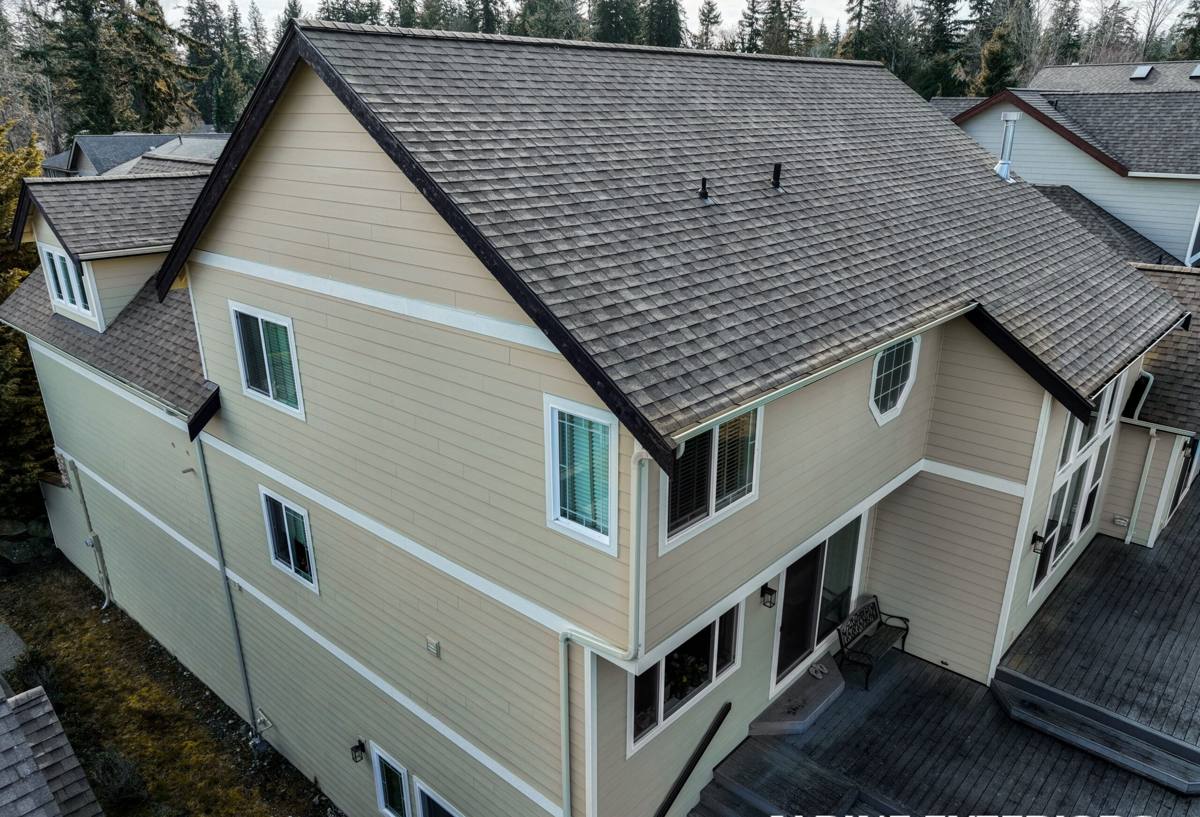
What Salt Air, Rain, and Moss Do to a Deck Over Time
Whatcom County's marine climate is mild, which is part of why people want to spend time outside on a deck. But that same mild, damp climate is hard on building materials in specific, predictable ways:
- Salt-laden air accelerates corrosion on fasteners, brackets, and any exposed metal hardware — even hardware rated for treated lumber can degrade faster this close to the water.
- Driving rain gets pushed sideways by wind, which means it reaches areas a dry-climate deck design assumes stay covered, like ledger connections and the undersides of rail posts.
- Long moss season means any deck surface that doesn't drain and dry quickly becomes a growth surface for moss and algae, which hold moisture against the wood and turn boards slick and dangerous underfoot.
- Shaded lots, common in established Fairhaven neighborhoods with mature trees, slow drying time even further, so airflow under and around the deck matters more here than it would on an open, sunny lot.
None of this means a deck can't last decades in this area — it means the build has to account for water from the start rather than relying on a coating to fight it after the fact.
Choosing the Right Decking Material for This Climate
There's no single "best" decking material — the right choice depends on your budget, how much upkeep you're willing to do, and how the site sits relative to sun, shade, and moisture. Here's how the common options actually perform in a wet, salt-exposed environment:
| Material | How It Handles Moisture Here | Maintenance |
|---|---|---|
| Pressure-treated lumber | Good rot resistance when properly sealed and gapped for drainage; needs re-sealing on a regular cycle | Moderate — annual cleaning, periodic sealant |
| Cedar | Naturally moisture- and insect-resistant, but softer and can gray or split without upkeep | Moderate to high — regular oiling/sealing |
| Composite decking | Doesn't rot or absorb water into the board itself, but can still grow surface moss/algae in shade if not cleaned | Low — periodic washing, no sealing |
| PVC decking | Fully moisture-resistant, best option for heavily shaded or splash-exposed areas | Low — occasional washing |
We'll walk you through the real trade-offs for your specific lot rather than push one product. A shaded, tree-covered yard near the water is a different decision than an open, south-facing lot even a few blocks away.
What We Won't Do
We don't install decking or use fasteners that aren't rated for the exposure the site actually gets. That sometimes means recommending a step up from what a homeowner originally asked for — for example, stainless or coated fasteners instead of standard galvanized in a spot that catches direct wind off the water. It costs a little more up front and saves you a re-build in ten years.
What a Correctly Built Deck Involves
A deck that's going to last in this climate is built differently below the surface than it looks from the top. The parts homeowners rarely see are the parts that determine whether the deck is still solid in fifteen years:
Footings and Framing
Footings need to be sized and set below frost depth and on undisturbed, well-draining soil. On sloped or wooded lots, that sometimes means adjusting footing placement and post heights to the actual grade rather than a standard layout — which is common on the rolling, tree-covered lots you find around Fairhaven.
Ledger Attachment
The ledger board — where the deck attaches to the house — is the single most common failure point on older decks in wet climates. It has to be flashed correctly so water sheds away from the house framing, not into it. This is also one of the areas building inspectors check closely, for good reason.
Board Spacing and Airflow
Decking boards need consistent gaps for drainage, and the substructure underneath needs enough clearance for air to move and wood to dry between storms. Tight-laid decking on a low, shaded deck is a near-guarantee of moss and rot within a few seasons here.
Fasteners and Hardware
Every bracket, screw, and joist hanger should be rated for the exposure it will actually see — not just the minimum code requirement. In a salt-air environment, that distinction matters more than it does twenty miles inland.
Our Deck Building Process
- On-site consultation — we look at your site's drainage, sun/shade pattern, tree cover, and how the deck will tie into the house.
- Design and material selection — we lay out size, layout, and material options based on your budget and how you'll actually use the space.
- Permitting — we handle the permit application and coordinate required inspections so you don't have to track it down yourself.
- Site prep and footings — footings are set to depth and location based on your soil and grade, not a generic template.
- Framing and ledger work — structural framing goes in with correct flashing and fastener specs for this climate.
- Decking, railing, and finish work — surface material, railings, and any stairs or lighting go in last.
- Final walkthrough — we go over the finished deck with you, including basic care so it stays looking and performing the way it should.
Permits and Code Basics
Most new decks and many significant deck rebuilds in Whatcom County require a building permit, particularly once the deck is a certain height off grade or attached to the house structure. Guardrail height, baluster spacing, and stair requirements are all set by code, not preference. We handle the permit process as part of the job — it's not an extra homeowners should have to manage on their own, and skipping it can create real problems at resale.
Maintenance That Actually Matters Here
A well-built deck in this climate still needs some seasonal attention. This is the short list we give clients after a build:
- Sweep debris and fallen leaves off the deck regularly, especially in fall — trapped organic matter holds moisture and feeds moss growth.
- Wash the surface at least once a year to remove early moss and algae before it gets established and slick.
- Check and clear gaps between boards so water keeps draining freely rather than pooling.
- Inspect fasteners and hardware periodically for corrosion, especially on decks closer to the water.
- Reseal wood decking on the schedule appropriate to the product — don't wait until it's visibly graying or cracking.
- Trim back overhanging branches where practical to improve sun exposure and airflow.
What Affects the Cost of a Deck Build
| Factor | Why It Matters |
|---|---|
| Size and shape | More square footage and complex angles increase material and labor |
| Decking material | Composite and PVC cost more up front than treated lumber but less in upkeep over time |
| Site conditions | Sloped, wooded, or hard-to-access lots take more time to prep and frame correctly |
| Height off grade | Taller decks need more substantial footings, framing, and often stairs and additional railing |
| Railing and features | Custom railing, built-in seating, or lighting add to both material and labor cost |
We won't quote a price without seeing the site — too many of these factors change the number to give an honest estimate over the phone.
Why Hire a Crew That Already Works in Fairhaven
A contractor who works this area regularly already knows how the local mix of salt air, shade, and rain behaves on a deck over time, rather than learning it on your project. We've seen what happens when a deck is built to a generic spec in this kind of environment — moss taking over a shaded deck within a couple of seasons, corroded hardware long before the wood itself fails, ledger connections that were never properly flashed. Building it right the first time, with materials and fastening specified for this climate, costs less over the life of the deck than repairing or rebuilding a deck that wasn't.
If you're planning a new deck or replacing an aging one in the Fairhaven area, we're happy to take a look and talk through honest options for your site — no pressure, no obligation. Fill out the form below to request a free estimate.