 Ferndale
 Marietta's Waterfront Climate Is Hard on Decks
Marietta sits close to the water on the edge of Ferndale, and that location is exactly what makes deck repair here different from a repair job ten miles inland. Homes in this part of Whatcom County deal with a combination most decks were never built to handle for decades on end: salty marine air rolling off Bellingham Bay, driving rain that comes in sideways during fall and winter storms, and a moss season that can stretch from October well into spring. Any one of these will shorten a deck's life. Together, they compound each other, and that's why we see decks here fail in specific, predictable ways.
Salt Air and Corrosion
Airborne salt doesn't just affect boats and siding — it settles into deck fasteners, hidden brackets, and any exposed metal hardware. Once corrosion starts on a nail, screw, or joist hanger, it weakens from the inside long before it's visible on the surface. A deck can look solid and still have fasteners that have lost most of their holding strength underneath the boards.
Driving Rain and Hidden Rot
Whatcom County's rain rarely falls straight down. Wind off the water pushes it at an angle, which means it gets driven into joints, under flashing, and behind ledger boards that face the weather. Water that gets trapped instead of shedding is the single biggest cause of structural rot we find in this area — and it's almost always hidden until a board or post is already soft.
Moss, Algae, and a Slippery Surface
Long, damp winters give moss and algae plenty of time to take hold on horizontal surfaces that don't get much direct sun. Beyond the slip hazard, moss holds moisture against the wood surface far longer than open air would, which accelerates decay in the boards underneath it — especially on the shaded side of a house or under overhangs.
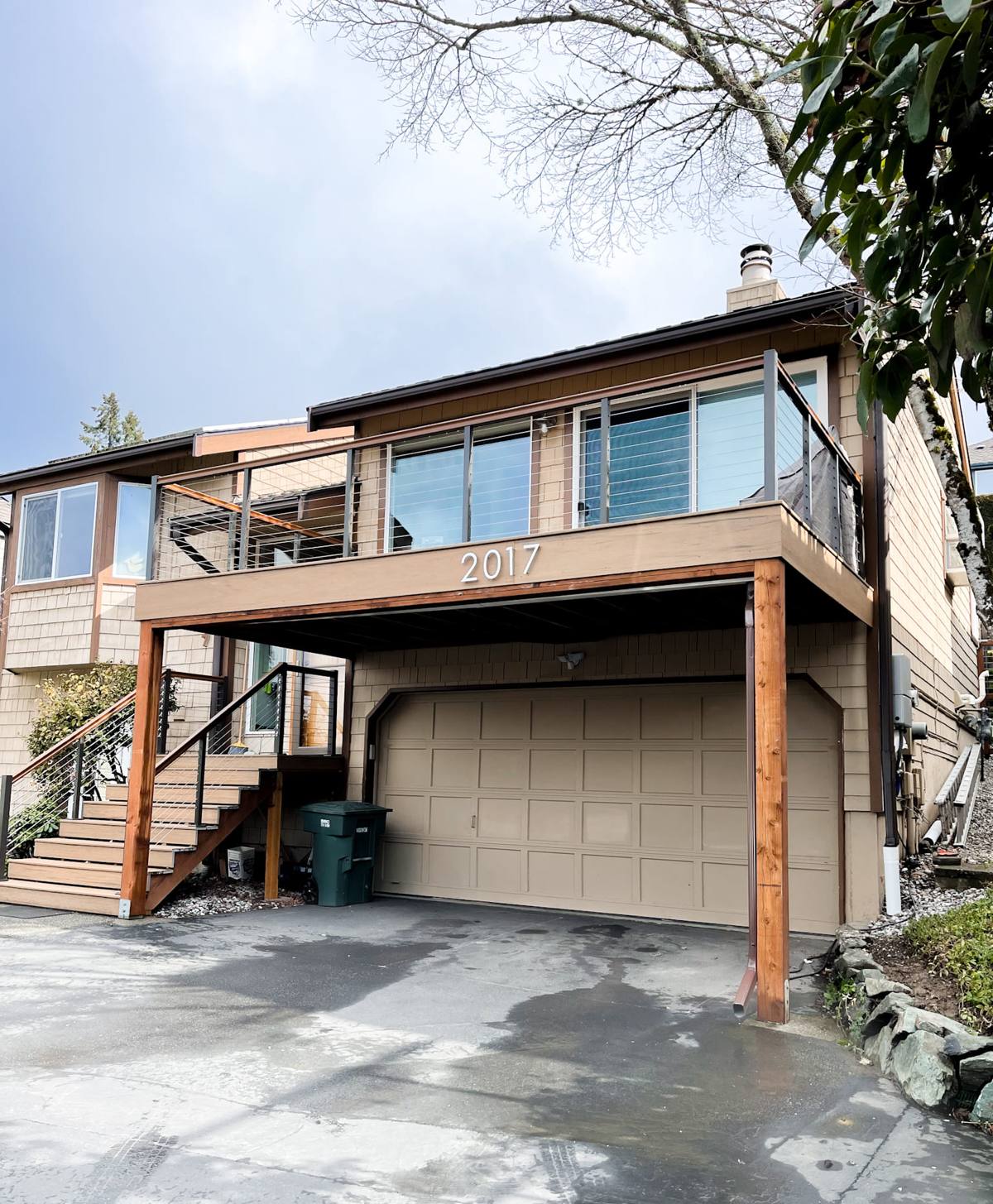
Signs a Marietta Deck Needs Repair
Most deck problems in this area start small and stay hidden for a season or two before they show up as something a homeowner notices. Catching them early is almost always cheaper than waiting.
- Boards that feel spongy, springy, or noticeably softer underfoot than the rest of the deck
- Rust streaks running down from screw heads, brackets, or joist hangers
- Gaps opening up where the ledger board meets the house, or daylight visible behind it
- Railings or posts that wiggle more than they did a year or two ago
- Persistent green or black staining that keeps returning after cleaning
- Stairs that feel uneven, or treads with visible cupping or splitting
- Water pooling on the deck surface instead of draining off between boards
- Any spot where you can push a screwdriver into the wood with light pressure
If any of these sound familiar, it's worth having someone look underneath the deck, not just at the surface — that's where the real story usually is.
What a Correct Deck Repair Actually Involves
A repair that only replaces the boards you can see is a temporary fix if the framing underneath has already started to go. A repair done right starts from the ground up, even if the visible work ends up being smaller than expected.
Structural Framing
We check joists, beams, and posts for soft spots, splitting, and any sign of movement, not just rot. In a climate this wet, we're also looking for joists that were never properly sized or spaced for the loads they're carrying, since older decks in this area were sometimes built before current framing standards were common.
Ledger Board and Flashing
The ledger board — where the deck attaches to the house — is the single most important connection on the whole structure, and it's the one most exposed to driving rain in Marietta's weather pattern. Proper flashing directs water away from this joint instead of letting it collect behind the ledger and rot both the deck framing and the house's rim joist. If we find flashing that's missing, cracked, or was never installed correctly, we address it as part of the repair rather than covering it back up.
Fasteners and Connectors
Given how much salt air affects hardware here, we don't reuse corroded fasteners just because they're still holding. We match connectors and screws to what the repair actually needs for a coastal environment, since mismatched or undersized hardware is one of the more common shortcuts we find in older repairs done by whoever was available at the time.
Repair or Replace? How We Decide
Not every deck problem means starting over, and not every deck is worth patching indefinitely. The honest answer depends on what's failing and how much of the structure it affects.
| What We Find | What It Usually Means | Typical Path |
|---|---|---|
| A few soft or split surface boards | Normal wear from sun and moisture cycling | Board-level repair |
| Rusted fasteners, framing still solid | Hardware reaching the end of its service life | Hardware and fastener replacement |
| Soft or rotted ledger board | Water intrusion at the house connection | Ledger and flashing repair |
| Multiple rotted joists or beams | Long-term moisture damage to the frame | Partial to full structural rebuild |
| Posts with rot at ground contact | Drainage or footing issue, not just age | Post and footing replacement |
| Deck is structurally sound overall | Cosmetic wear, staining, or moss buildup | Cleaning, sealing, cosmetic repair |
Cost follows the same logic. A handful of boards and fasteners is a modest, contained job. Ledger, framing, or footing work costs more because it's structural and involves more labor and material — but it's also the work that actually determines whether the deck is safe to use, so it's not the place to cut corners. We'll always tell you plainly which category your deck falls into before any work starts.
Decking Material Options for a Marine Climate
What you rebuild with matters as much as how it's built, especially this close to the water. There's no single right answer for every homeowner — it's a trade-off between upfront cost, maintenance, and how the material handles moisture over time.
| Material | Moisture Behavior | Maintenance | Best Fit For |
|---|---|---|---|
| Pressure-treated lumber | Resists rot when properly maintained; can still cup or split if sealing lapses | Needs periodic cleaning and re-sealing | Budget-conscious repairs and framing |
| Cedar | Naturally rot- and insect-resistant; still needs protection from constant wetting | Regular sealing to hold color and resist graying | Homeowners who want a natural wood look |
| Composite decking | Doesn't rot or splinter; some products can absorb moisture at cut edges if not capped properly | Low — occasional washing | Long-term, low-maintenance surfaces |
We're upfront about the trade-offs rather than pushing one product for every job. Composite is attractive because it cuts down on yearly upkeep, but it costs more up front and isn't always the right call for structural framing underneath the surface, where treated lumber is still the standard. What matters more than brand is correct installation — proper spacing, fastening, and flashing behind the material you choose.
Our Deck Repair Process
- On-site inspection of the full structure — surface, framing, ledger, posts, and footings, not just the boards you called about
- Plain explanation of what's actually failing and why, including what's cosmetic versus structural
- A written estimate that separates repair scope so you can see what each part of the job covers
- Removal of damaged material back to solid, sound wood or framing — no covering over soft spots
- Repair or replacement of framing, ledger, and flashing where water intrusion has occurred
- Installation of new decking, fasteners, and hardware matched to the exposure the deck actually gets
- Final walkthrough so you know what was repaired, what to watch, and what routine care will extend its life
Keeping a Repaired Deck in Good Shape
A correct repair buys you years, but this climate keeps working on a deck every season, so a little routine care goes a long way toward protecting the investment.
- Sweep debris and standing leaves off the surface regularly, especially in fall
- Clean moss and algae off before it has a chance to hold moisture against the wood
- Check and re-seal wood decking on a regular schedule rather than waiting until it looks gray or dry
- Keep an eye on the ledger board area each fall for any gaps, staining, or peeling caulk
- Make sure gutters and downspouts near the deck are directing water away, not onto it
- Check railings and stair connections once a year for looseness before it becomes a safety issue
Why Hire a Crew That Already Works in Marietta
Deck repair in a marine climate rewards experience with that specific climate. A crew that mostly works drier, inland areas may not think twice about a ledger detail or fastener choice that's perfectly fine there but undersized for what a bayside property in Whatcom County actually gets thrown at it over a winter. Working in and around Ferndale and Marietta regularly means we've seen how these decks fail here specifically — where water tends to collect, which connections corrode first, and which shortcuts from a previous repair job tend to resurface a few years later. That local pattern recognition is what separates a repair that lasts from one that just looks finished on the day it's done.
If you're noticing soft boards, rust stains, or a deck that just doesn't feel as solid as it used to, we're happy to take a look and give you a straight answer — no pressure, no upsell, just an honest assessment and a free estimate for what it would actually take to fix it right.