 Ferndale
 Windows Built for the Fairhaven Climate, Not a Catalog Average
Homes near Fairhaven sit close enough to the water that the air itself works against your windows every day. Salt-laden moisture off the bay, wind-driven rain that comes in sideways more often than straight down, and a wet season that can stretch from October into May all add up to conditions that a window designed for a dry inland climate was never built to handle. When we talk about "custom windows" for this area, we don't mean custom in the showroom sense — bigger panes, unusual shapes, a particular grid pattern. We mean windows selected and installed with this specific microclimate in mind: the right frame material, the right glazing, and flashing detail that assumes water will try to get in and gives it nowhere to go.
A lot of window problems we get called out for in this part of Whatcom County aren't manufacturing defects. They're installation shortcuts — a window that was never flashed correctly, or a frame material that was a poor match for a home that sits a few miles from salt water. Getting it right the first time costs about the same as getting it wrong. It just takes a crew that understands why the detail matters here specifically.
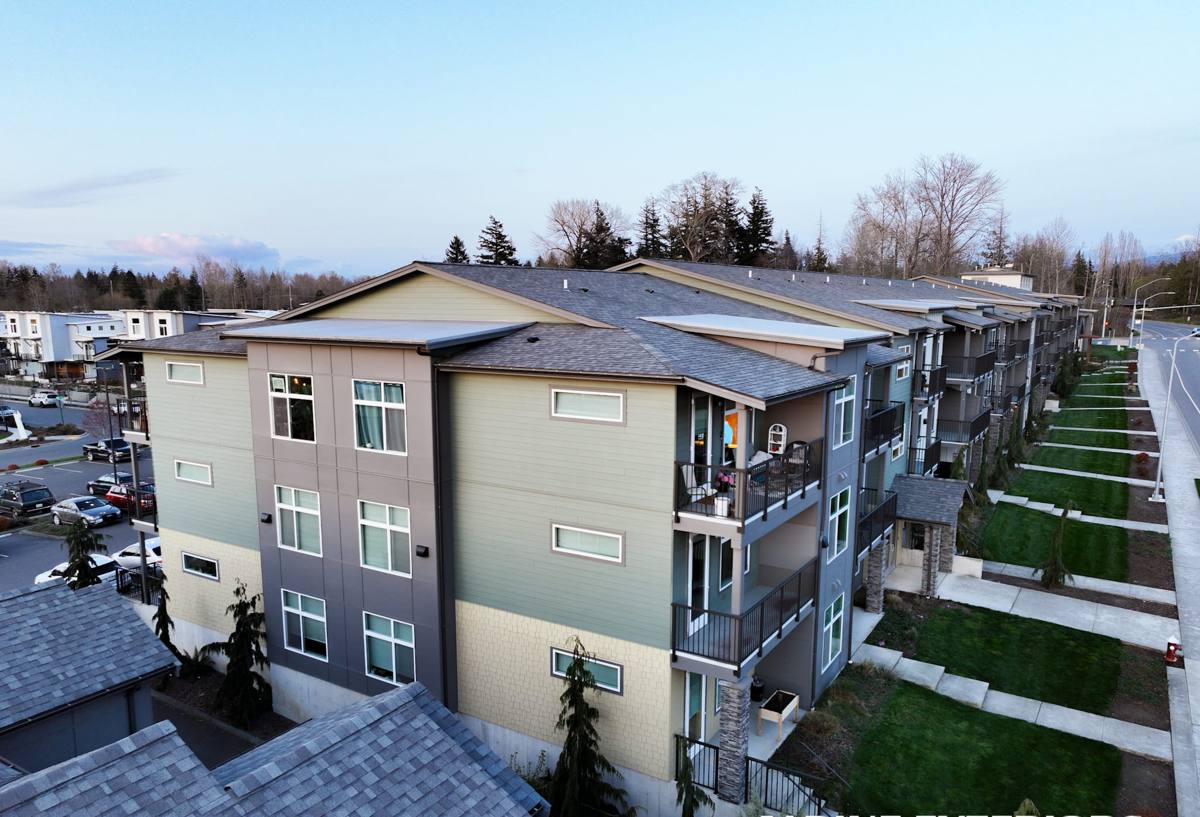
What Salt Air, Driving Rain, and Moss Season Actually Do to a Window
Salt Air and Metal Components
Salt in the air accelerates corrosion on anything metal — window hardware, screen frames, and especially aluminum. Cheaper aluminum windows and even some vinyl windows with aluminum reinforcement can start pitting or oxidizing years ahead of schedule this close to Bellingham Bay. It's not dramatic; it shows up slowly as stiff locks, streaked sills, and hardware that stops closing smoothly.
Driving Rain and Wind-Driven Moisture
Rain that falls straight down is relatively easy to shed. Rain that's pushed sideways by wind off the water finds every gap in a poorly sealed frame or flashing detail. This is where most real leaks start — not through the glass or the sash, but around the perimeter where the window meets the wall. A window can be excellent quality and still leak if it was installed with the wrong flashing sequence or without proper sill pan protection.
Moss, Mildew, and the Long Wet Season
Whatcom County's wet stretch is long enough that any spot where water sits — a sill without proper slope, a track that doesn't drain, a corner where caulk has failed — becomes a place where moss, algae, and mildew take hold. Beyond looking bad, sustained moisture against wood trim or a compromised seal is exactly what leads to soft framing and interior water stains over a few seasons.
Signs Your Current Windows Aren't Keeping Up
- Fogging or moisture trapped between panes on double- or triple-glazed units — the seal has failed
- Sills or lower corners that stay damp, discolored, or grow moss even in short dry spells
- Drafts you can feel with a hand near the frame on a windy day
- Hardware — locks, cranks, hinges — that has gotten stiff or corroded faster than it should
- Visible gaps or cracked caulk where the frame meets the siding or trim
- Wood trim around the window that's gone soft, spongy, or is peeling paint repeatedly in the same spot
- Noticeably higher heating bills in winter with no other explanation
Any one of these can be minor. Two or three together, especially on the side of the house that takes the weather, usually means it's worth a real inspection rather than another round of caulk.
What a Correct Custom Window Installation Involves
"Custom" for a home in this area starts with measuring and building around the actual rough opening rather than forcing a standard size to fit. From there, the work that actually determines whether the window performs for the next 20-plus years happens in a specific order:
- Remove and inspect. Pull the old window and check the rough opening framing for rot or moisture damage before anything new goes in. Installing a good window into a compromised opening just delays the same problem.
- Sill pan and flashing. A sloped, sealed sill pan gives any water that does get past the window somewhere to drain instead of soaking into the framing. This is the single most-skipped step on budget installs, and it's the one that matters most in a driving-rain climate.
- Set and level. The window has to be plumb, level, and square in the opening, shimmed correctly so it isn't relying on fasteners alone to hold its shape.
- Seal the exterior. Proper flashing tape and sealant around the perimeter, integrated with the home's weather-resistive barrier — not just a bead of caulk around the trim.
- Insulate the gap. Low-expansion foam or backer rod between the frame and the rough opening, avoiding both drafts and the kind of over-expansion that can bow a frame.
- Interior and exterior trim. Finished correctly so water sheds away from the wall assembly rather than toward it.
Skip or rush any one of those steps and the window itself — no matter how good — becomes the weak point in the wall.
Choosing the Right Frame Material for a Coastal-Influenced Home
There isn't one "best" window material for every home. The right choice depends on your budget, how exposed the house is to weather off the water, and how much upkeep you're willing to do.
| Frame Material | How It Handles Salt Air & Moisture | Maintenance | General Cost Position |
|---|---|---|---|
| Vinyl | Won't corrode; performs well if the reinforcement inside is protected | Low — occasional cleaning | Lower to mid |
| Fiberglass | Very stable in wet, salty air; resists warping and corrosion | Low | Mid to higher |
| Wood-clad (exterior clad, wood interior) | Good if cladding and flashing are done right; exposed wood is the risk point | Moderate — watch cladding seams | Higher |
| Aluminum | Prone to corrosion and condensation this close to salt water unless thermally broken and well-finished | Higher — hardware and finish need attention | Varies widely |
We install a range of these depending on the home, but we're honest about where each one is a poor fit. Bare aluminum, for example, is something we generally steer clients away from on homes with direct exposure to salt air — not because it's a bad product everywhere, but because the corrosion and condensation risk in this specific climate outweighs the upfront savings for most homeowners. That's a maintenance-and-longevity call, not a knock on any manufacturer.
Glass and Glazing Choices That Make a Difference Here
Beyond the frame, the glass package matters for both comfort and moisture control:
- Double vs. triple pane: Triple-pane adds real value in noise reduction and winter comfort; double-pane with a good low-E coating is often the more practical choice unless the home is on an especially exposed or noisy site.
- Low-E coatings: Help manage heat loss through our cool, wet winters without making the home feel dark.
- Argon or krypton gas fill: Improves insulating performance; argon is the standard, cost-effective choice for most residential jobs.
- Warm-edge spacers: Reduce condensation at the edge of the glass, which matters in a humid climate where interior condensation is already a common complaint.
How We Approach a Fairhaven-Area Project
Because we already work regularly in and around Ferndale and the surrounding Whatcom County communities, we're not learning this climate on your house. Our process on a custom window job looks like this:
- An on-site walkthrough where we check each opening, look at the current flashing and trim condition, and talk through what's actually failing versus what's cosmetic
- A written scope and honest estimate before any demo starts — no pressure, no bait pricing
- Careful removal that lets us assess the framing underneath before we commit to a plan
- Installation following the full sequence above, not a shortcut version
- A final walkthrough where we show you what was done and answer questions directly
We size crews and schedules around real Northwest weather windows rather than assuming every day is installable — which matters more here than in drier parts of the state, since an opening left exposed during a wind-driven rain event can cause more damage than the original problem.
Why Local Experience Matters More Than It Sounds
Window installation isn't fundamentally different from one region to another, but the judgment calls are. Knowing which side of a typical Fairhaven-area home takes the worst weather, how far salt-air corrosion effects typically reach inland, and which flashing details actually hold up through a full Whatcom County wet season isn't something you get from a training manual — it's something you get from doing the work here, on homes like yours, repeatedly. A crew that mainly works other climates can install a technically correct window and still miss the details that matter most where you live.
Maintaining Custom Windows Through the Wet Season
Even a well-installed window benefits from basic seasonal attention in this climate:
- Clear debris and moss from sills and tracks before the fall rains set in
- Check exterior caulk lines each year for cracking or gaps, especially after a hard winter
- Wipe down hardware periodically if the home is close to the water, to slow salt-related corrosion
- Watch for condensation between panes as an early sign of seal failure
- Keep gutters and downspouts clear so water isn't sheeting down past upper windows
If your windows are original to the house, showing any of the warning signs above, or you're simply planning ahead for a remodel, we're glad to take a look and walk you through honest options for your home. There's no pressure and no cost to find out where you stand — use the form below to request a free estimate.