 Ferndale
 Point Roberts Is a Tougher Deck Environment Than Most of Whatcom County
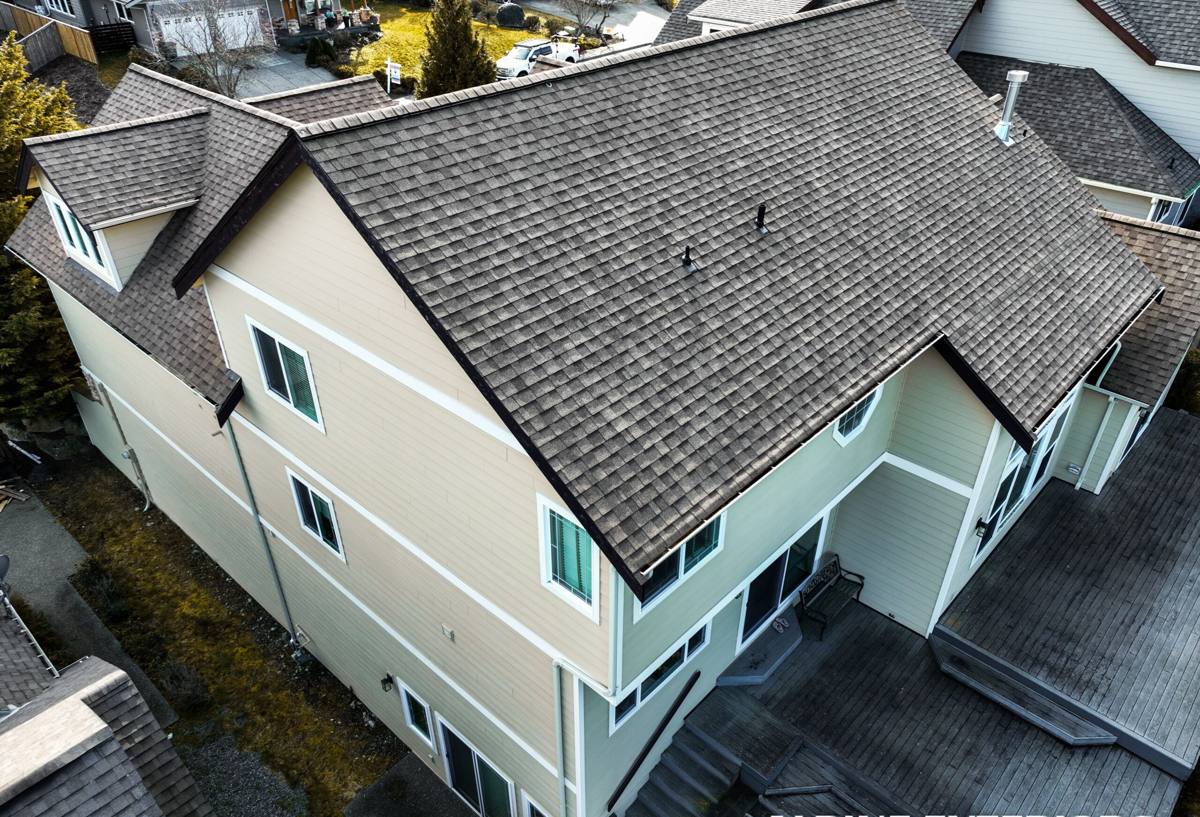
Point Roberts sits on its own peninsula, with water on three sides and wind that carries salt spray a lot farther inland than homeowners expect. A deck built with the same specs you'd use in a sheltered Ferndale backyard often doesn't hold up the same way out here. Between the marine air, the driving rain that comes in off the water during fall and winter storms, and a moss season that can stretch for months in our maritime climate, a deck in Point Roberts is doing more work than the average deck in Whatcom County — and it shows up first in the details other crews skip.
None of that means composite decking is a bad fit for Point Roberts. It's actually one of the better options for this environment, when it's installed with the exposure in mind. The problems we get called out to fix almost never trace back to the decking material itself — they trace back to a substructure, fastening, or drainage detail that was fine for an inland install but wasn't built for salt air and standing moisture.
What Salt Air, Rain, and Moss Actually Do to a Deck
Salt Air and Hardware
Salt-laden air speeds up corrosion on anything metal — screws, joist hangers, post bases, railing brackets. On a lot of decks we inspect, the boards look fine but the fasteners underneath are rusting and staining the boards from below. Once that starts, it's a structural issue, not a cosmetic one.
Driving Rain
Wind-driven rain doesn't just fall straight down — it gets pushed sideways into end grain, fastener holes, and any gap where water can collect instead of running off. Composite boards resist rot better than wood, but the framing underneath them is usually still wood, and that's where poor drainage detailing causes the real damage.
Moss and Shade
A long, damp moss season means any deck surface that stays wet and shaded for weeks at a time is going to grow something on it. Moss holds moisture against the board surface, and on decks with tight board spacing or poor airflow underneath, that moisture has nowhere to go.
What a Correct Composite Deck Build Looks Like Out Here
Substructure and Ventilation
The framing underneath a composite deck matters as much as the decking on top. We use fasteners and structural hardware rated for corrosive/coastal exposure rather than standard interior-grade galvanized product, and we make sure there's real airflow under the deck — not just a gap, but a system that lets moist air move out instead of sitting under the boards all winter.
Fasteners and Hidden Hardware
Most composite systems use hidden fastener clips instead of face screws. That's good for appearance, but the clips and screws still need to be corrosion-resistant hardware, not the standard-grade kit that ships in a generic contractor box. This is one of the easiest things for a crew unfamiliar with marine exposure to get wrong, because the deck looks correct on day one and only shows problems two or three winters later.
Board Spacing and Drainage Slope
Composite boards need slightly more attention to gap spacing than wood, because they expand and contract differently with temperature and moisture. We also build in a slight drainage slope away from the house and keep gaps consistent so water sheds instead of pooling — pooled water is exactly what feeds moss growth and picture-frames dirt and algae along board edges.
Composite vs. the Alternatives for a Point Roberts Deck
| Material | How It Handles Salt Air & Rain | Moss/Algae Behavior | Maintenance |
|---|---|---|---|
| Capped Composite | Strong — cap layer resists moisture absorption and staining | Grows on surface grime like any deck if not cleaned, but doesn't absorb moisture that feeds rot underneath | Occasional wash; no staining or sealing |
| Pressure-Treated Wood | Fair — treatment resists rot but fasteners and cut ends are vulnerable | More prone to moss and algae because the surface stays damp longer | Regular staining/sealing, more frequent than most owners keep up with |
| Cedar | Fair — naturally rot-resistant but softer and more exposure-sensitive than treated lumber | Similar moss risk to treated wood if not maintained | Frequent sealing to hold color and resist checking |
| PVC/Cellular PVC | Very strong — fully synthetic, doesn't absorb moisture | Low, but can still film over with algae without cleaning | Low; can look more plastic-like in appearance |
We install composite decking most often in this area because it strikes the best balance for this climate: it doesn't rot, it doesn't need the annual staining wood does, and modern capped boards hold their color and resist moisture absorption far better than the composite products from ten or fifteen years ago. That said, the substructure underneath any of these materials still has to be built for salt air and driving rain — the decking brand doesn't fix a badly detailed frame.
Our Process, Start to Finish
- On-site assessment. We look at existing framing (if there is any), drainage, sun/shade exposure, and how exposed the site is to wind-driven rain and salt spray.
- Material and hardware selection. We spec composite decking and fastening hardware to match the exposure level of that specific property, not a one-size-fits-all package.
- Scheduling and material delivery. Point Roberts is only reachable by crossing the border or by boat, so we plan material deliveries and crew days as a single trip rather than several back-and-forth runs — that keeps your project moving instead of stalling mid-build waiting on a forgotten part.
- Framing and structural work. Joists, ledger connections, post footings, and hardware get built or upgraded to current code and to the corrosion-resistant standard we use for coastal exposure.
- Decking installation. Boards go down with consistent spacing, correct fastening, and attention to drainage slope.
- Railing, stairs, and trim. Finished out to match the deck system and the house.
- Final walk-through. We show you what was done, what maintenance (if any) it needs, and answer questions before we call it finished.
Living With a Composite Deck in This Climate
Composite decking is low-maintenance, not no-maintenance. In a salt air and moss-prone environment like Point Roberts, a little seasonal attention keeps the deck looking and draining the way it should.
- Rinse or sweep debris (leaves, needles, dirt) off the deck regularly, especially in shaded areas where moss takes hold fastest
- Wash the surface with a soft-bristle brush and mild soap/water a couple times a year to remove salt film and organic buildup
- Keep gutters and downspouts clear so runoff isn't dumping extra water onto or near the deck
- Check railing brackets, post bases, and any exposed hardware periodically for corrosion or looseness
- Trim back plants and branches that keep sections of the deck shaded and damp longer than the rest
- Avoid pressure-washing at high pressure directly into board grooves — it can force water and grit into fastener channels
What Affects the Cost
| Factor | Why It Matters |
|---|---|
| Deck size and shape | More square footage and more cuts/angles increase material and labor |
| Composite tier | Capped composite costs more upfront than base-grade composite but resists moisture and fading better long-term |
| Substructure condition | Replacing rotted or undersized framing adds cost but is not optional if the frame is compromised |
| Height and railing needs | Elevated decks require more structural work and code-compliant railing |
| Site access and logistics | Point Roberts scheduling and material transport is factored into project planning |
As a broad range, composite deck projects in this region typically land somewhere in the mid-to-upper range per square foot installed once you account for composite tier, substructure work, and railing — but the honest answer is that it depends heavily on the condition of what's already there. We'll give you real numbers after we've actually looked at the site, not before.
Why a Crew That Already Works Point Roberts Matters
Point Roberts isn't just another stop on a route — it's an exclave, reachable only through Canada or by boat, and that changes how a project has to be planned. A crew that hasn't worked out here before can underestimate how much wind-driven rain and salt exposure the site actually gets, or plan a build schedule around multiple supply runs that eat up days. We've built our process around the reality of working in Point Roberts: right materials specified up front, hardware rated for the exposure, and a delivery and crew schedule that doesn't leave your project half-finished waiting on a part.
We're based in Ferndale and work throughout Whatcom County, but Point Roberts gets treated as its own case, not a smaller version of an inland job.
Repair, Refresh, or Replace
Not every deck issue means a full rebuild. Here's a general guide to what we look for:
- Repair: a few damaged boards, loose railing, or isolated hardware corrosion on an otherwise sound structure
- Refresh: the substructure is solid but the decking surface is worn, faded, or holding moss despite cleaning
- Replace: soft or rotted framing, widespread fastener corrosion, or a structure that was never built for this level of exposure in the first place
If you're not sure which category your deck falls into, that's exactly what an on-site look is for.
If you're planning a new composite deck or replacing one that hasn't held up to the Point Roberts climate, we're happy to take a look and give you a straightforward, no-pressure estimate. Use the form below to get started.