 Ferndale
 Board & Batten in a Whatcom County Climate
Board and batten has become one of the most requested siding profiles for homes around Lynden and the wider Ferndale area, and it's not just a style trend. The vertical lines pair well with the barns, outbuildings, and farmhouse-influenced homes common on this stretch of Whatcom County, and the deep shadow lines the battens create hold up visually in the flat, overcast light we get for a good part of the year. But the look only matters if the material underneath survives what this climate throws at it. Homes here deal with salt-tinged air moving in off the Strait of Georgia and Puget Sound, long stretches of driving rain, and a moss season that can run from fall through spring. Any siding installed vertically has to manage water running down its face for months at a time without trapping it behind the panel.
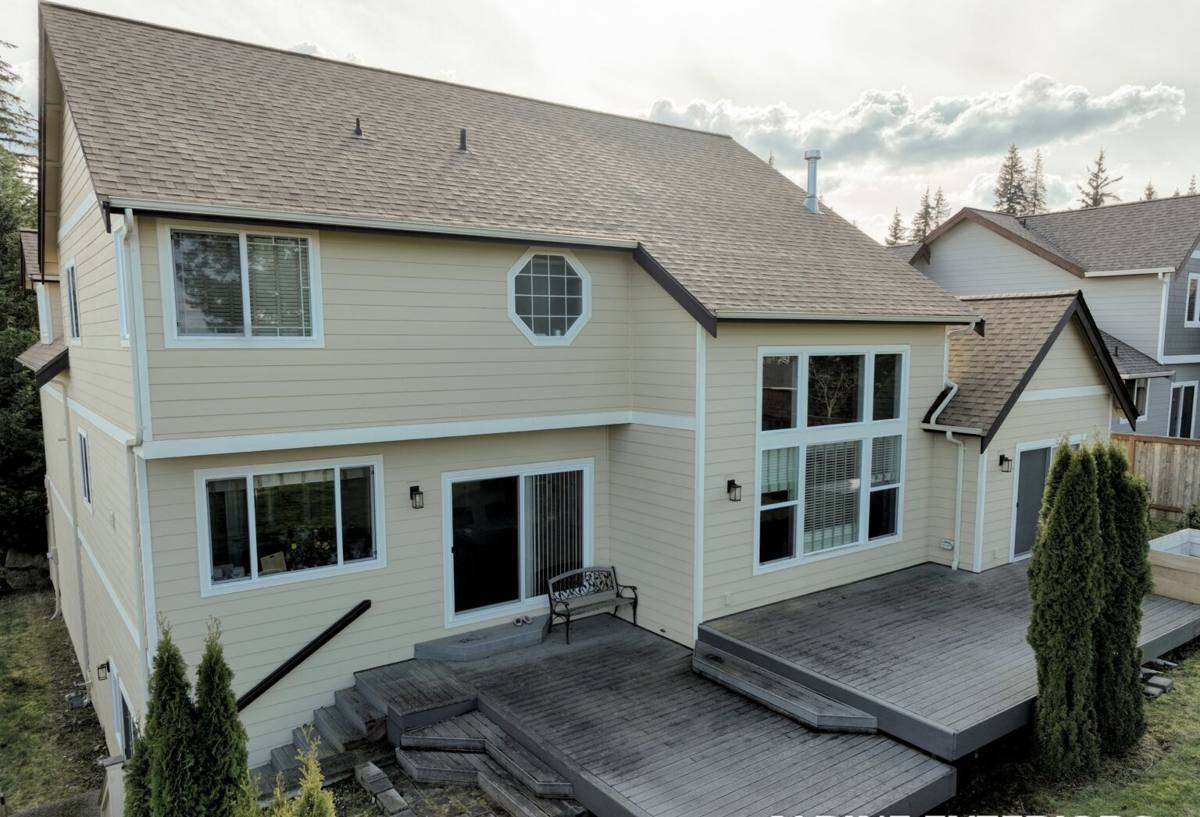
What "Correct" Board & Batten Actually Means
Board and batten isn't a single product — it's a siding pattern. Wide flat panels are installed first, and narrower strips (the "battens") are fastened over the seams between them. That pattern can be built out of several different materials, and the material you choose determines whether this siding lasts 8 years or 40.
How We Build It
We install board and batten using James Hardie fiber cement — typically HardiePanel vertical siding with Hardie batten strips, or the Hardie Artisan vertical panel line where a homeowner wants a more refined reveal. Both are engineered specifically to be installed vertically, which matters more than most homeowners realize. A panel designed and tested for vertical installation handles water shedding, expansion, and fastening differently than a product adapted from a horizontal lap design.
Why the Local Climate Is Unforgiving on This Profile
Vertical siding is more exposed to sustained water contact than horizontal lap siding, simply because water runs the full face of the panel instead of shedding off overlapping courses every few inches. In a climate like Ferndale's — persistent rain, high humidity, and salt air that accelerates corrosion on fasteners and hardware — that difference shows up fast on the wrong material.
- Wood board and batten needs repainting and caulk maintenance every few years or it starts absorbing moisture at the seams, which is exactly where board and batten is most vulnerable.
- Vinyl board and batten can work loose or warp with the area's temperature swings and doesn't hold up well against the abrasive, salt-laden grit that blows in off the water.
- Engineered wood products like LP SmartSide resist rot better than raw wood but are still a wood-strand composite — any breach in the factory coating at a cut edge or batten seam gives moisture a path in, and vertical siding has more seams per square foot than horizontal lap.
- Moss and algae take hold fastest on porous or slightly textured surfaces that stay damp — a real issue on north- and west-facing walls that don't get much sun exposure through a Whatcom County winter.
This is exactly the environment fiber cement was engineered for. James Hardie panels don't swell, rot, or support the fungal growth that wood-based products are prone to, and the factory-applied ColorPlus finish resists the fading and moss staining that plain paint struggles with here.
What a Correct Installation Involves
Board and batten is unforgiving of shortcuts, because every batten seam is a potential water entry point if it's not detailed correctly. A correct job includes:
Behind the Panel
A drainage plane (weather-resistant barrier) and, on most jobs we recommend a furred-out rainscreen gap behind vertical Hardie panel. That gap lets any moisture that does get behind the siding drain and dry instead of sitting against the sheathing — a meaningful advantage in a region where the siding rarely gets a long dry stretch to fully dry out on its own.
Panel Gaps and Fastening
Hardie specifies exact gapping at panel joints, corners, and any place siding meets trim, windows, or roofing — these gaps allow for the panel's minor seasonal movement and give caulk a proper joint to seal instead of a hairline crack that will fail early. Fasteners have to be corrosion-resistant and set to the correct depth; in salt air, using the wrong fastener is one of the most common causes of premature staining and streaking down the face of the siding.
Batten Placement and Sealant
Battens need consistent spacing and full contact with the framing behind them, and the sealant used at seams and terminations needs to be rated for exterior use and compatible with the ColorPlus finish so it doesn't discolor or pull away over time.
Our Process for Lynden-Area Homes
- On-site assessment — we look at wall orientation (sun exposure matters a lot for moss risk), existing moisture damage, and where the home is catching wind-driven rain.
- Design and material selection — panel width, batten spacing, and ColorPlus color are chosen for the home's style and the amount of maintenance the homeowner wants going forward.
- Tear-off and prep — removing old siding lets us actually inspect the sheathing and framing underneath, which is often where hidden rot or moisture damage is found on older homes in this area.
- Weather barrier and rainscreen installation — this step is where most of the long-term performance of the job is decided, and it's invisible once the siding goes on.
- Panel and batten installation — installed to Hardie's fastening and gapping specifications, not generic siding practice.
- Final inspection and cleanup — checking every seam, corner, and penetration before we call the job done.
Board & Batten Material Comparison
| Material | Moisture Behavior | Maintenance | Typical Lifespan Here |
|---|---|---|---|
| James Hardie Fiber Cement | Non-combustible, doesn't swell or rot, factory-sealed edges | Occasional wash; no repainting with ColorPlus finish | 30+ years with correct install |
| Cedar Board & Batten | Absorbs moisture at seams and cuts; prone to rot in shaded, damp walls | Repaint/reseal every 3-5 years | 15-20 years with diligent upkeep |
| LP SmartSide Vertical Panel | Wood-strand core; vulnerable if factory coating is breached | Touch-up paint at cuts/seams; monitor edges | 20-25 years, install-dependent |
| Vinyl Board & Batten | Doesn't rot, but can warp, fade, and loosen in wind and temperature swings | Low, but panels can crack or need replacement | 15-25 years |
Cost Factors to Expect
| Factor | Why It Matters |
|---|---|
| Wall height and complexity | Vertical siding on tall gables or multiple roof lines takes more cutting and detail work than a simple rectangular wall |
| Existing siding removal and sheathing condition | Rot repair found during tear-off adds cost but should never be skipped, especially on older Whatcom County homes |
| Rainscreen/furring installation | Adds labor and material but pays off in moisture performance in this climate |
| Panel and batten width chosen | Wider reveals use less material but change the look; narrower battens mean more seams and labor |
| ColorPlus color and trim package | Factory-finished colors cost more upfront than field paint but eliminate repainting |
We give straightforward, itemized estimates rather than a single flat number — homeowners deserve to see what they're actually paying for.
Maintaining Board & Batten in This Climate
- Rinse the siding annually, focusing on north- and west-facing walls where moss and algae are most likely to establish
- Keep gutters clear so water isn't sheeting down the siding face from above
- Trim back vegetation and landscaping that keeps a wall shaded and damp
- Inspect caulking at seams, corners, and window trim every couple of years and have any cracked sealant redone
- Have any impact damage (ladders, debris, equipment) repaired promptly rather than left exposed
Why Hiring a Crew That Already Works This Area Matters
Board and batten installed wrong doesn't usually fail in year one — it fails in year five or six, after moisture has been working behind the panel for a while. A crew that already installs siding around Lynden and Ferndale knows which wall orientations on local homes take the worst weather, how the area's rain and salt air have affected the last generation of siding on similar homes, and what gapping and sealant choices actually hold up here versus in a drier inland climate. That local pattern recognition is hard to replace with a generic install crew that isn't used to this region's conditions.
If you're weighing board and batten for a home in the Lynden or Ferndale area, we're happy to take a look and walk you through what it would take on your specific house — no pressure, no obligation. Fill out the form below for a free estimate.