 Ferndale
 Birch Bay's Climate Doesn't Forgive a Cheap Roof
Birch Bay sits right on the water, and that changes what a roof has to deal with compared to a home a few miles inland in Ferndale. Salt-laden air off the bay works on exposed metal and fasteners year-round, wind-driven rain gets pushed sideways under laps and flashing that would stay dry in a calmer spot, and Whatcom County's long wet season keeps everything damp enough for moss to take hold for months at a time. None of that is a reason to avoid metal roofing — it's actually one of the better materials for this stretch of coastline — but it does mean the details matter more here than they would somewhere drier and further from the water.
A metal roof installed with inland assumptions — standard fasteners, minimal flashing detail, no thought given to where salt spray actually reaches — will show its age faster in Birch Bay than the same roof would in a more sheltered part of Ferndale. The material itself isn't the weak point. How it's specified and installed for this specific location is.
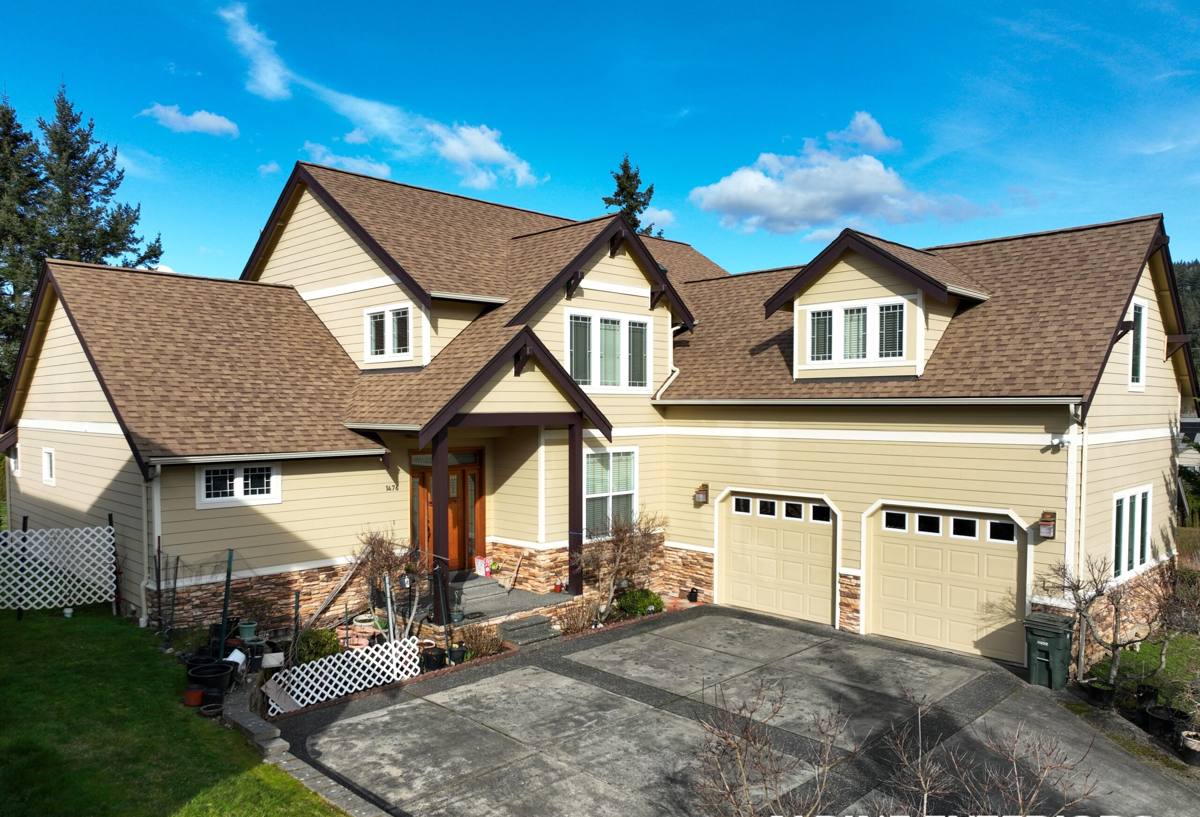
What a Metal Roof Actually Needs to Hold Up Here
Panel Material and Finish
Both steel and aluminum panels can perform well near salt water, but they need the right coating system to do it. A quality factory finish — PVDF-based coatings (often marketed under names like Kynar 500) — hold their color and resist chalking far longer in a marine environment than lower-grade polyester or SMP finishes. The upfront cost difference is modest compared to the difference in how the finish looks and performs after a decade of salt air and UV exposure. Aluminum has a natural advantage in pure corrosion resistance since it doesn't rust, though steel with a proper finish and cut-edge treatment still performs well for most homes here.
Fasteners and Flashing
This is where a lot of coastal metal roofs actually fail, and it's rarely the panel's fault. Exposed-fastener panel systems rely on gasketed screws, and those gaskets and fastener coatings degrade faster under salt exposure and constant thermal cycling than they would inland. We use fasteners rated for coastal/marine exposure and pay close attention to any point where dissimilar metals touch — mixing certain metals (like uncoated steel fasteners against copper flashing) sets up galvanic corrosion that eats through the weaker metal, sometimes years before anyone notices. Flashing at valleys, chimneys, wall transitions, and any roof penetration gets extra attention, since driving rain off the bay finds gaps that would never be tested by a normal Ferndale rainstorm.
Underlayment and Ventilation
A synthetic underlayment as a secondary water barrier is worth the upgrade here, since wind-driven rain can occasionally force moisture past the panel seams even on a well-installed roof — the underlayment is what keeps that moisture out of the deck. Proper ridge and soffit ventilation also matters more with metal than people expect: metal panels react quickly to temperature swings, and without airflow underneath, that can lead to condensation on the underside of the deck, which is a slower but just as damaging moisture problem as a leak.
Standing Seam vs. Exposed Fastener: Which Fits a Birch Bay Roof
Both systems are used successfully along the Whatcom County coastline, but they come with different maintenance expectations once salt air is part of the equation.
| Factor | Standing Seam (Concealed Fastener) | Exposed Fastener Panel |
|---|---|---|
| Fastener exposure to weather | Fasteners are hidden under the seam — no direct salt/UV exposure | Screws are exposed on the panel face, directly hit by rain and salt air |
| Long-term maintenance | Minimal — no gaskets to replace | Fastener gaskets typically need inspection/replacement over the roof's life |
| Upfront cost | Higher | Lower |
| Best fit | Waterfront or wind-exposed lots, longer ownership horizon | Budget-conscious projects, outbuildings, less exposed sites |
For homes closer to the water's edge in Birch Bay, we generally recommend standing seam if the budget allows it, simply because it removes the one component (exposed fasteners) that ages fastest in salt air. Exposed-fastener panels are still a reasonable, durable choice — they just need to go into the maintenance plan rather than being treated as install-and-forget.
The Long Moss Season Whatcom County Is Known For
Moss needs shade and consistent moisture, and Birch Bay's tree cover combined with our wet fall-through-spring stretch gives it plenty of both. Metal roofing is far more moss-resistant than composition shingle because there's no rough, absorbent surface for spores to root into, but it isn't immune, particularly in shaded valleys, low-slope sections, or where debris collects and holds moisture against the panel.
A few things actually make a difference on a metal roof here:
- Zinc or copper strips installed near the ridge, which release trace metal ions with every rain that inhibit moss and algae growth downslope
- Keeping roof pitch and valley design clean so water and debris don't pool
- Trimming back overhanging branches where practical, since shade is the biggest driver of moss growth
- Periodic clearing of needles and leaf litter from valleys and behind chimneys, where debris is most likely to trap moisture
Discoloration or light surface algae staining on a metal roof is usually cosmetic, not structural — but it's worth addressing before it holds enough moisture to start affecting fasteners or sealant underneath.
What Drives the Cost of a Metal Roof in This Area
Every roof is different, and we won't quote a number without seeing the roof, but these are the factors that actually move the price on a Birch Bay or Ferndale metal roofing project.
| Cost Factor | Why It Matters |
|---|---|
| Panel material (steel vs. aluminum) | Aluminum costs more but resists corrosion better in direct salt exposure |
| Roof complexity / number of penetrations | More valleys, vents, and roof-wall intersections mean more flashing labor |
| Tear-off vs. install over existing roof | Removing old roofing adds labor and disposal cost but lets us inspect and repair the deck |
| Panel profile and finish tier | Standing seam and premium PVDF finishes cost more upfront than exposed-fastener/standard finish |
| Roof pitch and access | Steep or hard-to-access roofs take longer and require more safety setup |
| Fastener and flashing spec for coastal exposure | Marine-grade fasteners and extra flashing detail cost more than standard hardware but save money in maintenance later |
How We Approach a Birch Bay Metal Roofing Job
- On-site inspection and measurement, including a look at the existing roof deck and any moss, moisture, or corrosion patterns already present
- Tear-off of old roofing when needed, with the deck inspected and any soft or damaged sheathing replaced before anything new goes on
- Installation of synthetic underlayment as a secondary moisture barrier
- Drip edge, valley, and flashing installation at every penetration and roof-wall transition — done before panels go on, not patched around afterward
- Panel installation with fasteners and clips specified for coastal exposure
- Ridge venting and trim work to keep airflow moving under the panels
- Full cleanup, including magnetic sweep for stray fasteners, and a walk-through so you know exactly what was done and what maintenance to expect
Why Hiring a Crew That Already Works Birch Bay Matters
A roofing crew that only occasionally works this close to the water can miss things that are obvious to a crew that's out here regularly — which sections of a lot actually catch the worst of the wind and salt spray, which older homes in the area still have original exposed-fastener roofs that are due for a fastener inspection, and how differently a shaded, moss-prone lot behaves compared to an open, wind-exposed one just a few streets over. We work Ferndale and Birch Bay regularly, which means we're not guessing at how this specific stretch of Whatcom County coastline treats a roof over time.
It also matters after the job is done. If a windstorm off the bay lifts a panel edge or a fastener starts working loose, you want a local crew that can get back out to look at it, not a company working out of a distant service area with a long wait list. Standing behind the work is easier when the work is close to home.
Maintenance Checklist for a Metal Roof Near Salt Water
- Rinse accumulated salt spray and debris off the roof periodically, especially on sections facing the bay directly
- If you have an exposed-fastener system, have fasteners and gaskets checked every few years for early signs of wear
- Keep valleys and behind-chimney areas clear of needles, leaves, and moss buildup
- Check sealant at penetrations (vent pipes, skylights) periodically — sealant degrades faster under coastal sun and salt exposure than the panels themselves
- Watch for staining or pitting anywhere two different metals are in contact, which can signal galvanic corrosion starting
- After any significant windstorm, do a visual check (or have us do one) for lifted edges, loose fasteners, or shifted flashing
If you're weighing options for a Birch Bay home, we're happy to take a look and walk you through what your specific roof needs — no pressure, no sales script. Fill out the form below for a free estimate.