 Ferndale
 Why Birch Bay's Shoreline Climate Is Hard on Siding
Birch Bay sits right on the water, and that location cuts both ways. The views are a big reason people buy homes out there, but the same exposure that gives you a water view also gives your siding a much harder job than a house a few miles inland in Ferndale or elsewhere in Whatcom County. Three things wear on exterior cladding here more than almost anywhere else in the region: salt-laden air, wind-driven rain coming straight off the water, and a moss and algae season that runs long because of the shade, humidity, and mild temperatures typical of this stretch of coastline.
Salt Air and Corrosion
Homes within a mile or so of Birch Bay's shoreline get a steady dose of salt spray, especially during winter storms. Salt is corrosive to fasteners, trim, and paint film. On siding materials that rely on a factory or field-applied paint coat for protection, salt exposure accelerates chalking, fading, and edge deterioration, particularly on the west- and north-facing walls that catch the prevailing weather.
Wind-Driven Rain and Water Intrusion
Whatcom County gets plenty of rain generally, but Birch Bay's open exposure means that rain often arrives sideways, driven by wind straight off the water. That matters because siding isn't just a decorative skin — it's the first line of a water management system. Wind-driven rain finds every gap in flashing, every under-lapped joint, and every place a fastener was driven wrong. A siding job that would hold up fine on a sheltered inland lot can fail years early on an exposed Birch Bay wall if the water-management details weren't done right.
Moss, Algae, and a Long Shaded Season
Many Birch Bay lots have mature trees and northern exposures that stay damp and shaded for much of the year. Combined with our mild, wet winters, that's ideal growing conditions for moss and algae on roofs and siding alike. Materials that hold moisture at the surface, or that have seams and textures where organic growth can get a foothold, will show green and black staining faster in a spot like this than they would in a drier, sunnier location.
Why We Install Only James Hardie Fiber Cement
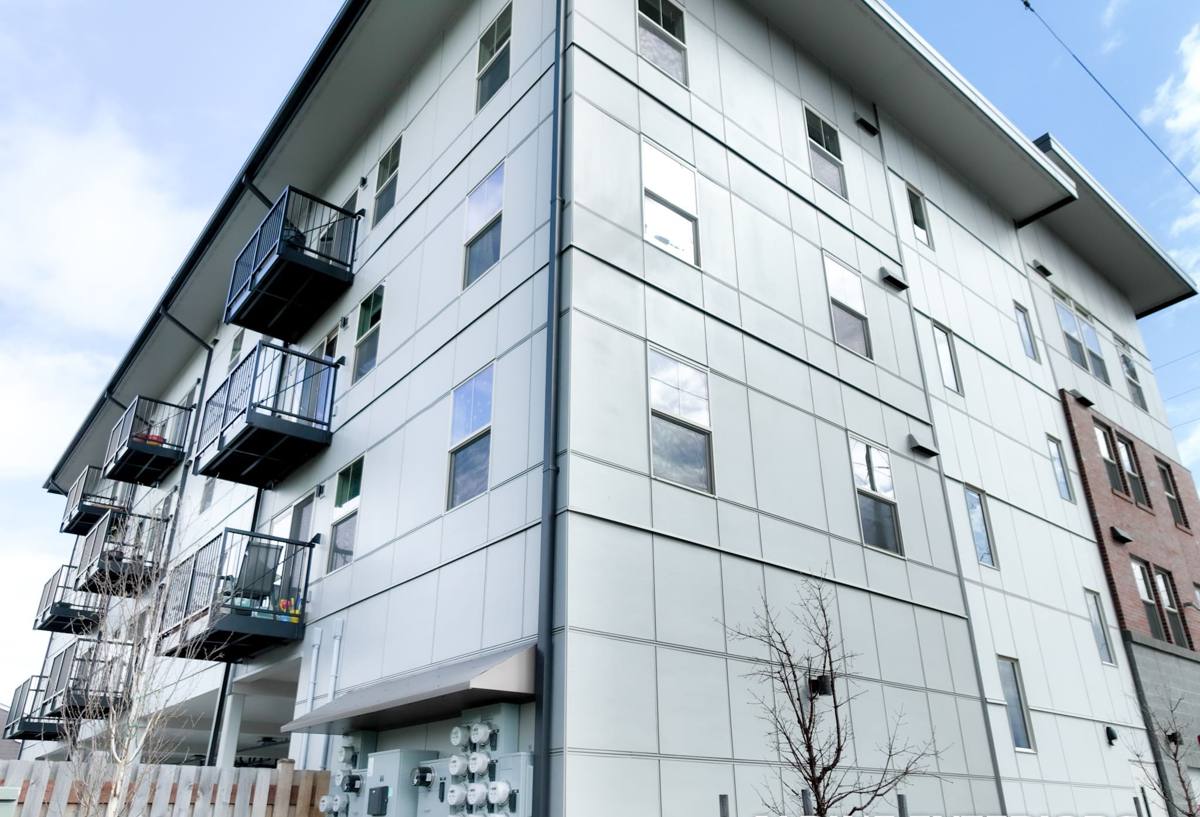
We made a standing decision as a company to install James Hardie fiber cement siding exclusively — not vinyl, not LP SmartSide, not Cemplank or Allura, not primed wood. That's not a marketing line; it's a practical response to what we see happen to siding in exactly this kind of coastal, wet, moss-prone climate over the years. Fiber cement is dimensionally stable, it doesn't rely on paint film alone for its long-term durability the way some engineered wood products do, and it's non-combustible, which matters to a lot of homeowners regardless of climate.
ColorPlus Finish Holds Up to UV and Salt Spray
James Hardie's ColorPlus finish is baked on in a factory-controlled process with multiple coats, rather than sprayed or brushed on site. That gives it better adhesion and more resistance to fading and chalking than field-applied paint, which is a real advantage on a wall that's taking regular salt spray. It also means color consistency across the whole job, since it isn't dependent on site weather conditions during application the way a field-painted product is.
A Fiber Cement Substrate That Doesn't Swell or Rot
Because Hardie board is cement-based rather than wood-based, it doesn't absorb water the way wood or wood-composite siding can, and it won't swell, delaminate, or rot at cut edges and butt joints the way some engineered wood products can when water gets past the paint line. In a location where wind-driven rain is a regular event, that's the single biggest reason we don't offer alternatives.
Choosing the Right Hardie Product Line for a Birch Bay Home
James Hardie makes several siding profiles and engineers its boards to different climate zones (HZ5 and HZ10 designations). For a Birch Bay property, we're generally looking at products engineered for the wetter, harsher HZ5 climate zone that the Pacific Northwest falls into, paired with a lap or panel profile that suits the home's style and the amount of direct weather exposure on each elevation.
| Product | Typical use | Why it fits a coastal Whatcom County home |
|---|---|---|
| HardiePlank lap siding | Most common choice for full-house siding | Traditional lap look, wide range of widths and textures, HZ5-engineered for our wet climate |
| HardiePanel vertical siding | Accent walls, gables, modern facades | Clean lines for contemporary styles, pairs well with board-and-batten trim |
| HardieTrim boards | Corners, window and door casing, fascia | Matches the fiber cement performance of the field siding so trim doesn't fail before the walls do |
| HardieSoffit panels | Eaves and overhangs | Resists the moisture and moss buildup common under shaded eaves |
Color selection matters too, and not just for looks. On a west- or north-facing wall that catches wind-driven rain and stays shaded longer, a durable factory finish is worth more than it would be on a sheltered, sun-exposed wall. We'll walk through the ColorPlus palette with you and talk through which elevations of your home see the most weather, so the choice makes sense for the actual exposure your house gets, not just the showroom sample.
What a Correct Installation Actually Involves Here
The siding material is only part of the equation. Most siding failures we get called out to inspect — regardless of brand — trace back to installation shortcuts around water management, not the panel itself. In a location like Birch Bay, those details matter more than average because there's less margin for error.
Flashing and Water Management
Every window, door, and horizontal trim transition needs proper flashing and correctly lapped house wrap so water is shed outward and down, never trapped behind the cladding. This is especially critical on walls facing the water, where wind pressure can drive rain sideways and even slightly upward at times.
Rainscreen Gap
We install with a rainscreen — a drainage gap between the siding and the weather-resistive barrier — which lets any moisture that does get past the outer layer drain and dry out instead of sitting against the wall sheathing. On an exposed coastal lot, that gap is one of the most effective things we do to keep a wall assembly dry over the long term.
Fastener Placement and Clearances
James Hardie publishes specific fastener spacing, edge distance, and clearance requirements — including keeping the bottom edge of siding a minimum distance above grade, decks, roofs, and hardscape. Skipping these clearances is a common shortcut that leads to wicking and early paint failure, and it's exactly the kind of detail that shows up as a problem years down the road, not on install day.
Caulking and Joint Treatment
Butt joints, corners, and trim transitions need to be treated according to Hardie's published details — some joints are meant to be caulked, others are designed to be left with a gap and covered, and using the wrong approach in the wrong place traps water instead of shedding it.
Our Process for a Birch Bay Siding Project
- On-site inspection: We look at your home's current siding, sheathing condition, and specifically at which elevations take the most wind and rain based on your lot's orientation to the water.
- Product and color selection: We recommend a Hardie product line and ColorPlus color based on your home's style and its actual weather exposure, not just aesthetics.
- Tear-off and sheathing check: Once old siding is off, we inspect the sheathing and framing for any hidden moisture damage before anything new goes up — this is the point where problems from old installations usually surface.
- Weather barrier and rainscreen installation: House wrap, flashing, and rainscreen furring go on correctly before a single piece of siding is hung.
- Hardie installation to spec: Fastener spacing, clearances, and joint treatment follow James Hardie's published installation requirements, which is also what keeps the manufacturer's warranty intact.
- Cleanup and walkthrough: We clean the site and walk the finished job with you before calling it done.
- Warranty registration: We register the job so your ColorPlus and substrate warranties are properly on file.
Cost Factors on a Birch Bay Project
Every home is different, so we won't quote a number without seeing your house, but here are the main variables that move the price on a project like this:
| Factor | Why it affects cost |
|---|---|
| Amount of tear-off and disposal | Removing old siding, especially multiple layers, adds labor and disposal cost |
| Sheathing repair | Hidden water damage found after tear-off needs to be addressed before new siding goes on |
| Home size and wall complexity | More corners, dormers, and trim details mean more cutting, fitting, and labor time |
| Product line and profile | Panel vs. lap siding, plank width, and texture affect material cost |
| Trim scope | Full trim replacement in HardieTrim vs. reusing sound existing trim changes the total |
| Access and site conditions | Steep grades, water-facing scaffolding needs, or tight lots can add labor time |
Maintaining Hardie Siding in a Salt-Air, Moss-Prone Setting
James Hardie siding is low-maintenance compared to wood or engineered wood, but "low-maintenance" doesn't mean "no maintenance," especially this close to the water. A little routine care goes a long way toward getting the full service life out of the job.
- Rinse salt residue off the siding a couple of times a year with a garden hose, focusing on walls that face the water directly.
- Keep gutters clear so water isn't overflowing and running down the face of the siding.
- Trim back trees and shrubs that keep a wall shaded and damp, since that's where moss and algae take hold first.
- Use a soft wash approach for moss and algae removal rather than aggressive pressure washing, which can drive water behind joints and trim.
- Inspect caulked joints every year or two and have any cracked or missing caulk redone before winter storm season.
- Watch for any staining or soft spots at the base of walls near grade, decks, or downspouts, which can signal a clearance or flashing issue worth checking.
Why a Crew That Already Works Birch Bay Matters
Coastal Whatcom County properties come with details that a crew unfamiliar with the area can miss: which elevations of a home actually take the brunt of the weather off the water, how much wind exposure a given lot really has, and where moss problems tend to start based on tree cover and shade patterns typical of this stretch of coastline. None of that shows up in a generic estimate — it comes from having done enough jobs in Birch Bay and along the Ferndale coastline to know what the water side of a house needs versus the sheltered side. A crew that treats every home the same regardless of its exposure is more likely to under-detail the walls that need it most.
It also matters for the practical side of a project — knowing typical local permitting requirements, being realistic about weather windows for tear-off during our wet season, and having a straightforward answer when you ask what happens if hidden damage turns up once old siding comes off.
Get a Straight Answer for Your Home
If you're weighing a siding replacement for a Birch Bay property, we're happy to come take a look, walk the exposure on your specific walls, and give you a straightforward, no-pressure estimate for a correctly installed James Hardie system built for this climate. Fill out the form below to get started.