 Ferndale
 Board & Batten Siding for Bellingham Homes
Board and batten is one of the most requested siding profiles we install in Bellingham, and for good reason. The vertical lines read as clean and modern on newer builds, and just as at-home on farmhouse-style and craftsman remodels near the water. But the look is only half the story. In Whatcom County's marine climate, board and batten has to perform as well as it looks, and that means getting the material, the fasteners, and the water management right from the first course to the last.
We install board and batten exclusively in James Hardie fiber cement. This page walks through what that means for a Bellingham home specifically — the conditions your siding is up against, what a correct installation involves, and how our process works from estimate to finished wall.
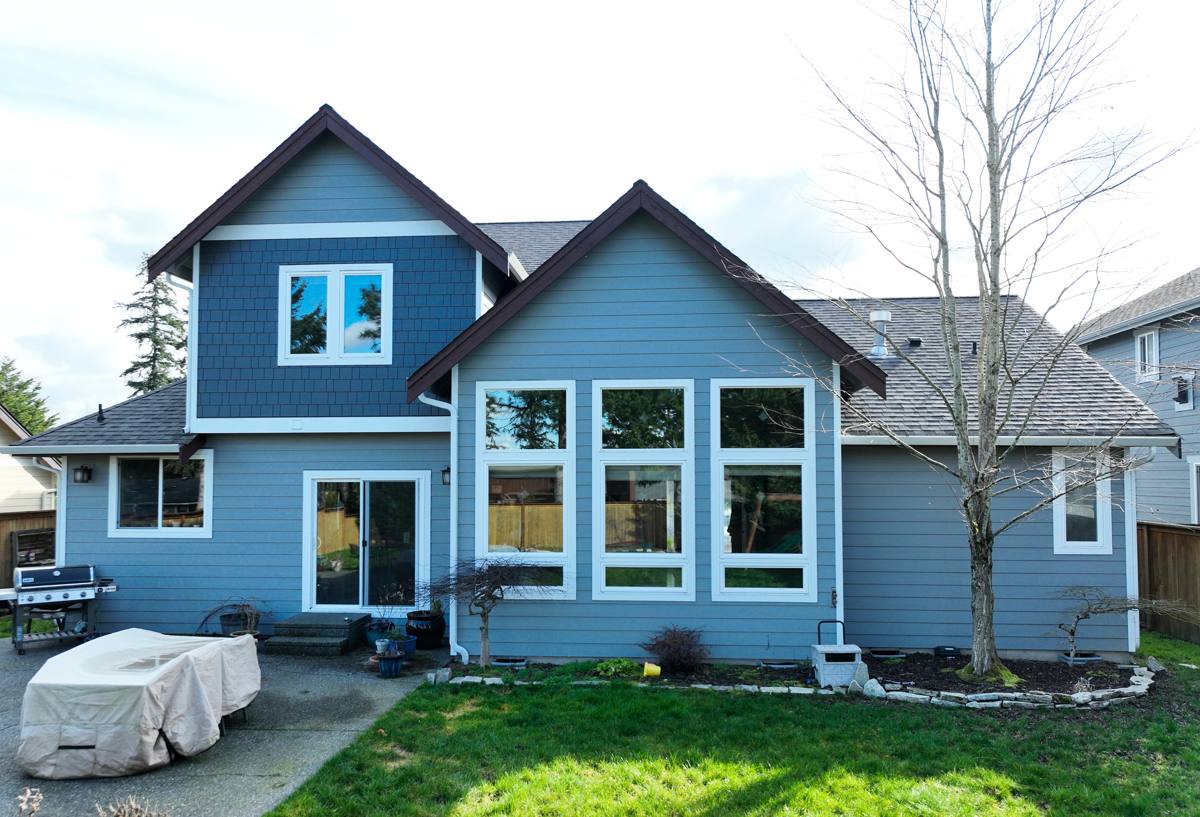
What Bellingham's Climate Does to Vertical Siding
Bellingham sits close enough to the water that salt-laden air is a constant, not an occasional event. Combine that with the region's driving rain — often blown sideways by wind off the bay rather than falling straight down — and a long, damp moss season that can stretch from fall through spring, and you have a climate that's genuinely tough on exterior materials.
Vertical siding profiles like board and batten see this more acutely than horizontal lap siding in a few specific ways:
- Batten seams run with the water flow. Every vertical seam is a potential path for wind-driven rain to track down the wall. If the batten spacing, fastening, and underlying flashing aren't done correctly, water finds its way behind the boards instead of running off them.
- North-facing and shaded walls hold moisture longer. Bellingham's tree cover and long overcast stretches mean some elevations rarely get direct sun to dry out. That's where moss and mildew take hold first, and where the siding material's own moisture tolerance matters most.
- Salt air accelerates fastener and finish breakdown. Cheaper coatings and uncoated fasteners corrode faster this close to Bellingham Bay. Corroding fasteners eventually stain the face of the siding and lose their grip.
None of this means vertical siding is a poor choice for the area — it's a good one, when the product and the installation both account for these conditions.
Why We Install Board & Batten Only in James Hardie
Board and batten is traditionally a wood profile, and it's still commonly sold in cedar, primed spruce, or engineered wood products. We don't install any of those here, and the reasoning is specific to what board and batten asks of a material in a climate like Bellingham's.
Wood-based battens and boards move with moisture — they swell, shrink, and can cup or split as they cycle through wet Whatcom County winters and drier summers. That movement stresses the caulk lines and fasteners that are supposed to keep water out at every seam. Once a seam opens even slightly, moss spores and standing moisture get behind the siding, and a vertical profile makes that hard to spot until the damage has already started.
James Hardie fiber cement doesn't share that weakness. It's dimensionally stable across wet and dry cycles, which means the seams that make board and batten work stay tight over the long haul instead of loosening year over year. It's also non-combustible, holds paint and factory finish far longer than wood, and doesn't feed moss and mildew the way untreated or lightly primed wood surfaces do. For a profile that depends entirely on tight seams and stable boards to keep water out, that stability isn't a nice-to-have — it's the whole point.
What Correct Board & Batten Installation Involves
The board and batten look is simple. The water management behind it is not. A correctly installed system has several layers working together, and skipping any one of them is where most vertical siding failures start.
Weather-Resistive Barrier and Rainscreen
Behind every board, there should be a code-compliant weather-resistive barrier, and in most of our Bellingham installations we build in a rainscreen gap — a small air space between the barrier and the siding. That gap lets any moisture that does get past the face of the siding drain and dry out instead of sitting against the wall sheathing. Given how much rain this area sees, we treat this as standard practice rather than an upgrade.
Flashing at Every Penetration
Windows, doors, hose bibs, light fixtures, and any other wall penetration need proper flashing integrated with the weather barrier before a single board goes up. Vertical siding makes flashing mistakes more visible over time, since water tracking down a batten seam will find any gap in the flashing below it.
Fastener Placement and Spacing
James Hardie publishes specific fastening schedules for vertical applications — nail size, spacing, and placement relative to the board edge all affect how well the panel holds up to wind load and moisture cycling. Coastal exposure also means we use corrosion-resistant fasteners rated for the conditions, not just whatever's fastest to run.
Caulking and Sealant at Seams
Batten-to-board and board-to-trim seams get sealed with a quality, paintable exterior sealant rated for the movement and moisture exposure typical here. This is a small step that gets skipped on rushed jobs, and it's one of the first places water gets in when it's missed.
Factory Finish, Not Field Paint
We install James Hardie's ColorPlus factory-applied finish wherever possible rather than field-painting after installation. The factory finish is baked on under controlled conditions and holds color and adhesion far longer than a coat applied on-site in variable weather — which matters in a climate where you don't always get a long dry window to paint correctly.
Our Process for a Bellingham Board & Batten Project
- On-site assessment. We look at wall orientation, existing moisture damage, tree cover, and drainage around the foundation — all of which affect how the new siding needs to be detailed.
- Water management plan. Before boards are ordered, we map out flashing details, rainscreen approach, and how the new siding will interface with roof lines, trim, and existing penetrations.
- Material and color selection. We walk through James Hardie's HZ10 product line (built for climates like ours) and ColorPlus finish options so the final look matches the home and the neighborhood.
- Tear-off and prep. Old siding comes off, sheathing is inspected and repaired as needed, and the weather barrier goes on correctly the first time.
- Installation to manufacturer spec. Battens and boards go up following James Hardie's fastening and clearance requirements for vertical siding, with flashing and sealant integrated at every seam and penetration.
- Final walkthrough. We review the finished job with the homeowner, including care and maintenance basics specific to a vertical profile in a wet climate.
Why Hiring a Crew That Already Works Bellingham Matters
Board and batten forgives fewer mistakes than lap siding, and the mistakes that do happen are often invisible until moisture has already worked its way behind the wall. A crew that's already installed vertical siding across Whatcom County knows which elevations in this area need extra attention to shade and moss exposure, how much rainscreen gap actually makes a difference in local storms, and where salt air tends to shorten the life of cheaper fasteners and trim.
That local pattern recognition is hard to substitute with a generic installation guide. It shows up in small decisions — where to add extra flashing, which walls need a wider rainscreen cavity, how tight to run batten spacing given the wood movement of the trim it ties into — that add up to a wall system that actually holds up here.
Board & Batten vs. Other Siding Profiles: A Quick Comparison
| Factor | Board & Batten (Vertical) | Lap Siding (Horizontal) |
|---|---|---|
| Visual style | Modern, farmhouse, craftsman accent walls | Traditional, widely used across all styles |
| Water shedding | Depends heavily on seam detailing and rainscreen | Naturally sheds water via overlap |
| Best material fit | Dimensionally stable material (fiber cement) strongly preferred | Performs well in wood or fiber cement, though fiber cement still outlasts wood |
| Installation sensitivity | Higher — flashing and fastening precision matters more | Moderate — more forgiving profile overall |
| Common local use | Accent walls, gables, full-home modern builds | Full-home siding, most common default |
Cost Factors for Board & Batten in This Area
Every home is different, but a few factors tend to move the price on Bellingham projects specifically:
- Wall height and complexity. Multi-story homes and steep rooflines with lots of cut angles take more labor per square foot.
- Existing siding removal. Tear-off of old wood or vinyl, plus any sheathing repair from moisture damage, adds time before new siding can go up.
- Rainscreen and flashing scope. Homes on more exposed or shaded lots may warrant a more robust water management build-out, which adds material and labor.
- Trim and batten spacing chosen. Tighter batten spacing and wider trim boards use more material per square foot than a standard layout.
- Accent vs. full-home application. Board and batten used as a gable or entry accent costs less overall than a full elevation or whole-home application.
We provide a detailed, itemized estimate before any work starts, so there are no surprises once the crew is on site.
Maintenance Checklist for Bellingham Homeowners
James Hardie board and batten is low-maintenance compared to wood, but "low-maintenance" isn't "no-maintenance" in a climate this wet. A simple annual routine goes a long way:
- Rinse the siding down once or twice a year to clear pollen, salt residue, and early moss growth before it takes hold.
- Walk the exterior each fall and spring looking for gaps in caulking at seams, trim, and penetrations.
- Keep gutters clear and downspouts directed away from the wall — overflow onto siding is one of the most common causes of premature moss and staining.
- Trim back vegetation and tree limbs that keep a wall section shaded and damp longer than the rest of the house.
- Note any soft spots, discoloration, or peeling near the base of the wall and have them checked promptly — caught early, these are simple fixes.
Get a Straight Answer for Your Home
If you're considering board and batten siding for a home in Bellingham, we're happy to take a look, walk you through what your specific walls need given their sun exposure and drainage, and give you a clear, itemized estimate — no pressure, no upsell. Use the form below to get started.