 Ferndale
 Siding Replacement for Sumas Homes
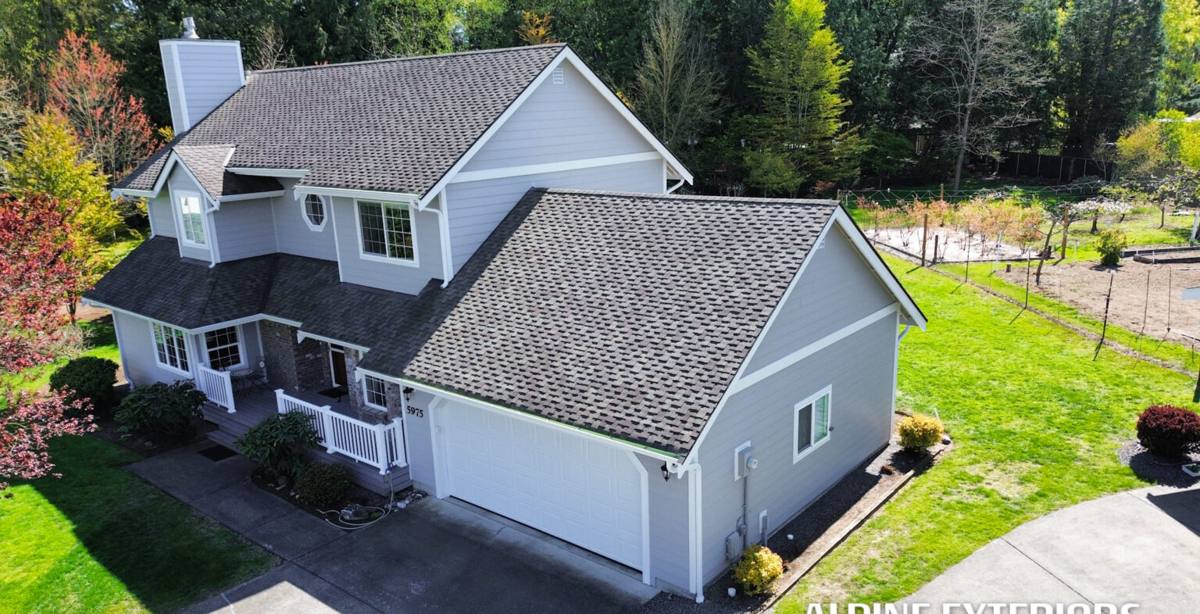
Sumas is one of the communities we cover out of Ferndale, and it's a different property type than most of what sits closer to Bellingham Bay. Homes here tend to sit on flatter, low-lying ground near the Canadian border, often with more open exposure than a sheltered in-town lot. The weather that shapes every siding job in Whatcom County still applies — driving rain that comes in at an angle instead of straight down, salt-laden air that reaches further inland than most homeowners assume, and a moss season that runs for most of the year on shaded and north-facing walls. On a Sumas property, that combination has fewer natural windbreaks to soften it. We install James Hardie fiber cement siding exclusively, and this page walks through what a full siding replacement actually involves for a home in this area, not just why we recommend the product.
What This Climate Asks of Sumas Siding
Rain That Doesn't Fall Straight Down
Wind-driven rain is the detail that separates a siding job that lasts from one that fails early. Water pushed sideways into a wall finds any seam, lap joint, or fastener penetration that isn't detailed correctly, and on an exposed valley lot the wind has fewer trees and neighboring structures to slow it down before it hits the house. Siding that's simply nailed up and caulked at the edges tends to show its weak points here faster than it would on a more sheltered site.
A Moss Season That Doesn't Really End
Consistent moisture and mild temperatures mean moss and mildew growth is active across most of the calendar in this part of the county, not just in the wettest winter months. It shows up first on shaded walls and anywhere siding stays damp longer than it should. Left alone, that growth holds water directly against the wall surface, which is a slow but real path toward hidden rot underneath.
Salt Air Reaching Further Than Expected
Salt exposure isn't limited to waterfront property. It travels on the wind and settles on siding, trim, and fasteners well inland from the shoreline, gradually breaking down factory finishes and accelerating corrosion on anything metal. It's a slower process than wind-driven rain damage, but it's part of why we pay attention to fastener quality and finish durability on every job we quote in this area, not just the ones closest to the water.
What a Correct Siding Replacement Actually Involves
Tear-Off, Not Overlay, in Most Cases
Installing new siding directly over old siding is faster and cheaper, and it's also how existing moisture problems get sealed in rather than solved. On most full replacements we recommend a complete tear-off, because it's the only way to actually see the sheathing, framing, and any trapped moisture underneath before covering it back up. An overlay might save a homeowner money upfront, but on a home with any history of water intrusion it usually just delays a bigger repair.
What's Underneath Matters More Than What's On Top
Once the old siding is off, the sheathing tells the real story. Soft spots, staining, or discoloration point to moisture that's been getting in for a while, sometimes long before it showed up as a visible problem on the outside. Any damaged sheathing gets replaced before new siding goes on — installing a premium product over compromised sheathing just moves the same problem a few years down the road.
Flashing and Drainage Behind the Siding
The siding itself is only part of the water management system. A correctly installed weather-resistive barrier, properly lapped and sealed flashing at every window, door, and penetration, and a drainage plane that lets any moisture that does get past the surface actually escape and dry — these details do more to determine how a wall performs over twenty years than the visible siding product does. On an exposed lot taking regular wind-driven rain, cutting corners here is where problems start.
Our Siding Replacement Process
- On-site assessment. We walk the exterior, look at current siding condition, check trim and flashing, and get a sense of what's likely underneath before we ever write a number.
- Written scope and product selection. You get a clear scope of work and a specific James Hardie product recommendation for your home, not a vague allowance.
- Site prep and protection. Landscaping, walkways, and anything near the work area gets protected before tear-off starts.
- Tear-off and sheathing inspection. Old siding comes off, and we inspect and photograph the sheathing before anything new goes up.
- Repairs, then house wrap and flashing. Any damaged sheathing or framing gets addressed first, followed by a correctly installed weather-resistive barrier and flashing at every opening.
- Siding installation. Hardie siding goes on to manufacturer spec, with fastening patterns and clearances set for this area's wind and moisture exposure.
- Trim, caulking, and final details. Corner boards, trim, and sealant get finished to match the product's factory look, not just closed up quickly.
- Final walkthrough. We go over the finished job with you and answer any questions before calling it done.
Repair, Partial Replacement, or Full Re-Side?
Not every siding problem on a Sumas home needs the same scope of work. Here's how we generally think through it:
| Situation | What It Usually Means | Typical Approach |
|---|---|---|
| One or two damaged boards, impact or wind damage | Localized failure, surrounding siding is sound | Repair and match into existing Hardie siding |
| Consistent staining or soft spots on one wall face | Moisture intrusion isolated to a specific exposure | Section replacement with sheathing inspection in that area |
| Aging non-Hardie siding nearing end of service life | Material is original to the home and no longer performing | Full re-side, typically with tear-off |
| Multiple wall faces showing rot, warping, or paint failure | Widespread moisture intrusion, likely affecting sheathing | Full tear-off and replacement, with framing repair as needed |
We'll tell you honestly which category your home actually falls into rather than defaulting to the largest scope of work.
Why James Hardie Fiber Cement Fits This Job
We standardized on one siding system, and for a property dealing with sustained wind-driven rain, reaching salt exposure, and a long moss season, the case holds up:
- Non-combustible core: Fiber cement doesn't burn or feed a fire the way wood-based siding can.
- Factory-applied ColorPlus finish: Baked on under controlled conditions rather than field-applied, it resists the fading and breakdown that salt air and UV exposure accelerate in site-painted finishes.
- Climate-engineered HZ formulation: Built for regions with sustained moisture and freeze-thaw cycling rather than a generic, one-size-fits-all mix.
- Dimensional stability: It doesn't swell, cup, or warp through repeated wet-season cycles the way engineered wood products can.
- Transferable warranty: Real coverage backing the material when it's installed to spec, not just a marketing line.
We don't install LP SmartSide, vinyl, Cemplank, Allura, primed spruce, or cedar. Each has its place in the broader market, but we made a professional decision to stand fully behind one system rather than offer several and hedge on which one actually holds up here.
Why a Crew Already Working Sumas Matters
A contractor who works this area regularly has already seen how these houses perform through a full wet season, not just how a product looks on a spec sheet. That shows up in practical decisions: which wall orientations on an open, low-lying lot take the worst of the wind-driven rain, where extra flashing attention actually pays off, and how to schedule tear-off work around this region's weather windows so a home isn't left exposed longer than necessary. It also means fewer surprises with permitting and inspection timelines specific to this part of Whatcom County. That familiarity doesn't replace a careful, site-specific assessment of your particular home, but it does mean fewer avoidable mistakes on install day.
Signs a Sumas Home May Need Siding Replacement
- Visible cracking, warping, or bubbling on siding boards
- Persistent moss, mildew, or dark staining that returns quickly after cleaning
- Soft spots when pressing gently on siding near the base of the wall
- Paint that's peeling, chalking, or failing faster than it should
- Gaps opening up at seams, corners, or around window and door trim
- Rising energy bills that suggest the wall assembly isn't sealing the way it used to
If you're seeing one or more of these on your Sumas home, it's worth having someone take a real look before the next wet season adds to the damage. We're glad to walk the property and give you a straight, no-pressure assessment — use the form below to schedule a free estimate.