 Ferndale
 Building a Deck That Holds Up in Everson's Wet Side of the Valley
Everson sits in the Nooksack River valley, a stretch of Whatcom County where damp ground, shaded tree lines, and long stretches of overcast weather are just part of life. A deck built here doesn't fail the way a deck fails in a dry climate. It fails from the bottom up and from the inside out — moisture that gets trapped where it shouldn't be, wood that never fully dries between rain events, and hardware that corrodes years before the lumber around it gives out. Driving rain off the valley, a long moss season, and humid air that lingers under tree cover all add up over a few winters if a deck wasn't built with that in mind from the start.
We build and repair decks across Ferndale and the surrounding Whatcom County communities, including Everson, and the approach doesn't change: treat the connection points, manage the water, and use materials that match how this ground actually behaves through a wet fall and winter.
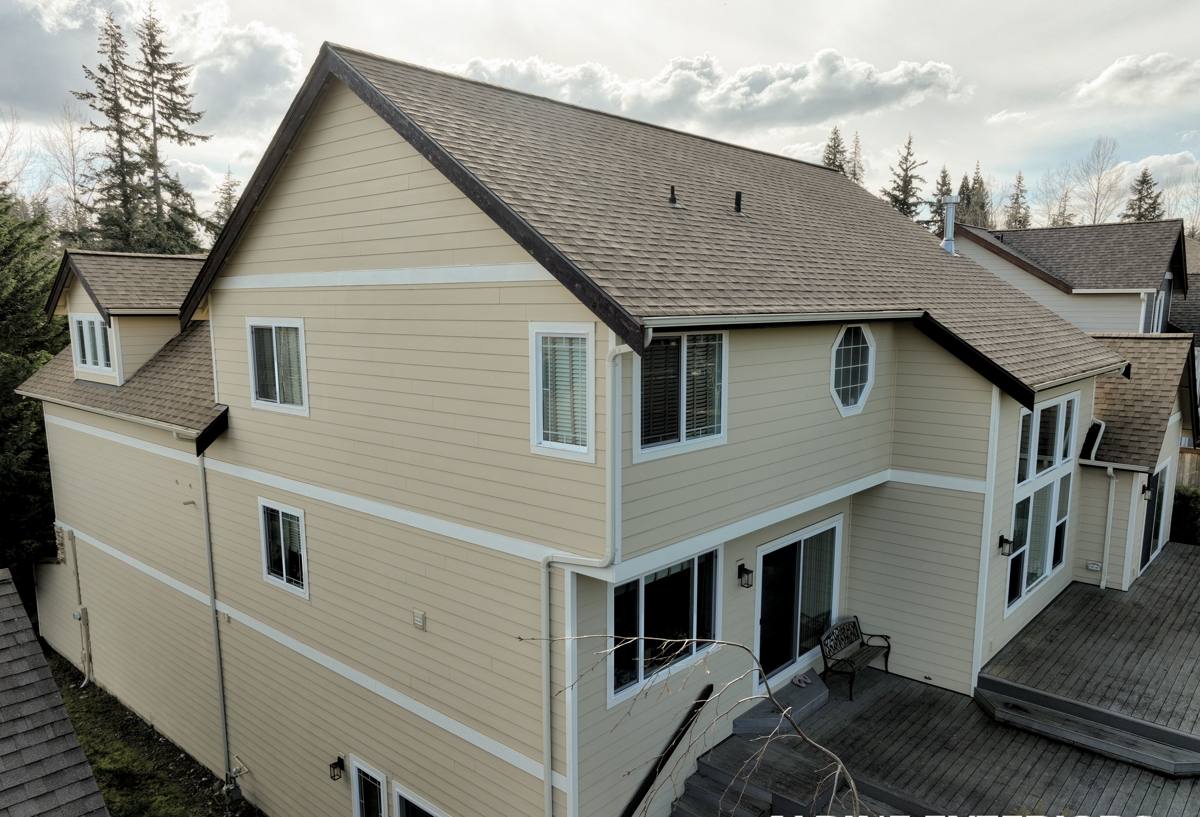
What a Correct Deck Build Looks Like Here
The Ledger Connection — Where Siding Knowledge Matters
Most deck failures we get called out to inspect don't start in the decking boards — they start at the ledger board, the piece that bolts the deck to the house. If that connection isn't flashed correctly, water works its way behind the ledger and into the house's rim joist and wall framing, often for years before anyone notices a soft spot. This is the same moisture-management work we do every day as a siding contractor: proper flashing laps, a drainage gap behind the ledger, and sealing that doesn't trap water against wood. A deck builder who doesn't also work on siding and water intrusion day-to-day can get the framing right and still miss this — and it's the single most common source of hidden rot we find on older decks in this area.
Footings and Framing
Footings need to sit below frost depth and bear on solid, undisturbed soil — something worth checking carefully on properties with softer or seasonally saturated ground near the valley floor. Joists should be spaced to match the decking material (composite generally wants tighter spacing than solid wood), and every cut end and notch on treated lumber needs to be re-sealed, since factory treatment doesn't penetrate a fresh cut. Skipping that step is a common shortcut, and it's exactly where rot starts first.
Material Choices for Everson's Climate
There's no single "right" decking material — it's a trade-off between upfront cost, how much upkeep you're willing to do, and how the material behaves in a place that stays damp for months at a stretch. Here's how the common options compare for a property in this area:
| Material | Upfront Cost | Moisture & Moss Behavior | Maintenance |
|---|---|---|---|
| Pressure-treated lumber | Lowest | Handles moisture well if sealed and re-sealed regularly; moss and algae grow on the surface without upkeep | Annual cleaning and re-sealing recommended |
| Cedar | Mid-range | Naturally rot-resistant, but graying and surface softening happen faster in constant shade or damp pockets | Periodic cleaning and oiling to keep its look and performance |
| Composite decking | Highest | Doesn't absorb moisture or feed rot, but can still grow surface moss/mildew in shaded, low-airflow spots | Occasional washing; no sealing or staining needed |
Composite has become the common choice for decks that get heavy shade or sit close to grade, simply because it removes moisture absorption from the equation. That said, plenty of solid wood decks in Everson last well past a decade when they're built with real drainage underneath and the owner keeps up with sealing on a normal schedule. The material matters less than whether the deck was built to let water leave — that's true no matter which surface you pick.
Moss, Mildew, and Drainage — Keeping the Deck Dry From Underneath
A long moss season doesn't just affect roofs and siding. Any deck surface that stays shaded and damp for weeks at a time will grow moss and algae, and on wood that moisture holds against the grain instead of shedding off. A few things make a real difference:
- Consistent gapping between boards so water drains through instead of pooling on the surface
- Open airflow underneath the deck rather than skirting that traps ground moisture against the framing
- Joist tape or a protective cap on top of framing lumber, so standing water doesn't sit directly on exposed wood
- Grading and drainage around and under the deck so water moves away from the house rather than collecting under the structure
- Keeping nearby trees and shrubs trimmed back enough that the deck surface actually gets some sun and airflow
None of this is exotic — it's basic water management, the same principle behind good siding and good roofing. A deck that can't shed water and dry out between storms is on a shorter clock, no matter what it's built from.
Permits, Codes, and Inspections in Whatcom County
Most attached decks and any deck built above a certain height require a permit through Whatcom County, along with an inspection of the footings and framing before decking goes down and a final inspection once railings and stairs are complete. Stair rise and run, railing height, and baluster spacing are all governed by code — not style preferences — and they get checked. Skipping the permit step is tempting on a smaller project, but it can create real problems at resale, since an unpermitted structure attached to the house is something a home inspector will flag. We handle the permit process as part of the job rather than leaving it for the homeowner to sort out.
Our Process From First Call to Finished Deck
- On-site assessment — we look at the house connection point, the ground and drainage, sun/shade exposure, and what you actually want to use the space for.
- Design and material selection — sizing, layout, railing style, and a material choice that fits your budget and how much maintenance you want to take on.
- Permitting — we prepare and submit what Whatcom County requires and schedule inspections at the right points in the build.
- Framing and ledger flashing — footings, joists, and the critical ledger-to-house connection, flashed and sealed correctly the first time.
- Decking, railing, and finish work — hardware, fasteners, and finish details matched to the material.
- Final walkthrough — we go over care and maintenance for whatever material you chose so it holds up the way it's supposed to.
Why a Crew That Already Works in Everson Makes a Difference
A deck built to a generic set of plans doesn't automatically account for how this valley behaves — ground that stays soft longer into the spring, framing that needs to dry between storms during a build, and scheduling that has to work around a wetter stretch of the calendar than a lot of the country deals with. Working regularly in Everson and the rest of Whatcom County means we're not guessing at frost depth, soil conditions, or how the county's permitting and inspection process runs — we already know it, and that keeps a project moving instead of stalling on paperwork or rework. It also means the same crew that flashes your deck ledger correctly can look at the siding around it and catch a problem — a gap, a failing seal, a spot already holding moisture — before it becomes a bigger repair.
Keeping Your New Deck in Good Shape
A well-built deck still needs some attention from the owner. Watch for these signs, especially heading into the wetter months:
- Standing water on the surface that doesn't drain within a few hours of rain stopping
- Soft or spongy spots anywhere in the decking, especially near the house connection
- Moss or algae building up faster than a normal cleaning schedule can keep up with
- Rust streaks around fasteners, which usually means the wrong hardware was used
- Gaps opening up at the ledger board or flashing pulling away from the siding
- Railings or stair stringers that feel loose or have visible movement
Catching any of these early is a small fix. Left through another wet season, they turn into structural work.
If you're planning a new deck or want an honest look at one that's already showing its age, we're glad to come take a look. The estimate is free, there's no pressure attached to it, and you'll get a straight answer about what your property actually needs — just fill out the form below to get started.