 Ferndale
 Windows Built for Sumas' Version of Northwest Weather
Homes in and around Sumas deal with a specific combination of weather stress that doesn't show up the same way everywhere in Whatcom County. You get long stretches of driving rain pushed sideways by wind, salt-tinged air moving in off the Sound and Strait on certain wind patterns, and a moss season that can stretch from fall through spring. None of that is dramatic on any single day. It's the accumulation — months of moisture sitting against glazing, sills, and trim — that eventually finds the weak point in a window system.
Older windows, or windows that were installed correctly for a drier climate but never sealed and flashed for this one, tend to fail quietly. You won't usually see a leak on day one. You'll see a soft spot in the sill two years later, a musty smell in a bedroom corner, or a window that's suddenly hard to latch because the frame has swollen. Custom window work in this area isn't about picking a prettier window — it's about matching the window, the flashing, and the installation method to what Sumas weather actually does to a house over time.
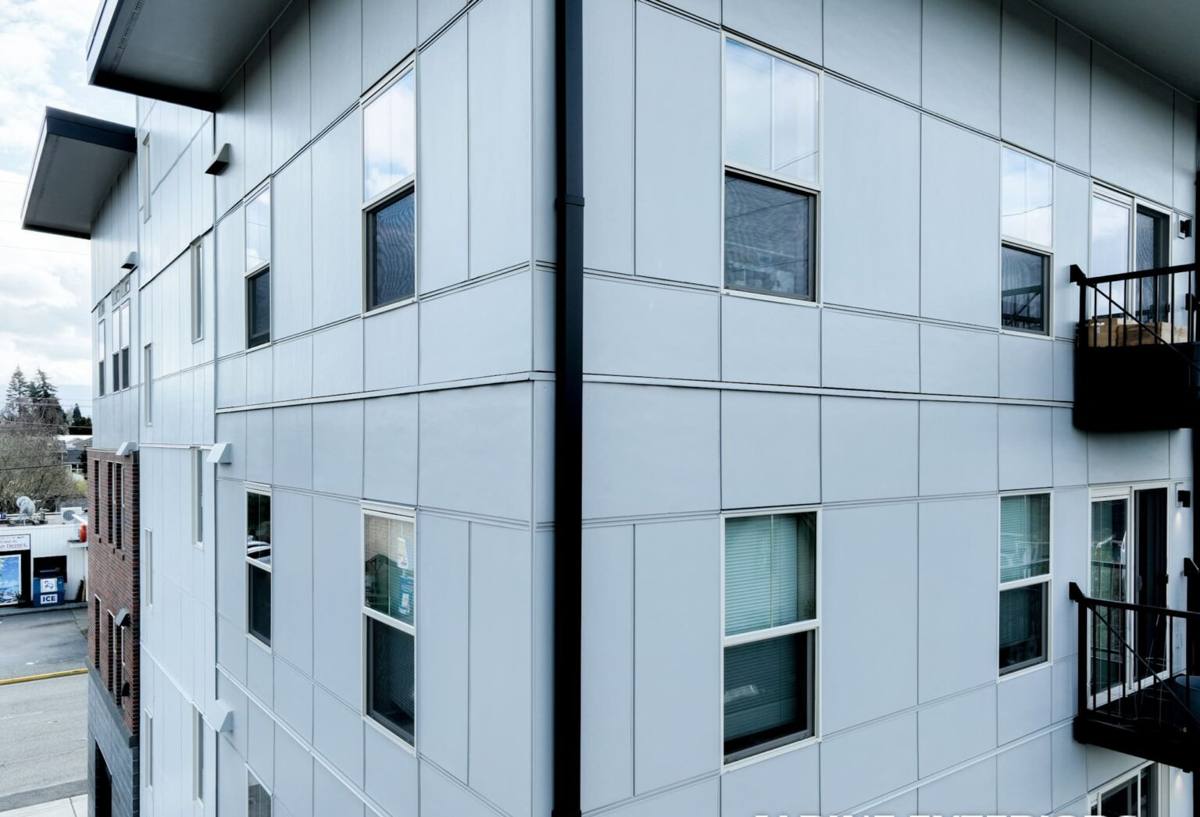
What "Custom" Actually Means Here
"Custom windows" gets used loosely in the industry, so it's worth being specific about what it means on a real job in this area. It's rarely about exotic shapes or one-off designs, though we do those when a home calls for it. Most of the time, custom means:
- Windows sized to the actual rough opening instead of forcing a stock size and packing the gaps with extra shim and caulk
- Frame material and glazing chosen for the specific exposure of that wall — a west-facing wall catching weather off the water needs different consideration than a sheltered north wall
- Flashing and drainage details built around your home's existing wall assembly, not a generic install method
- Trim, casing, and interior finish matched to the age and style of the house instead of a mismatched off-the-shelf profile
On older Whatcom County homes especially, rough openings are rarely square or uniform, even from window to window on the same wall. Custom measurement and fitting is what keeps a new window from having the same failure points as the one it replaced.
Signs Your Current Windows Are Working Against You
Most homeowners call us after noticing one or two of these, not because they were shopping for new windows in general. Here's what tends to show up first in this climate:
- Fogging or condensation between panes — a sign the seal on a double- or triple-pane unit has failed
- Soft, discolored, or spongy wood at the sill or bottom corners of the frame
- Visible moss or dark streaking on the exterior trim above or beside the window
- Drafts you can feel with a hand near the frame on a windy day
- Windows that stick, won't latch fully, or have started sagging in the sash
- A musty smell near the window that wasn't there before, especially after a wet stretch
- Paint or caulk that's cracking and pulling away from the frame faster than it should
Any one of these on its own might just need a repair. Several of them together, especially on windows original to the house, usually mean the whole assembly — glass, frame, and flashing — is past the point where patching makes sense.
Frame Material Options and How They Hold Up Locally
There's no single "best" window material — the right choice depends on the exposure, the home's style, and how much upkeep you want to take on. Here's how the common options actually perform under this region's conditions:
| Material | Moisture & Salt Air Performance | Maintenance | Typical Fit |
|---|---|---|---|
| Vinyl | Good — won't rot or corrode, handles humidity well | Low — occasional cleaning | Most Sumas-area homes, especially budget-conscious full replacements |
| Fiberglass | Very good — dimensionally stable in temperature and moisture swings | Low | Homes wanting a narrower sightline or a paintable finish, higher exposure walls |
| Wood (clad exterior) | Depends heavily on installation and finish upkeep; exterior clad protects the wood from direct weather | Moderate to high — interior wood and any exposed trim need attention | Older or character homes where matching original wood trim matters |
| Aluminum | Prone to condensation and eventual corrosion in salt-influenced air unless thermally broken | Moderate | Limited use here; we typically steer away from it for primary living-space windows in this climate |
We don't push one material on every job. A sheltered window under a deep eave has different needs than one facing open weather with nothing to break the wind and rain. Part of a proper custom job is walking the exterior with you and matching material to each wall's actual exposure, not applying one blanket spec to the whole house.
How We Approach a Window Installation Here
The window itself is only part of what determines whether it lasts. Installation quality is what actually decides whether Sumas' rain and moisture stay outside. Our process on a typical replacement or new install:
- On-site assessment. We check the rough opening, existing flashing, sill condition, and any signs of past water intrusion before recommending anything.
- Precise measurement. Every opening is measured individually — older homes especially can have openings that vary by a half inch or more from window to window.
- Removal and opening inspection. Once the old window is out, we inspect the framing and sheathing underneath. This is often where hidden rot or old flashing failures turn up, and it needs to be addressed before the new window goes in, not covered over.
- Flashing and drainage plane integration. We tie the new window's flashing into the existing weather-resistive barrier so water is directed out and down, not trapped behind the siding.
- Setting, shimming, and sealing. The window is leveled, plumb, and shimmed at the correct load points, then sealed with materials suited for this climate's moisture cycle — not just caulked around the edges.
- Interior and exterior finish work. Trim, casing, and any paint or caulk touch-up are completed to match the surrounding wall.
- Final check. We test operation, look for gaps or drafts, and walk the job with you before calling it done.
Why Flashing and Moisture Management Matter More Than the Window Brand
We say this to nearly every homeowner we work with: a mid-range window installed correctly will outperform a premium window installed poorly. In a climate with as much sustained wet weather as Whatcom County gets, the flashing detail — how water is directed away from the opening and down the wall rather than behind it — is doing more long-term work than the glass package.
This is also why we're cautious about products or installation shortcuts that rely heavily on caulk alone as a water barrier. Caulk is a maintenance item, not a permanent seal, and in a climate with this much annual rainfall, a window system that depends on caulk staying perfect year after year is a system that's going to fail eventually. We build in mechanical flashing and proper drainage so that if a bead of sealant does eventually crack, the wall assembly still sheds water correctly behind it.
What Affects Cost on a Sumas-Area Window Project
Every home is different, so we don't quote sight-unseen, but these are the factors that typically move a project's cost up or down:
| Factor | Why It Matters |
|---|---|
| Number and size of openings | More straightforward math, but larger custom sizes and shapes cost more per unit |
| Frame material | Vinyl is generally the most economical; fiberglass and clad wood run higher |
| Condition behind the old window | Hidden rot or old water damage found during removal adds repair scope |
| Access and wall height | Second-story or hard-to-reach windows take more time and equipment |
| Trim and finish complexity | Matching historic profiles or custom interior casing adds labor |
| Full-frame vs. insert replacement | Full-frame replaces the flashing and frame entirely; inserts are faster but depend on the existing frame being sound |
We'll always tell you honestly if an insert replacement is a bad idea for a given window — usually because the existing frame or sill already has moisture damage that an insert would just seal over.
Permits, Timing, and Weather Windows
Depending on scope, window replacement in Whatcom County may or may not require a permit — that generally depends on whether structural framing is being altered, not just swapping window units within an existing opening. We handle that determination and any paperwork as part of the job so you're not left guessing.
Timing matters more here than in drier regions. We plan installs around the weather rather than a fixed calendar, because an opening left exposed during a driving rain event is exactly the scenario that causes hidden damage. That usually means shorter installation windows are scheduled around forecasted dry stretches, and multi-window jobs are sequenced so no more openings are open at once than we can close out the same day.
Why Hiring a Crew That Already Works in This Area Matters
A contractor unfamiliar with Whatcom County conditions can install a window correctly by general standards and still have it underperform here, simply because the flashing detail or material choice wasn't matched to the actual exposure this region sees. Crews who work Sumas and the surrounding Ferndale-area communities regularly have already seen how different wall orientations, older home construction, and this climate's rain and moss patterns interact over time. That experience shows up in the small decisions — how deep the flashing laps, which sealant actually holds up through a wet winter, when to recommend full-frame replacement instead of an insert — that don't show up on a spec sheet but decide whether the window is still performing well in ten years.
If your windows are showing any of the signs above, or you're planning ahead for a home that's due, we're happy to take a look and give you a straightforward assessment — no pressure, no upsell. Reach out for a free estimate using the form below and we'll walk through what your home actually needs.