 Ferndale
 Roof Repair Built for Semiahmoo's Coastal Exposure
Semiahmoo sits out on its own spit along the Strait of Georgia, and that location comes with a roofing reality most inland Whatcom County homes never have to deal with: salt-laden air, wind-driven rain off the water, and a moss season that runs longer than almost anywhere else in the county. A roof here takes a different kind of beating than one a few miles inland in Ferndale or Blaine proper, and repairing it correctly means understanding that difference before a single shingle gets touched.
We work on homes across Whatcom County, but Semiahmoo's waterfront and near-waterfront properties get a specific set of problems on repeat: corroded fasteners and flashing, wind-lifted shingle edges, and moss-driven rot in shaded, north-facing roof sections. This page covers what that means for a repair job done right, and what our process looks like when we're called out to fix it.
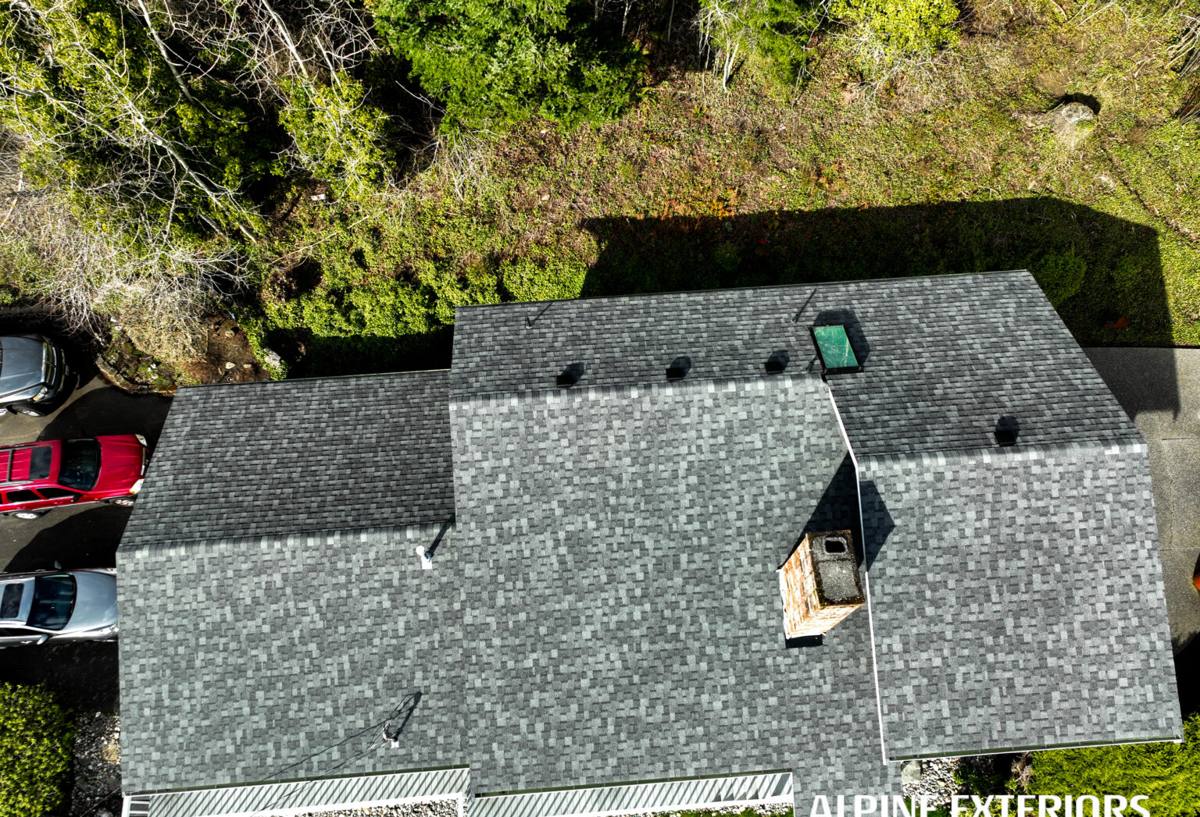
Why Salt Air Changes the Repair Calculus
Airborne salt doesn't just sit on a roof's surface — it works into every metal component over time. On a typical repair call in Semiahmoo, the fasteners, flashing, and drip edge are often further along in corrosion than the shingles or panels themselves would suggest from the ground. That matters because a repair that only addresses the visible leak or missing shingle, without checking the metal underneath, tends to fail again within a season or two.
What Salt Exposure Actually Does
- Accelerates rust on exposed nail heads and staples, which eventually lets shingles work loose in wind
- Pits and thins galvanized flashing around chimneys, vents, and roof-to-wall transitions faster than in inland areas
- Breaks down sealant and caulk bonds around penetrations sooner than manufacturer timelines assume
- Can discolor and slowly degrade certain metal roofing finishes if the wrong alloy or coating was used originally
None of this means a Semiahmoo roof needs replacing every few years — it means repairs need to look past the symptom and check the fasteners and flashing nearby, not just patch the one spot that's visibly failing.
Wind-Driven Rain: The Other Half of the Problem
Semiahmoo's exposure to open water means storms arrive with more sustained wind than a sheltered inland lot sees, and that wind pushes rain sideways and upward under roof edges, ridge caps, and shingle tabs. A roof that would shed water fine in a straight-down rain can still take on water during a Strait of Georgia blow if the seal at the eaves, ridge, or valleys has weakened.
This is why we pay close attention to a few specific areas on every Semiahmoo repair call:
- Ridge caps — the highest-wind-exposure point on the roof, and often the first place sealant fails
- Valleys — where water volume concentrates and any gap becomes a real leak path fast
- Eaves and rake edges — the entry points for wind-driven rain pushed sideways under the shingle line
- Roof-to-wall and chimney flashing — transitions where two materials meet and movement over time opens small gaps
A repair that ignores wind exposure and just replaces a shingle or two in isolation often misses the actual entry point, because wind-driven leaks frequently show up several feet away from where water is entering.
Moss: A Longer Season Here Than Most of the County Sees
Whatcom County's marine climate already favors moss growth, but Semiahmoo's shaded, moisture-holding microclimate near the water tends to push the moss season a little longer and a little heavier than what we see on more open, sun-exposed roofs elsewhere in Ferndale. Moss isn't just cosmetic — it holds moisture against the roof surface for extended periods, and on shingle roofs it works up under tab edges as it grows, lifting them and creating a path for water.
Where Moss Does the Most Damage
North-facing slopes, roof sections shaded by trees or neighboring structures, and low-slope areas that don't dry out quickly are where we find the worst moss-related deterioration. By the time moss is visible from the ground, it's often already caused granule loss or lifted a few shingle tabs underneath.
A proper repair addresses moss in three parts: removing the growth without damaging the roofing material underneath, treating the area to slow regrowth, and repairing any granule loss, lifted tabs, or rot the moss has already caused. Skipping any one of those three means the same repair call again in a year or two.
What a Correct Repair Actually Involves
A roof repair is only as good as the diagnosis behind it. Here's the sequence we follow on every job:
- Full roof inspection, not just the reported leak spot — because leaks travel along the roof deck before showing up inside, the visible damage and the actual entry point are often not the same location.
- Check fasteners and flashing near the repair area — given how salt air accelerates corrosion here, we look at nearby metal even if it wasn't the original complaint.
- Assess the roof deck — any area that's been leaking for a while needs a check for soft, rotted, or delaminated decking before new material goes down, since covering rotten decking just hides the problem.
- Match materials appropriately — shingle color runs vary by manufacturing batch and age, and metal flashing needs to be compatible with what's already installed to avoid galvanic corrosion between dissimilar metals.
- Repair and reseal properly — correct nailing pattern, proper flashing laps (upper piece over lower, always shedding water downhill), and sealant rated for the exposure this location actually sees.
- Final check for wind and water resistance — a repair should hold up to the wind-driven rain this location gets, not just look right on a calm day.
Common Repair Scenarios We See in Semiahmoo
| Issue | Likely Cause | Typical Fix |
|---|---|---|
| Leak near chimney or vent | Corroded or improperly lapped flashing | Remove and replace flashing, reseal with marine-grade sealant |
| Lifted shingle tabs on north slope | Moss growth working under tab edges | Careful moss removal, replace damaged shingles, treat to slow regrowth |
| Leak after a windstorm, no obvious damage from ground | Wind-driven rain forced under ridge cap or valley | Inspect and reseal ridge/valley, replace any compromised underlayment |
| Rust streaks running down roof slope | Corroding fasteners or metal components | Replace affected fasteners and flashing, not just cosmetic cleaning |
| Soft spot or sagging near a repaired area | Underlying deck rot from a prior undiagnosed leak | Cut out and replace damaged decking before re-roofing that section |
Why It Matters That We Already Work This Area
Semiahmoo's exposure isn't something you can fully diagnose from a stock inspection checklist — it takes having actually worked roofs out here to know that a fastener corrosion pattern that would be unusual in inland Ferndale is routine near the water, or that a leak reported after a windstorm is more likely a ridge or valley issue than a shingle that's simply worn out. A crew that's repaired roofs across Whatcom County's varied microclimates brings that pattern recognition to the first inspection instead of figuring it out through trial and error.
It also means we're not guessing at material choices. We know which flashing and fastener options hold up against salt exposure and which ones become the next repair call in a couple of years, and we're upfront about that trade-off rather than installing whatever's cheapest and calling it done.
When Repair Makes Sense — and When It Doesn't
Not every roof issue in Semiahmoo needs a full replacement, and not every issue is a simple patch either. A few honest guidelines:
- If the roof deck underneath is sound and the damage is localized (a section of moss damage, one area of flashing failure, storm damage to a limited section), repair is usually the right call.
- If corrosion or moss damage has spread across multiple sections, or if the roof is near the end of its expected service life anyway, a repair may be a short-term fix that doesn't address the bigger picture — we'll tell you that directly rather than stringing along a series of repairs.
- If the roof is relatively young but showing localized wear from a specific cause (a poorly installed flashing detail, an isolated moss patch), targeted repair is almost always more cost-effective than replacement.
A Quick Homeowner Checklist
Between visits, here's what's worth keeping an eye on if you're in Semiahmoo or anywhere along this stretch of coastline:
- Rust streaking or discoloration running down from flashing, vents, or fasteners
- Visible moss, especially on north-facing or shaded slopes
- Shingle tabs that look lifted or curled at the edges, particularly after windy weather
- Water stains on interior ceilings that appear or worsen after a storm with strong wind
- Granules collecting in gutters in noticeably larger amounts than in past years
- Any soft or spongy feeling if you're able to safely check the roof deck from an attic space
Catching these early is almost always cheaper than waiting until there's active interior water damage.
Get a Straight Answer on Your Roof
If you're dealing with a leak, storm damage, or a moss problem that's gotten ahead of you in Semiahmoo, we're glad to take a look and tell you plainly what's going on — repair, monitor, or something more. There's no pressure and no charge for the estimate, just a straight assessment from a crew that already knows what this stretch of coastline does to a roof.