 Ferndale
 Building a Deck That Can Actually Handle Semiahmoo
Semiahmoo sits right where Whatcom County's coastline meets the weather that comes off the Salish Sea, and that combination is hard on outdoor structures in ways that inland decks never have to deal with. Salt-laden air, long stretches of driving rain, and a moss season that can run half the year all work against a deck at the same time. A deck built the same way you'd build one in a dry inland yard tends to show corrosion, softening wood, and slick, moss-covered boards well before it should. Building correctly for this specific location isn't an upsell — it's what keeps a deck safe and looking decent past the first few winters.
This page covers what a deck in Semiahmoo actually needs, what a correct build involves from the ground up, how we approach the work, and why local experience matters more here than in most parts of Ferndale and greater Whatcom County that sit farther from the water.
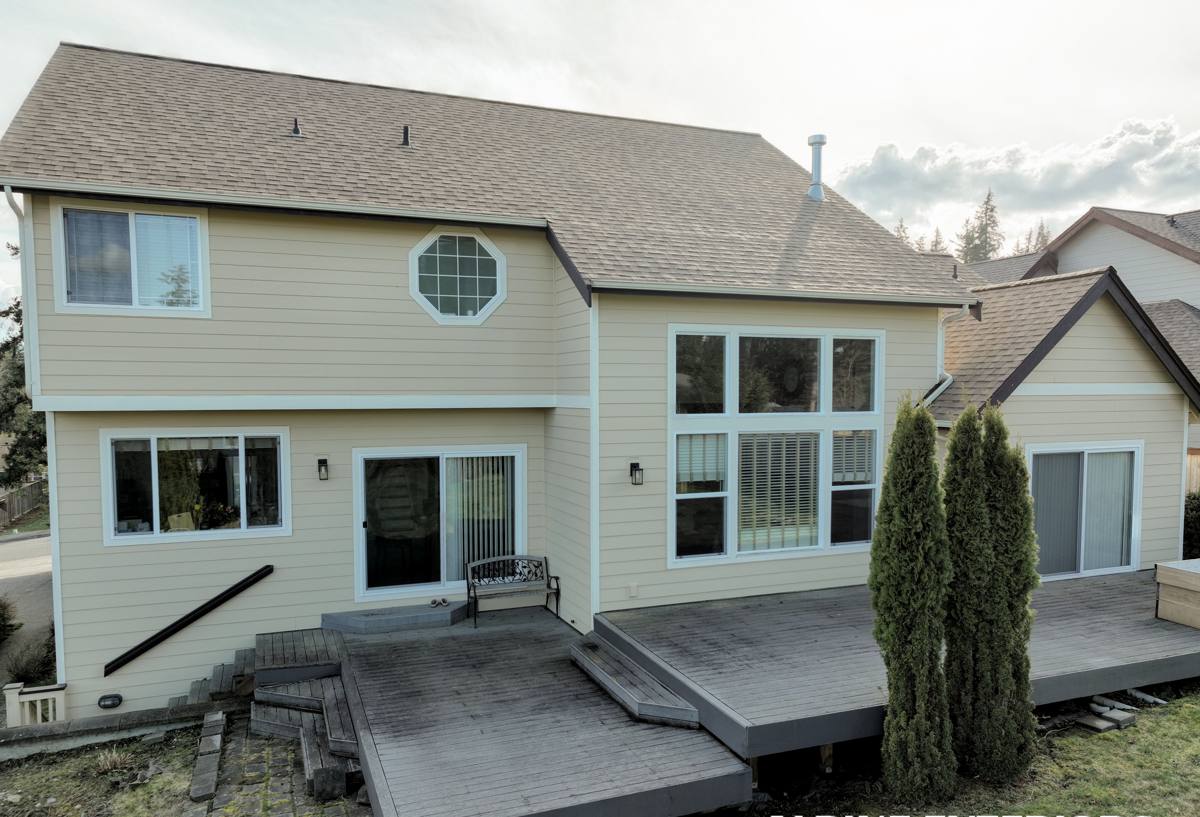
What Salt Air, Rain, and Moss Actually Do to a Deck
Corrosion Nobody Notices Until It's a Problem
Salt air doesn't need to be blowing hard to do damage — it just needs time, and waterfront and near-shore properties get plenty of it. Fasteners, joist hangers, and structural connectors that aren't rated for a coastal or marine-air environment start corroding from the inside, often while the visible screw head still looks fine. By the time a homeowner sees rust staining around a hanger or a screw head snapping off, the metal underneath has usually been weakening for a while. This is almost always a below-the-surface problem, which is exactly why it gets missed on decks that weren't built with the local air quality in mind.
Wood Decay, Rot, and the Long Moss Season
Driving rain doesn't just fall — it gets pushed sideways into railings, against ledger boards, and up under decking that isn't properly gapped or sloped. Combine that with the shaded, damp stretches of fall through spring, and you get ideal conditions for moss and algae to take hold on any horizontal wood surface. Moss holds moisture against the board underneath it, which accelerates rot in exactly the spots you can't see until a board is already soft. It also turns decking dangerously slick, which is a safety issue as much as a maintenance one.
What a Correctly Built Deck Requires Here
The Substructure: Footings, Posts, and Framing
Everything above ground only lasts as long as what's underneath it. Footings need to be sized and set to local frost and soil conditions, posts need proper post bases that keep end grain up off standing water, and framing lumber should be rated for ground contact or exterior exposure where it's called for — not just whatever's on the shelf. On sites with any grade or drainage issues, which shows up on more coastal lots than people expect, getting water to actually move away from the structure matters as much as the lumber grade itself.
Ledger Attachment and Flashing
The ledger board — where the deck attaches to the house — is the single most common point of failure on decks in wet climates, and it's almost always because flashing was skipped or done poorly. Correct flashing directs water away from the house band board and the ledger fasteners instead of letting it pool and wick in. Given how much rain this area sees, this is not a step to shortcut, and it's one of the first things we check on any deck we're asked to repair or rebuild.
Fasteners and Hardware
Given the salt air exposure around Semiahmoo, we use fasteners and structural hardware rated for coastal or marine environments — typically stainless steel or heavy hot-dip galvanized, depending on the application — rather than standard exterior-rated hardware that's fine inland but corrodes faster this close to the water. This applies to structural connectors, ledger bolts, and the screws holding down the decking itself, not just the parts that are visible.
Decking Material Choice
There's no single right decking material for every project, but there is a right way to think about it for this climate: how it handles constant moisture, how much it resists moss and algae, and how much upkeep the homeowner is realistically willing to do. We walk through these trade-offs honestly rather than pushing one product, because the best material for a low-maintenance rental property is often different from the best material for a homeowner who wants a specific look and doesn't mind maintaining it.
| Material | Moisture / Salt Air Behavior | Moss & Algae Resistance | Maintenance |
|---|---|---|---|
| Cedar | Naturally moisture- and insect-resistant; still needs sealing to perform well long-term | Moderate — needs regular cleaning in shaded, damp spots | Annual cleaning and re-sealing recommended |
| Pressure-Treated Fir/Pine | Treated for ground contact, but cut ends and fastener holes need re-sealing | Lower — more prone to surface moss without upkeep | Regular cleaning; periodic staining or sealing |
| Composite Decking | Doesn't absorb moisture the way wood does; consistent performance in wet, salty air | Good, though surface can still collect organic debris that needs washing off | Low — periodic washing, no staining or sealing |
| PVC/Capped Composite | Fully moisture-sealed surface; among the most stable in coastal conditions | Good | Lowest — occasional washing |
Railings, Stairs, and Drainage Details That Matter Here
The details around the edges of a deck are where a lot of coastal-climate failures actually start. Railing posts and baluster hardware sit exposed to the same driving rain and salt air as everything else, so they need the same fastener and flashing attention as the framing — a good deck with poorly detailed railings will still show corrosion streaks and loose posts within a few seasons. Stair stringers and treads need enough slope and gapping to shed water fast, since standing water on a stair tread is both a rot risk and a slip hazard once moss starts to form. And board spacing across the whole deck surface should be set to let water drain through rather than pool on top, especially on any part of the deck that sits in shade for most of the day — those are the spots where moss establishes first and spreads from.
Our Deck Building Process
- Site and structure assessment — we look at drainage, sun/shade exposure, soil conditions, and how exposed the site is to prevailing wind and rain off the water.
- Design and material selection — sizing, layout, railing style, and decking material are worked out based on how the homeowner will use the space and how much upkeep they want going forward.
- Permitting — we handle the permit application with the local jurisdiction so footings, framing, and railing heights meet current code before any lumber goes down.
- Substructure build — footings, posts, and framing go in first, with ledger flashing and coastal-rated hardware installed at every structural connection.
- Decking and railing installation — boards are gapped and fastened to the manufacturer's or species' specifications for proper drainage and long-term stability.
- Final walkthrough — we go over the finished deck with the homeowner, including what maintenance to expect given the local climate.
What Influences the Cost of a Semiahmoo Deck
Every deck project is different, and we'd rather walk a specific site than throw out a number that doesn't apply to it. That said, these are the main factors that move the price up or down:
| Factor | How It Affects Cost |
|---|---|
| Size and footprint | More square footage means more framing, footings, and decking material |
| Height and grade | Elevated decks or sloped/uneven sites need more substructure work and often engineered footings |
| Decking material | Pressure-treated lumber costs less upfront than cedar or composite; composite and PVC cost more but need less long-term upkeep |
| Railing style | Basic wood or metal railing systems cost less than glass panel or custom cable railing |
| Hardware grade | Coastal-rated fasteners and connectors cost more than standard exterior hardware, but they're what actually holds up this close to the water |
| Access and site prep | Difficult site access or the need to remove an old deck adds labor time |
Living With a Deck in a Salt Air, Moss-Prone Climate
A properly built deck still needs some seasonal attention in this climate — that's just the reality of building anything outdoors this close to the water. The good news is that the maintenance is manageable if it's done on a regular schedule instead of being ignored until something looks wrong.
- Sweep or blow off leaves and debris regularly, especially in fall — trapped organic matter is what feeds moss growth.
- Wash the deck surface at least once or twice a year with a deck cleaner or diluted solution suited to the material, focusing on shaded areas where moss forms first.
- Check railing posts, stair connections, and any visible hardware for rust staining or loosening once a year.
- Re-seal or re-stain wood decking on the manufacturer's or species' recommended schedule — don't wait until it's visibly gray and worn.
- Keep gutters and downspouts near the deck clear so runoff isn't being directed onto or under the deck structure.
- Address any soft spots, popped fasteners, or moss buildup early rather than waiting for it to spread.
Why Hire a Crew That Already Works in Semiahmoo
Deck building isn't the same job in every location, even within the same county. A crew that mostly builds decks farther inland may not think twice about fastener grade or ledger flashing detail, because it usually doesn't matter as much where they normally work. Around Semiahmoo, those choices are the difference between a deck that holds up and one that needs hardware replaced or boards re-sealed within a few years. Working regularly in and around Ferndale and this stretch of Whatcom County means we already know which details matter for this specific exposure, we're familiar with the local permitting process, and we're not guessing at material choices — we're applying what we've already seen hold up, and what hasn't, on decks like this one.
If you're planning a new deck, or dealing with an existing one that's showing rust, soft spots, or moss you can't keep ahead of, we're happy to take a look and talk through honest options — no pressure, no pushy sales pitch. Reach out for a free estimate using the form below.