 Ferndale
 Building New in Semiahmoo Means Building for the Water
Semiahmoo sits right up against Semiahmoo Bay, exposed to wind coming straight off the water with almost nothing to break it. If you're framing a new home or a major addition out there, the windows you choose and how they're installed matter more than they would on a sheltered lot ten miles inland. Salt-laden air corrodes hardware faster, wind-driven rain finds every gap in a flashing detail, and the long gray moss season keeps everything damp for months at a stretch. New-construction windows give you one real chance to get the water management right before siding and trim close it all up. We install new-construction windows for builders and homeowners across Whatcom County, and the Semiahmoo waterfront is one of the more demanding stretches we work.
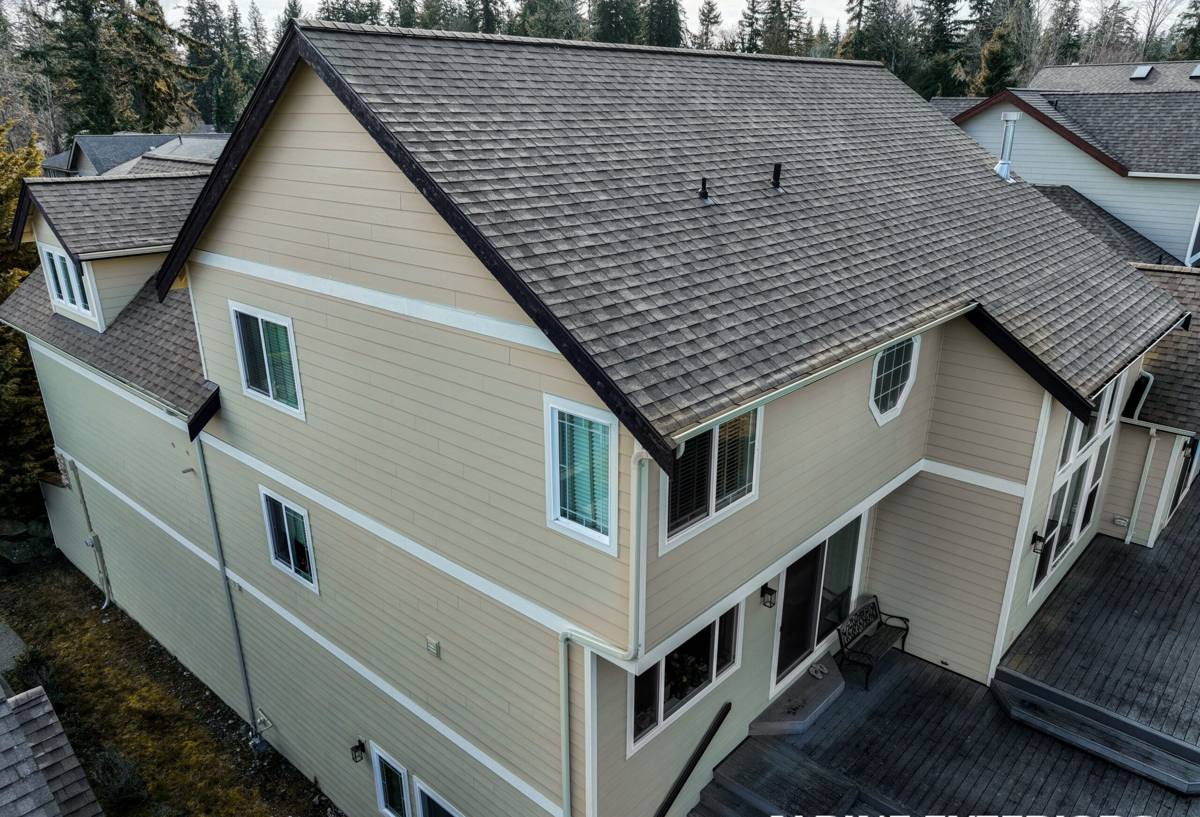
New Construction vs. Replacement — Why the Distinction Matters
"New-construction" windows are built with a nailing fin around the perimeter of the frame, meant to be installed into open framing before the weather-resistive barrier (WRB) and siding go on. Replacement windows, by contrast, are built to slide into an existing opening without disturbing the siding around it. On a new build or an addition, you want the nail-fin style — it lets us integrate the window into the wall's water management system as one continuous assembly rather than patching it in afterward.
This matters more on an exposed site like Semiahmoo. A retrofit-style install depends heavily on sealant to keep water out. A proper new-construction install depends on shingled, lapped flashing — sealant is a backup, not the primary defense. On a lot that takes direct wind-driven rain off the bay, that difference shows up as either a dry wall assembly for decades or a slow leak that doesn't show itself until there's rot in the sheathing.
What Driving Rain Does That Ordinary Rain Doesn't
Rain falling straight down mostly runs off a window. Rain being pushed sideways by wind gets driven up under trim, into reveals, and behind head flashing that isn't lapped correctly. Semiahmoo's open water exposure means wind-driven rain is a regular event, not an occasional storm. Every flashing lap and every sealant joint on that wall has to assume water will be pushed uphill against it at some point during the winter.
What Salt Air and Moss Season Do to a Window Over Time
Two things wear on windows here that don't get much attention until they cause a problem:
- Salt air corrosion: Airborne salt accelerates corrosion on screws, hinges, cranks, and low-grade cladding fasteners. Hardware rated for inland use can start showing rust or seizing up years earlier near the water.
- Moss and prolonged dampness: Whatcom County's wet season runs long, and moss doesn't just grow on roofs — it colonizes horizontal trim, sills, and any ledge that stays damp. Moss holds moisture against wood and painted surfaces far longer than open air would, which shortens the life of trim and caulk joints around a window.
Neither of these is dramatic on its own, but combined over a decade or two they're the reason windows on the water side of a house age differently than windows on the sheltered side. Specifying the right materials up front costs little at the framing stage and saves real money later.
Choosing a Window Built for This Exposure
Frame material, glazing, and hardware grade all affect how a window holds up in a marine environment. There's no single "best" answer for every project — it depends on budget, the home's design, and how directly exposed a given elevation is to the water.
| Frame Material | Coastal Performance | Trade-offs |
|---|---|---|
| Vinyl | Won't corrode; good value; performs well if UV-stable and properly reinforced at larger sizes | Can flex on very large openings without internal reinforcement; color/finish options more limited |
| Fiberglass | Very stable in temperature swings and moisture; strong resistance to warping | Higher upfront cost than vinyl; fewer stock sizes, more custom lead time |
| Aluminum-clad wood | Attractive interior wood look with a weather-resistant exterior shell | Cladding seams and any exposed fasteners are corrosion points near salt air if not properly detailed |
| Bare aluminum | Strong and slim sightlines | Higher thermal conductivity (condensation risk) and faster corrosion in direct salt exposure without marine-grade coatings |
For water-facing elevations in Semiahmoo, we lean toward vinyl or fiberglass with stainless or corrosion-resistant hardware, and we're careful about any exposed aluminum trim or cladding fasteners. Whatever material you land on, ask about the hardware grade specifically — cranks, hinges, and locks are usually where salt air shows up first, well before the frame itself has any issue.
Flashing and Water Management — Where Installs Actually Succeed or Fail
The window unit itself rarely fails. What fails is the water management around it — and that's entirely a function of installation sequence, not the product label. A correct new-construction install follows a specific order so every layer sheds water onto the layer below it, like shingles on a roof.
- Sill pan flashing installed first, sloped to drain outward, with corners sealed to prevent any water that gets past the window from tracking into the wall cavity.
- Window set into the opening, shimmed level and plumb, and fastened per the manufacturer's schedule — this affects the warranty and how the unit performs in wind.
- Side flashing tape applied over the nailing fin, followed by head flashing lapped over the top of the side flashing — never the reverse.
- WRB (housewrap or building paper) integrated over the head flashing so the wall's primary water barrier laps over the window assembly, not under it.
- Sealant used at specific manufacturer-called-out joints only — treated as a backup layer, not a substitute for correct flashing laps.
On an exposed site, we'll sometimes add a secondary weather barrier detail or upgrade sealant specification at particularly wind-loaded elevations. None of this is unusual or proprietary — it's the standard sequence done correctly and checked at every step, which is where a lot of installs quietly go wrong.
Meeting Washington's Energy and Wind Requirements
New construction in Whatcom County falls under the Washington State Energy Code (WSEC), which sets minimum U-factor and solar heat gain requirements for windows based on climate zone and the home's overall energy path. On an open, wind-exposed lot like Semiahmoo, we also look at the window's design pressure (DP) rating — how much wind and structural load the unit is engineered to handle — separately from the energy numbers. A window can meet code on energy performance and still be undersized for the wind load on a waterfront wall if it isn't specified correctly. We pull the local requirements for your specific project before ordering, rather than assuming a standard inland spec will pass.
Our New-Construction Window Process
Working directly with your builder or general contractor, our process is:
- Review plans and rough openings before framing is finalized, catching sizing or structural issues early.
- Confirm window specifications (U-factor, DP rating, glazing options) against code requirements and the site's actual wind exposure.
- Coordinate scheduling with the WRB and siding trades so windows go in at the right point in the sequence — not too early, not holding up the crew behind us.
- Install using the sill pan, side, and head flashing sequence above, checking level, plumb, and square at every unit.
- Walk the finished openings with the builder before siding closes them up, since that's the last point anything is easily visible or correctable.
Cost Factors for New-Construction Window Installation
Pricing on a new build depends on more than just the number of windows. The factors that move the number most are:
| Factor | Why It Affects Cost |
|---|---|
| Frame material | Fiberglass and clad-wood run higher than standard vinyl; hardware upgrades add incrementally |
| Size and quantity | Large openings and picture windows need reinforcement and cost more per unit than standard sizes |
| DP rating / structural spec | Higher wind-load-rated units for exposed elevations cost more than standard-DP stock units |
| Access and site logistics | Waterfront lots with limited staging space or seasonal access can add labor time |
| Flashing and detailing scope | Upgraded weather barrier details at high-exposure elevations add material and labor |
We'll walk your plans and give you a written estimate that breaks these out, so you know what you're paying for rather than a single lump number.
Why a Crew That Already Works Semiahmoo Is Worth It
Semiahmoo isn't a typical inland Whatcom County lot. Wind exposure, salt air, and site access all behave differently than they do a few miles inland in Ferndale proper. A crew that's already worked the area knows to spec hardware and flashing details for that exposure without being told, knows what the local wind conditions actually do to a job site day-to-day, and isn't learning those lessons on your house. That familiarity shows up in fewer surprises during installation and in how the windows perform ten and twenty years out — which is really the only timeline that matters for a new build.
Checklist: What a Correct New-Construction Window Install Includes
- Sill pan flashing installed and sloped before the window goes in
- Window specified with a wind (DP) rating appropriate to the site's actual exposure, not just a standard stock unit
- Corrosion-resistant hardware specified for any elevation facing the water
- Flashing sequence shingled correctly — sill, then sides, then head, then WRB lapped over the top
- Sealant used only at the joints the manufacturer specifies, as a backup rather than the primary seal
- Fastening schedule followed per manufacturer instructions to preserve the warranty
- Openings checked level, plumb, and square before trim or siding closes them in
- Final walk-through with the builder before the wall assembly is covered up
If you're framing a new home or addition in Semiahmoo, we're happy to look at your plans and give you a straightforward, no-pressure estimate on the windows and installation — just fill out the form below.