 Ferndale
 Windows in Kendall Take a Different Kind of Beating
Kendall sits out in the foothill country east of Ferndale, closer to the tree line and the Nooksack drainage than to open water — but that doesn't mean the house gets a pass on Whatcom County weather. The rain here isn't the polite, straight-down kind. It comes sideways off the marine air moving in from the Sound, and it finds every gap a window was never properly sealed against. Add the shade from the evergreens that ring most Kendall lots, and you get long stretches where wood trim, sills, and window jambs simply never fully dry out. That's the environment a window install has to survive here — not just look good in for a season or two.
Homes closer to the water in and around Ferndale also deal with the salt content in that same marine air, which speeds up corrosion on hardware and finishes. Kendall is a little further inland, but the moisture load and the moss season are the same story for every home in this county. A window that's installed correctly shrugs all of this off for decades. A window that's installed with shortcuts — even a good window — starts failing at the seams within a few wet winters.
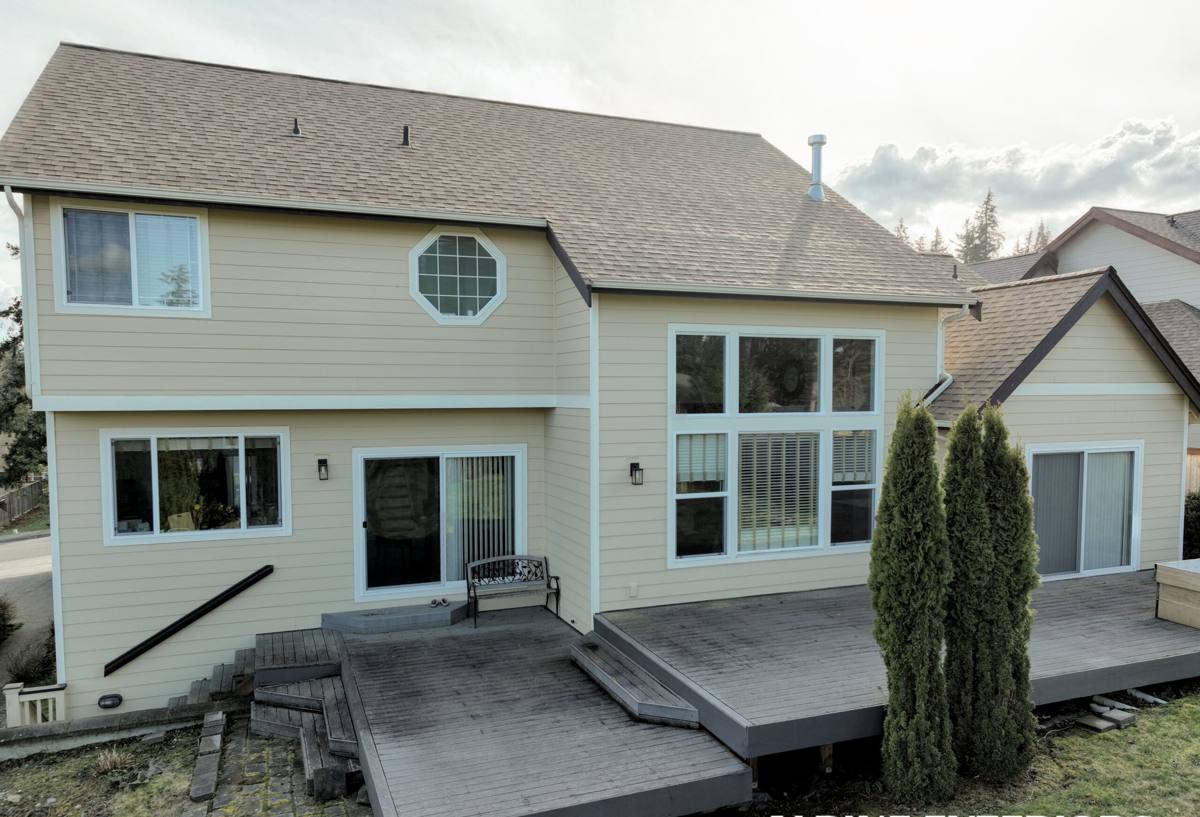
Signs a Kendall Home Needs Window Work
Most homeowners don't call about windows until something's obviously wrong, but the early signs are usually visible if you know where to look.
- Fogging or a permanent haze between the panes — the seal on the insulated glass unit has failed
- Soft or spongy wood at the sill or lower corners of the frame
- Visible daylight or a draft around the frame when the window is shut and locked
- Paint that keeps bubbling or peeling on the interior trim, even after repainting
- Windows that are hard to open, close, or lock — frames have swelled or racked out of square
- Moss or dark streaking on the exterior trim below the window, a sign water is running down and sitting there instead of shedding away
- A noticeable temperature difference near the window compared to the rest of the room
Any one of these can be a minor fix. Two or three together, especially on a window that's original to the house, usually means it's time to talk about replacement rather than another round of caulk and paint.
What a Correct Installation Actually Involves
It's Not Just the Window — It's Everything Around It
The window unit itself is maybe a third of what determines whether the job holds up. The rest is in the details most homeowners never see once the trim goes back on: how the rough opening is prepped, how water is managed if it ever gets past the outer seal, and how the window ties into the house's overall weather barrier.
A correct install includes:
- Inspecting and repairing the rough opening and any water damage found once the old window is out — this is where hidden rot usually turns up
- Sloped sill flashing so any water that does reach the sill drains outward, not into the wall
- Self-adhered flashing tape at the jambs and head, integrated with the house wrap or building paper in the correct shingle-lap order so water sheds down and out, never up and in
- Low-expansion foam or backer rod and sealant for the gap between the frame and the rough opening — enough to insulate and dampen sound, not so much it bows the frame
- Exterior sealant at the right joints only — sealing every seam solid can trap moisture instead of letting it escape, which is a common mistake on older Whatcom County homes
- Proper shimming so the window is plumb, level, and square before it's ever fastened — a racked frame is what causes locks to bind and seals to fail early
Skip the flashing sequence or get the sealant logic backwards, and you can install the best window on the market and still get rot in the wall behind it within a few years. This is the part of the job that separates a correct installation from one that just looks finished.
New Construction vs. Insert Windows
There are two basic approaches, and which one applies depends on the home:
New-construction windows have a nailing fin and are installed into a fully opened-up rough opening, with flashing integrated into the wall system from scratch. This is the right call when siding is already coming off, when a window is being resized, or when there's existing rot that needs to be cut out and rebuilt.
Insert (or retrofit) windows are sized to fit inside the existing frame, which stays in the wall. This is faster, less invasive, and often the more sensible choice when the existing frame is sound and the siding around it is in good shape. The trade-off is a slightly smaller glass area, since the old frame remains in place. On a lot of Kendall homes with older single-pane frames, insert windows are the practical answer — but only after we've confirmed the existing frame isn't hiding rot behind the trim.
Material and Window Type Comparison
There's no single "best" window — the right choice depends on the home's age, the budget, and how exposed that particular wall is to weather. Here's how the common options stack up for a house in this climate:
| Material | Moisture / Rot Resistance | Maintenance | Typical Cost Range | Best Fit |
|---|---|---|---|---|
| Vinyl | Excellent — won't rot, doesn't need painting | Low — occasional cleaning | Lower end | Budget-conscious replacements, rental properties |
| Fiberglass | Excellent — very stable in wet/dry cycles | Low | Mid to upper-mid | Homeowners wanting long service life with minimal upkeep |
| Wood, factory-clad exterior | Good on the exterior face; interior wood still needs care | Moderate — interior finish maintenance over time | Upper end | Homes where interior wood trim and sightlines matter |
| Aluminum | Fair — prone to condensation without a thermal break | Low | Mid | Specific architectural or commercial applications |
For most Kendall homes, we steer people toward vinyl or fiberglass for the exposed, weather-facing walls simply because they hold up to the wet-dry cycling this area puts them through without needing repainting every few years. Clad-wood windows are still a solid, honest choice where the look matters most — the trade-off is accepting the ongoing maintenance that comes with any wood component, which we'll always tell you upfront rather than downplay.
How We Handle a Kendall Window Job
1. On-Site Assessment
We look at the actual openings — not just take measurements, but check the condition of the framing, the current flashing (or lack of it), and whether there's any water damage already working on the wall behind the trim. This tells us whether insert windows are appropriate or whether a full new-construction approach is the honest recommendation.
2. A Written Plan, No Guessing
You get a clear scope: which windows, which approach, what happens if we find rot once we're into the wall, and what that would cost before it becomes a surprise. No open-ended change orders sprung on you mid-job.
3. Removal and Opening Prep
Old windows come out carefully, the opening gets inspected and repaired as needed, and any compromised sheathing or framing is addressed before anything new goes back in. This is the step that gets skipped when a job is rushed, and it's the step that determines whether the install lasts.
4. Flashing, Set, and Seal
Sill pan flashing, jamb and head flashing tied into the house's water-resistive barrier, correct shimming, and sealant only where it belongs — not everywhere, which can trap moisture instead of letting the assembly breathe correctly.
5. Trim, Cleanup, and Walkthrough
Interior and exterior trim finished, every window operated and checked for square, level, and smooth function, and a walkthrough so you know what you're looking at and what to expect going forward.
Why Hire a Crew That Already Works Kendall
Window installation isn't a one-size-fits-all trade. A crew that's worked houses throughout Ferndale and out into Kendall already knows the difference between a 1970s single-pane aluminum-slider home and a newer build with house wrap already integrated — and they know it before they pull the first window, not after they've opened something up and are guessing at the fix. That matters when it comes to pricing accurately, sequencing the job around our wet season instead of pretending it's not a factor, and catching hidden rot before it becomes your problem instead of ours.
It also matters for accountability. A local crew has a reputation in this specific area to protect, and we're not driving in from out of the county to do one job and disappear. If something needs a callback, we're close by.
After Installation: What Keeps Windows Performing
A correct install is most of the battle, but a little homeowner attention keeps it working for the long haul, especially given the amount of moisture this area sees:
- Rinse debris and moss buildup off exterior sills and tracks a couple times a year — trapped organic matter holds moisture against the frame
- Check exterior sealant lines annually for cracking or gaps, particularly after a hard winter
- Vacuum and lubricate window tracks and hardware so locks and rollers don't bind or corrode
- Watch for condensation between panes — that's a seal failure, not a cleaning problem, and it won't resolve itself
- Keep gutters and downspouts clear above window openings so water isn't sheeting directly down the wall onto the trim
None of this is complicated, but skipping it is how a well-installed window still ends up with an avoidable problem five or ten years down the road.
Get a Straight Answer on Your Windows
If you're in Kendall and dealing with drafty, foggy, or hard-to-operate windows, we're glad to come take a look, tell you honestly whether it's a repair or a replacement situation, and walk you through what correct installation looks like for your specific home. The estimate is free, there's no pressure, and you'll get a straight answer either way — just fill out the form below to get started.