 Ferndale
 Why Blaine Roofs Wear Differently Than Roofs Ten Miles Inland
Blaine sits right on the water, with nothing but the Strait of Georgia and Semiahmoo Bay between the town and open wind. That location is part of what makes it a great place to live, and part of why roofs here take a different kind of beating than roofs further inland in Whatcom County. Salt-laden air corrodes exposed metal faster than dry inland air does. Wind off the water drives rain sideways into valleys, vents, and wall-to-roof transitions that were never designed to see water moving in that direction. And the same marine climate that keeps everything green also keeps roofs damp long enough, for long enough stretches of the year, that moss and algae get a real foothold.
None of this means a Blaine roof needs exotic materials or a completely different approach than roofs anywhere else in the Pacific Northwest. It means the ordinary parts of a repair — flashing choice, fastener type, how a valley is built, how well the roof drains and dries — matter more here than they would in a drier, calmer climate. A repair that would hold up fine in eastern Washington can fail within a couple of winters a few blocks from the water in Blaine.
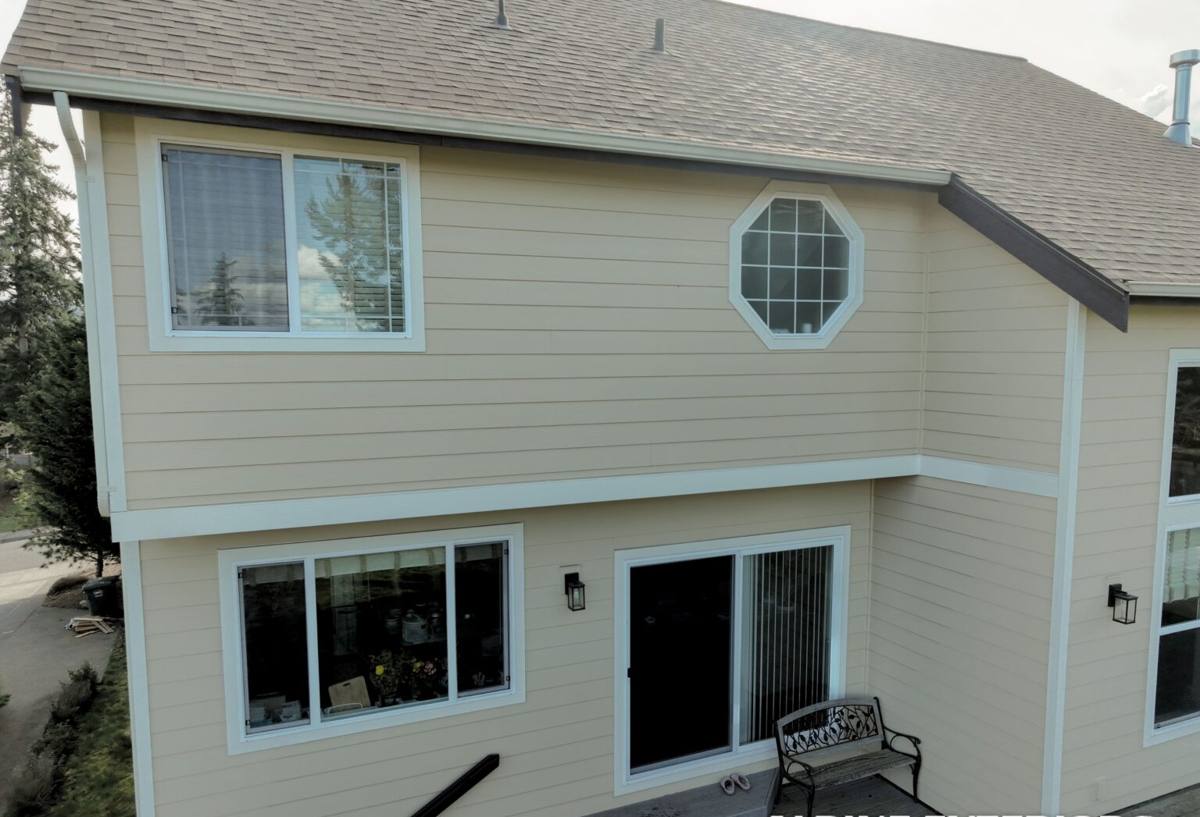
The Repair Problems We See Most Often in Blaine
Moss and Algae Undermining Shingles
Moss doesn't just look bad. Once it establishes itself under shingle tabs, it holds moisture against the roof deck around the clock and works its way under the shingle edge, lifting it slightly with every growth cycle. That lift is what lets wind-driven rain get underneath the shingle instead of running over it. By the time moss is visibly thick, there's usually already some amount of granule loss and lifted shingle edges underneath it, even if there's no active leak yet.
Flashing and Fastener Corrosion
Flashing around chimneys, skylights, and roof-to-wall transitions, along with the fasteners holding it, is usually the first thing to fail near salt air. Galvanized coatings and lower-grade fasteners can start showing rust streaks and pitting years before they would inland. Once flashing corrodes and develops pinholes or gaps at the seams, water finds its way behind it regardless of how sound the shingles above it still are.
Wind-Driven Rain at Valleys and Penetrations
Valleys, plumbing vents, and any place with a penetration through the roof deck are where sideways rain finds weaknesses. A valley that was cut a little short, or a boot flashing around a vent pipe that's cracked from UV and age, doesn't leak in a light rain — it leaks specifically when wind is pushing water uphill against the natural flow of the roof, which is exactly the kind of weather Blaine gets regularly off the water.
Clogged Gutters Backing Water Under the Edge
Conifer cover throughout Whatcom County means gutters fill with needles and debris quickly. When a gutter backs up during a heavy rain, water has nowhere to go but back up under the first course of shingles or shake at the eave, which shows up as staining or rot at the fascia and the roof edge long before anyone notices a leak inside.
What a Correct Roof Repair Actually Involves
Diagnosing the Real Source, Not Just the Stain
Water travels. A stain on a ceiling is rarely directly below the point where water is actually entering the roof — it can run several feet along a rafter or along the underside of the deck before it drips. A repair that just patches the spot above the visible stain, without tracing the actual entry point, often "fixes" nothing. Correct diagnosis means getting on the roof, checking flashing, valleys, and penetrations near the leak, and in some cases checking the attic side to see the actual water path.
Matching Materials and Techniques
A repair should use materials and installation methods consistent with the rest of the roof, not whatever is fastest. Mismatched shingle types, colors, or profiles stand out and can also behave differently in wind and rain than the surrounding roof, creating a new weak point instead of solving the old one.
Flashing Done Right
Given how much of the repair work in this area traces back to flashing, this is the step worth doing carefully. That means proper step flashing at roof-to-wall junctions, correctly lapped valley flashing, and new boots or collars around vent penetrations rather than a bead of sealant over old, cracked material. Sealant has its place, but it's a supplement to correct flashing, not a substitute for it.
Restoring Ventilation and Drainage
A repair is a good time to check that the roof is actually shedding water and venting moisture the way it should. Blocked ridge or soffit vents trap moisture in the attic, which can cause rot and premature aging from the underside of the deck even when the top side of the roof looks fine.
Roof Repair or Roof Replacement? How to Tell
Not every leak means a new roof, and not every roof that looks rough needs to be torn off. The honest answer usually comes down to how much of the roof's remaining service life is left and how widespread the damage is.
| Situation | Repair Usually Makes Sense | Replacement Usually Makes Sense |
|---|---|---|
| Age of roof | Well within its expected lifespan | Near or past the material's typical service life |
| Extent of damage | Isolated to one flashing point, valley, or section | Multiple areas failing independently across the roof |
| Moss/algae condition | Surface growth, shingles still sound underneath | Widespread lifting and granule loss under the moss |
| Deck condition | Solid, no soft spots | Soft, spongy, or visibly sagging decking |
| History of repairs | First or second repair on this roof | Repeated repairs to the same or nearby areas |
We'll always tell you plainly which side of that line your roof is on. If a repair is the honest answer, that's what we'll recommend and price.
How We Handle a Blaine Roof Repair Call
- We get on the roof and inspect it in person, including the areas around the reported leak and any other spots we'd expect trouble given the roof's age and exposure.
- We trace the actual water path when there's an active leak, rather than assuming the entry point matches the stain location.
- We give you a plain explanation of what's causing the problem and what it will take to fix it, including whether repair or replacement is the right call.
- We provide a written scope and price before any work starts, so there's no ambiguity about what's included.
- We complete the repair using materials matched to your existing roof and flashing details built to handle wind-driven rain, not just standard-condition rain.
- We clean up thoroughly and walk you through what was done.
Signs You Need a Roof Repair Before the Next Storm
Most roof problems give some warning before they turn into an active interior leak. Worth checking for, especially after a windy stretch off the water:
- Visible moss buildup, especially thick patches near the shaded side of the roof or under trees
- Shingle edges that look lifted, curled, or are missing granules in patches
- Rust streaks or visible corrosion running down from flashing or fasteners
- Dark staining or a sagging line on interior ceilings, even faint
- Daylight visible through the roof deck from inside the attic
- Granules collecting in gutters or at the base of downspouts
- Gutters overflowing or pulling away from the fascia during heavy rain
- Cracked or missing boot flashing around plumbing vents
What Roof Repairs Typically Cost
Repair costs vary with scope, access, and how much of the surrounding area has to be opened up to do the work correctly. As a general guide:
| Repair Type | Typical Scope | General Price Range |
|---|---|---|
| Flashing repair or replacement | Single chimney, wall, or valley flashing section | Low hundreds to around a thousand dollars |
| Vent boot / penetration repair | One or a few plumbing or exhaust vent boots | Low hundreds per vent |
| Localized shingle replacement | A section damaged by wind, moss, or a fallen branch | Several hundred to low thousands depending on area |
| Moss treatment and shingle restoration | Cleaning, treatment, and repair of lifted shingles | Varies with roof size and severity |
| Multi-point repair | Several unrelated problem areas addressed in one visit | Adds up based on scope of each item |
These ranges are meant to be a general reference, not a quote. Access, roof pitch, and the condition of decking underneath all affect final pricing, which is why we always inspect before pricing rather than quoting off a phone description.
Why It Matters That We Already Work in Blaine
A crew based in Ferndale that already does regular work in Blaine has an advantage that has nothing to do with marketing: we know what this particular stretch of Whatcom County coastline does to a roof over a few winters, because we've been up on those roofs. That means recognizing early-stage flashing corrosion for what it is instead of writing it off as cosmetic, and knowing which parts of a roof take the worst of the wind-driven rain in this specific area versus a roof a few miles inland.
It also means practical things that add up: we're not driving in cold from another region, we're familiar with the kind of access and weather windows that work for jobs in this part of the county, and we can usually get to a leak faster because we're not starting from across the region every time.
Keeping a Repaired Roof Healthy Between Visits
A repair holds up longer with a little basic maintenance in between. Keeping gutters clear of needles and debris, especially heading into fall, prevents the backed-up water that causes eave rot. Treating moss before it gets thick, rather than after, is far less disruptive than replacing shingles it has already lifted. A quick visual check after any major windstorm — looking for lifted shingles, displaced flashing, or debris caught on the roof — catches small problems while they're still small and cheap to fix.
If it's been a few years since your roof was actually inspected up close rather than glanced at from the ground, that's usually a good time to have someone look, particularly if the roof is past the midpoint of its expected life or has been through a rough winter.
If you're dealing with a leak, visible moss, or just want an honest read on where your roof stands, we're happy to come take a look. The estimate is free, there's no pressure attached to it, and you'll get a straight answer about whether you need a repair, a bigger fix, or nothing at all right now — just fill out the form below.