 Ferndale
 Window Installation Built for Point Roberts' Exposure
Point Roberts sits on its own peninsula, surrounded on three sides by saltwater and cut off from the rest of Whatcom County by geography. That location gives homeowners some of the best views in the region — and some of the toughest conditions for windows. Salt-laden air, driving rain off the water, and a long stretch of damp, mossy weather each year all work against ordinary window installations. Ferndale Siding works window projects throughout this area, and we've built our process around what actually holds up here, not just what passes on a spec sheet.
This page is about one job specifically: replacing or installing windows on Point Roberts homes. Not a general overview of window brands, but the practical questions a homeowner here actually needs answered — what the climate does to a window over time, what a correct installation looks like, and why local experience changes the outcome.
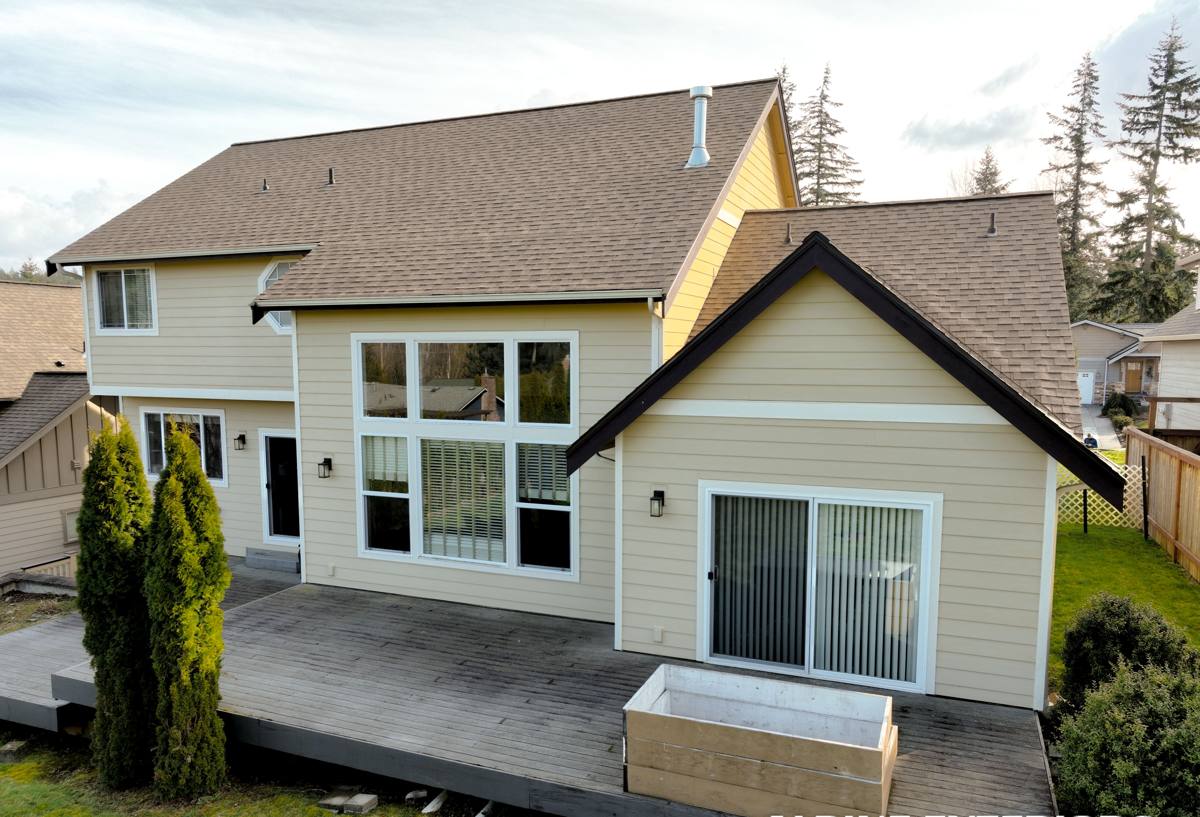
What the Local Climate Actually Does to Windows
Salt Air and Corrosion
Homes close to the water take in salt-carrying air almost constantly. Over years, that salt exposure accelerates corrosion on window hardware — hinges, cranks, locks, and screws — especially on lower-grade aluminum or unprotected steel components. It also degrades certain finishes and coatings faster than manufacturers' standard testing usually accounts for, since most product warranties are written around inland conditions, not marine ones.
Driving Rain and Wind-Driven Moisture
Point Roberts gets exposed to wind coming straight off the water, and that wind pushes rain sideways into wall assemblies rather than letting it simply run down the glass. A window that would perform fine on a sheltered inland lot can leak here if the flashing and sealant details aren't done correctly, because wind-driven rain finds any gap in the installation, not just gaps in the window unit itself.
Moss Season and Sustained Dampness
Whatcom County's long moss season means extended stretches where wood trim, sills, and surrounding siding stay damp rather than drying out between rain events. That sustained moisture is hard on any window that isn't properly flashed and sealed, and it's especially hard on wood components that don't have adequate protection from the elements.
Signs a Point Roberts Home Needs New Windows
- Fogging or a hazy film between panes — the seal on a double- or triple-pane unit has failed and moisture has gotten inside
- Soft or discolored wood at the sill or surrounding trim, a sign moisture has been getting past the seal for a while
- Windows that are hard to open, close, or lock — often corrosion or swelling in the frame and hardware
- Visible daylight or a noticeable draft around the frame when the window is closed
- Condensation forming on the inside of the glass regularly, which points to poor insulating performance
- Peeling paint or bubbling finish on interior or exterior trim near the window
- Noticeable outside noise or drafts that didn't used to be there
What a Correct Installation Actually Involves
Swapping a window is easy to do poorly and hard to do right — the difference shows up years later, not on install day. For an exposed, salt-air location like Point Roberts, the details below matter more than they would on a sheltered inland home.
Removing and Inspecting the Opening
Before a new window goes in, we check the rough opening for hidden rot or moisture damage from the old installation. Installing a new window over a compromised opening just hides the problem — it doesn't fix it, and it usually surfaces again within a few years.
Flashing and Water Management
Proper flashing directs any water that gets past the window back out of the wall assembly rather than letting it collect. This is the single most common point of failure we see in older or poorly done installations, and it's the detail that matters most in a wind-driven-rain environment like this one.
Sealing and Insulation
The gap between the window frame and the rough opening needs to be sealed and insulated correctly — not just caulked on the outside and left hollow inside. Done right, this stops both air infiltration and the kind of moisture intrusion that leads to hidden rot.
Hardware and Fastener Selection
Given the salt exposure here, we pay attention to fastener and hardware material, favoring components that resist corrosion rather than the cheapest options a builder-grade install might use inland.
Choosing the Right Window for This Exposure
There's no single "best" window brand for every home — the right choice depends on your budget, your home's style, and how much exposure that particular wall or elevation actually gets. Below is a general comparison of the frame material categories most homeowners in this area weigh against each other.
| Frame Material | How It Handles Salt Air & Moisture | Maintenance | General Cost Position |
|---|---|---|---|
| Vinyl | Resists corrosion well; doesn't rot; performance depends on quality of the extrusion and hardware | Low — occasional cleaning | Lower to mid |
| Fiberglass | Very stable in temperature swings and moisture; strong resistance to corrosion and warping | Low | Mid to higher |
| Wood (unclad) | Attractive but needs consistent upkeep in a damp, salt-air climate; higher risk of rot without diligent maintenance | High | Mid to higher |
| Wood-clad (metal or composite exterior) | Combines interior wood look with a more weather-resistant exterior shell | Moderate | Higher |
| Aluminum | Prone to corrosion in salt air unless specifically treated or coated; also a poor insulator without a thermal break | Moderate to high | Varies |
For most Point Roberts homes, we lean toward vinyl or fiberglass frames for their corrosion resistance and lower long-term upkeep. Where a homeowner wants the look of real wood on the interior, a clad option gives that appearance while keeping a more weather-resistant material facing the exterior. We'll talk through the honest trade-offs for your specific home and budget rather than push one product line.
Our Process for a Point Roberts Window Project
- On-site assessment — we look at existing window condition, the surrounding wall assembly, and the specific exposure of each elevation before recommending anything.
- Product selection — we go over frame material, glass package, and hardware options suited to your home's exposure and your budget, with honest trade-offs explained.
- Ordering and scheduling — windows are ordered to the exact opening dimensions, and we schedule the install around weather windows to avoid working in active rain wherever possible.
- Removal and opening inspection — old windows come out carefully, and we check the opening for hidden damage before anything new goes in.
- Installation, flashing, and sealing — proper flashing, insulation, and sealing at every opening, done to hold up against wind-driven rain, not just look finished.
- Interior and exterior finish work — trim, caulking, and touch-up work completed to match your home.
- Final walkthrough — we check operation, seal, and finish with you before we consider the job done.
Why Local Experience in Point Roberts Matters
Point Roberts is unusual to work in logistically — it's a peninsula community reached by crossing an international border, which means material deliveries, crew scheduling, and timelines all need to account for that in a way a typical job elsewhere doesn't. A crew that hasn't planned for that ahead of time can end up with delays that get passed on to the homeowner in the form of extra trip charges or schedule slippage.
Beyond logistics, a crew that regularly works this area already understands what the salt air and wind exposure do to window installations over time, and builds the job around that from the start rather than treating it like any other install. That local knowledge shows up in the small decisions — flashing details, hardware choices, sealant selection — that don't matter much inland but matter a great deal here.
Maintenance That Extends Window Life Here
- Rinse exterior frames and hardware periodically to reduce salt buildup, especially on homes with direct water exposure
- Keep weep holes clear of debris and moss so water can drain out of the frame as designed
- Check and refresh exterior caulking every couple of years, since UV and moisture cycling break it down faster here than in drier climates
- Address any soft trim or discoloration around a window promptly — waiting typically turns a small repair into a full replacement
- Operate hardware (locks, cranks) periodically even on windows you don't open often, to keep moving parts from seizing
Get a Straight Answer for Your Home
Every home on this peninsula sits a little differently against the wind and water, and the right window approach for one house isn't automatically right for the one next door. If you're dealing with fogged glass, drafts, soft trim, or windows that are simply due, we're happy to take a look and give you a straightforward assessment — no pressure, no upsell. Reach out for a free estimate using the form below and we'll walk through what your home actually needs.