 Ferndale
 Why Point Roberts Decks Wear Differently
Point Roberts sits in a spot that most decking material was never really engineered for. It's a small peninsula surrounded on three sides by saltwater, catching wind and spray straight off the Strait of Georgia, then sitting under the same wet, gray Whatcom County winters as the rest of Ferndale and Bellingham. That combination — salt air plus long stretches of driving rain plus a moss season that can run from October well into spring — is harder on exterior wood and fasteners than a typical inland Washington yard.
Salt air is the part people underestimate. It doesn't just sit on the surface — it works into end grain, screw holes, and any spot where the finish has worn thin, and it accelerates corrosion on fasteners and hardware faster than a few miles inland. Add in near-constant moisture from fall through spring, and you get the two things that actually destroy decks: metal that rusts and fails quietly under the boards, and wood or wood-composite material that stays damp long enough to rot, cup, or grow moss and algae on the walking surface.
None of this means a deck in Point Roberts is doomed — it means it needs to be built and repaired with that environment in mind, not with whatever spec sheet came with the lumber.
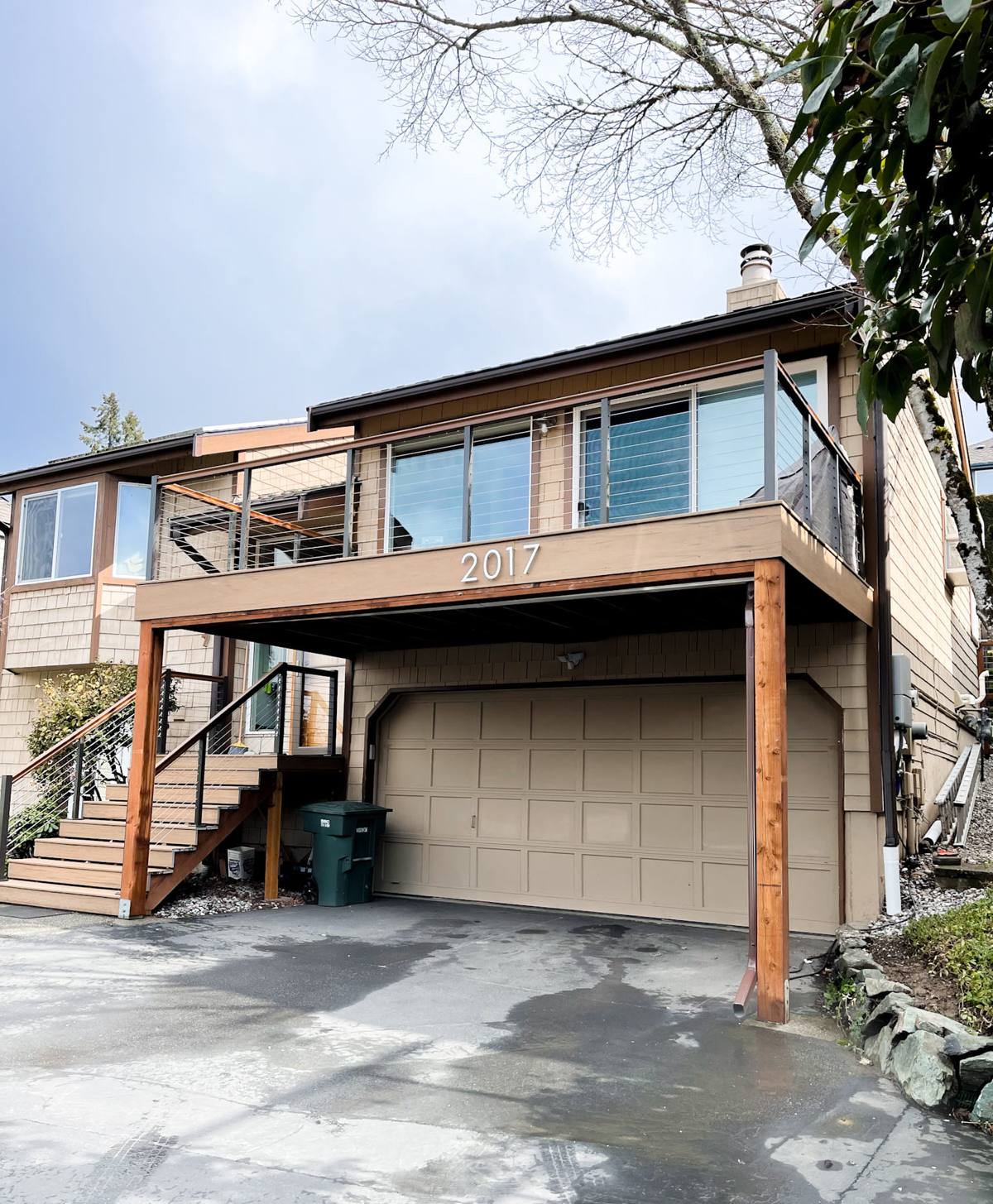
Signs a Deck Needs Repair — Not Just a Cleaning
A lot of deck problems get masked by a pressure wash. The surface looks better, but the underlying issue is still there. Homeowners in this area should watch for:
- Soft or spongy spots when you walk the boards, especially near the house or stair landings
- Rust streaks bleeding out around screw or nail heads
- Gaps opening up between boards, or boards that have cupped or crowned
- Persistent green or black growth that comes back within weeks of cleaning
- Railings or stair stringers that flex or feel loose under normal weight
- Visible daylight or gaps where the ledger board meets the house
- A musty smell coming from underneath the deck, which usually means trapped moisture
Any one of these on its own might be minor. Several together, especially rust plus softness plus a shaky railing, usually means the repair needs to go past the surface and into the framing.
The Ledger Board Deserves Special Attention
The ledger board — the piece that bolts the deck to the house — is the single most common failure point on older decks anywhere in a wet climate, and Point Roberts' rain exposure makes it worse. Flashing that was skipped or installed wrong lets water track behind the ledger every time it rains, which rots the board from the inside while the outside still looks fine. A proper repair always includes pulling boards near the house to actually look at this connection, not just tightening what's visible.
What a Correct Repair Actually Involves
"Deck repair" covers a wide range of work, and the right scope depends on what's actually failing — surface, fasteners, or structure. A repair done right generally works through these layers:
1. Structural Inspection First
Before any boards come off, we check the posts, beams, joists, and the ledger connection to the house. This is the part that determines whether you're looking at a cosmetic fix or something that affects the safety of the deck.
2. Fastener and Hardware Replacement
In a salt-air environment, hidden fasteners are often the real culprit even when the wood looks fine. Standard coated deck screws and joist hangers can corrode from the inside out over several seasons of exposure. We replace failing hardware with fasteners and connectors rated for corrosive/coastal exposure, not just whatever matches the original build.
3. Board Replacement and Matching
Individual boards get swapped where they're rotted, cupped, or split — full deck replacement usually isn't necessary unless the framing itself has failed. We match species, width, and spacing so repaired sections don't stand out.
4. Moisture Management
Any repair that doesn't address how water moves off and out from under the deck is a temporary fix. That means checking board spacing for drainage, confirming ledger flashing is doing its job, and making sure nothing is trapping standing water against wood.
5. Railings and Stairs
These take more abuse than the deck surface itself — more flexing, more hand contact, more direct rain exposure on top rails. We check post connections and baluster attachment as part of every repair visit, not as an afterthought.
Our Process for Point Roberts Jobs
- Free on-site assessment — we walk the whole deck, check underneath where possible, and probe suspect boards and the ledger connection
- Written scope and estimate — what's structural, what's cosmetic, and what we'd recommend fixing now versus monitoring
- Material and hardware selection — matched to what's already there, or upgraded where the original spec wasn't suited to this climate
- Repair work — done in phases if needed so the deck stays usable between visits
- Final walkthrough — we point out anything homeowners should keep an eye on going forward, and what routine maintenance will extend the life of the repair
Repair vs. Replacement: How We Decide
| Condition Found | Usual Recommendation | Why |
|---|---|---|
| Isolated soft boards, framing solid | Board replacement | Framing is the expensive part — if it's sound, targeted repair is the honest fix |
| Rusted fasteners, wood otherwise intact | Hardware upgrade + refasten | Corroded connectors are a safety issue even when boards look fine |
| Rot at ledger board or main beam | Structural repair, case by case | These carry the load — needs a real inspection, not a guess |
| Widespread rot across joists and multiple beams | Full or partial rebuild | Past a certain point, patching costs more over time than rebuilding right |
| Cosmetic graying, moss, mild cupping | Clean, treat, monitor | Not every weathered deck needs repair work — some just need maintenance |
Material Considerations for a Coastal Exclave Climate
When we're replacing boards or hardware, we factor in the same salt-and-moisture exposure that caused the original wear:
| Material | Behavior in This Climate | Maintenance Trade-Off |
|---|---|---|
| Pressure-treated lumber | Reliable and repairable, but needs sealing to resist moss and moisture staining | Lowest upfront cost, needs re-sealing every couple of years here |
| Cedar | Naturally rot-resistant, ages gracefully with the salt-air look many owners want | Softer surface, benefits from periodic cleaning and oil |
| Composite decking | Handles moisture well, resists rot, but can stay damp longer on the surface, which needs to be accounted for in board spacing and airflow underneath | Higher upfront cost, less ongoing sealing, but not maintenance-free — surface film and mold can still form |
| Fasteners/hardware | Standard coated screws and hangers corrode faster in salt air | Corrosion-resistant, coastal-rated hardware costs more but avoids repeat repairs |
We'll walk through these trade-offs honestly during the estimate — the right choice depends on your budget, how the deck is used, and how much upkeep you want to take on.
Why Hiring a Crew Already Working in Point Roberts Matters
Point Roberts is a peninsula that's only reachable by road through Canada, or by water — it isn't a quick in-and-out stop for a contractor based somewhere else. That logistics reality affects real jobs: material runs, return trips for a missed detail, and simple scheduling all take more planning than a job across town in Ferndale. A crew that already routes work through Point Roberts on a regular basis plans material orders and site visits accordingly, instead of treating your repair as an afterthought squeezed between other stops.
There's also a familiarity factor. A crew that's repaired several decks out there has already seen how salt exposure and moss actually play out on real homes in that specific setting — not just in general Pacific Northwest terms, but in terms of which fasteners hold up, which board species weather better right on the water, and where moisture tends to collect on that kind of exposed, coastal lot.
Seasonal Maintenance That Extends a Repair's Life
A repair is only as good as the upkeep that follows it. For Whatcom County's wet-season pattern, we recommend:
- Clear leaves and debris from between boards before fall rains set in — trapped debris holds moisture against the wood
- Rinse or treat for moss in early fall and again in late winter, before it gets a foothold
- Check railings and stair connections for movement once a year
- Reseal wood decking on the manufacturer's recommended cycle — don't wait until it looks gray and dry
- Keep gutters and downspouts near the deck clear so runoff isn't draining directly onto or under it
- After any wind event, walk the deck and railings for loose fasteners before the next rain drives moisture into any new gaps
What This Means for Your Deck
Most decks we look at in this area don't need to be torn out — they need the specific things that fail fastest in this climate addressed correctly: fasteners, the ledger connection, and moisture control. Catching those issues with a proper repair, rather than a surface-level fix, is what keeps a deck safe and usable through another Whatcom County winter instead of turning into a bigger rebuild in a few years.
If you're noticing soft spots, rust stains, or a railing that doesn't feel as solid as it used to, we're happy to come take a look. We offer free, no-pressure estimates — walk us through what you're seeing, and we'll tell you honestly what needs fixing and what can wait.