 Ferndale
 Siding Built for the Nooksack Corridor
Homes along the Nooksack area east of Ferndale sit in a stretch of Whatcom County that takes weather from two directions. Marine air pushes in off the Salish Sea carrying salt and moisture, while the river valley itself holds onto damp, still air longer than the open coastline does. The result is a siding environment that punishes anything with a weak moisture-management system: near-constant humidity for months at a time, driving rain that hits siding almost sideways during winter storms, and a moss season that can run from October through May if a wall never gets a chance to dry out fully.
This is not a place where "good enough" siding holds up for its full expected life. We've installed and repaired enough siding in this corridor to know which failure patterns show up first, and why the installation details matter more here than they would in a drier inland climate.
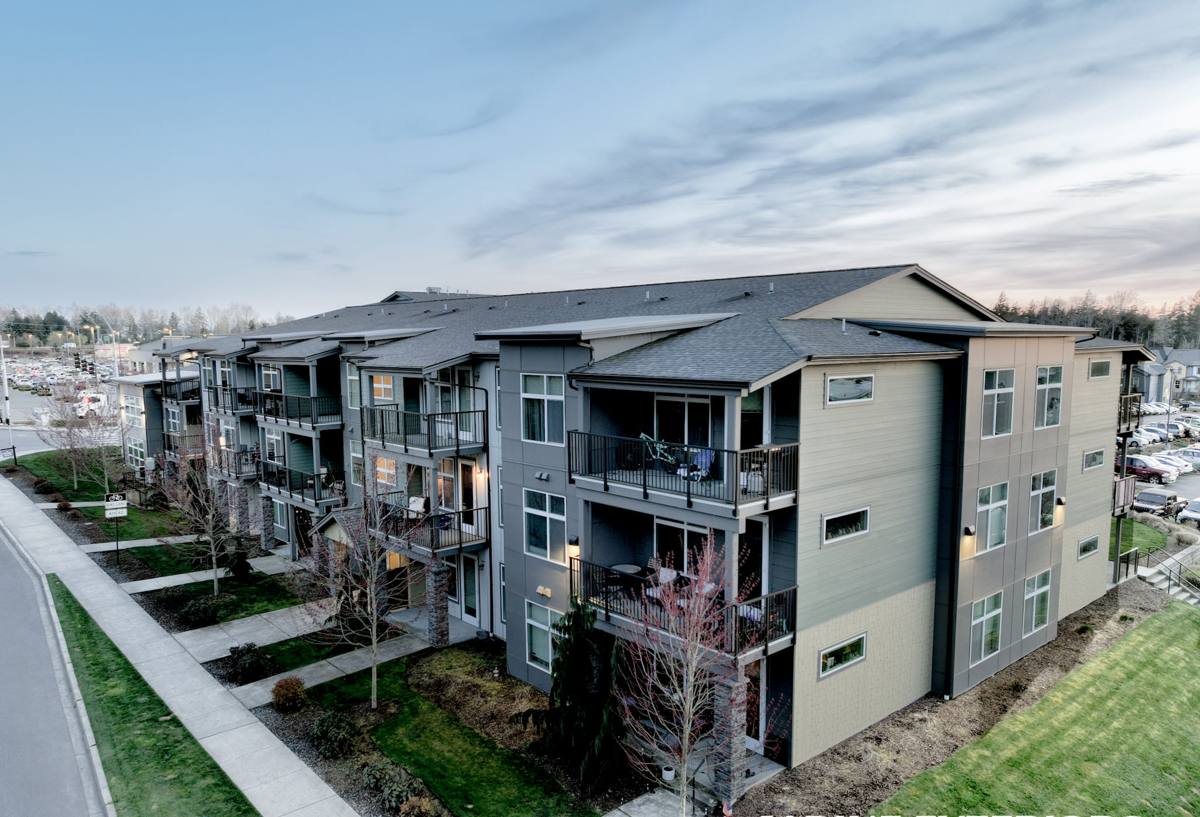
What Nooksack-Area Homes Actually Need From Their Siding
Moisture Management, Not Just Water Resistance
Most siding materials can shed rain when they're new and the caulk is fresh. The real test is what happens over years, when caulk joints shrink, panels flex, and small gaps open up at trim and butt joints. In a climate where a wall can stay damp for days after a storm, any material that absorbs water and holds it — instead of shedding it or drying out quickly — is going to swell, delaminate, or rot from the inside before the paint even starts to look bad.
Resistance to Moss and Algae Staining
Long stretches of shade, low winter sun angles, and consistent moisture are exactly what moss and algae need to take hold on north- and east-facing walls. Siding with a factory-applied, baked-on finish resists staining far longer than field-applied paint, which is porous by comparison and gives moss and mildew something to grip.
Stability Through Wet-Dry Cycling
The valley doesn't just get wet — it swings between saturated and dry as weather systems pass through. Siding that expands and contracts a lot with moisture content will eventually work its fasteners loose, open seams, and crack paint at the joints. A dimensionally stable material holds its fastening and its finish through those cycles.
Why We Install Only James Hardie Fiber Cement
We standardized on James Hardie fiber cement siding for every job we take on, including the Nooksack area, because it's the one product line that consistently meets the three needs above without asking the homeowner to manage a maintenance schedule to keep up with the climate.
- Non-combustible core: fiber cement doesn't feed a fire the way wood-based or foam-backed products can, which matters as much for insurance conversations as for safety.
- ColorPlus factory finish: baked on in a controlled environment, it resists fading, chipping, and the moss/algae staining that shows up fast on field-painted surfaces in this climate.
- Climate-engineered HZ5 formulation: Hardie's HZ5 product line is engineered for the Pacific Northwest's moisture and freeze-thaw pattern, not a one-size-fits-all national spec.
- Dimensional stability: fiber cement moves far less with humidity swings than wood, engineered wood, or vinyl, so joints and fasteners stay tight for decades instead of years.
- Transferable warranty: a strong, transferable manufacturer warranty backs the product, which helps at resale — an underrated factor in a family-oriented area like this.
We get asked why we don't install LP SmartSide, vinyl, or cedar. Each has legitimate uses elsewhere. In this specific climate, we've made the call that the long-term moisture exposure here isn't worth the trade-offs those materials carry, and we'd rather stand behind one product we trust completely than offer several we'd have reservations about.
What a Correct Installation Involves Here
Fiber cement siding is only as good as the wall assembly underneath it. In the Nooksack area, we pay particular attention to a handful of details that matter more here than in drier climates:
| Installation Element | Why It Matters Locally |
|---|---|
| Weather-resistive barrier and rainscreen gap | Creates a drainage plane and airflow channel so any water that gets behind the siding can drain and the wall cavity can dry between storms |
| Correct fastener type and spacing | Under-fastened or over-driven panels loosen faster under constant wet-dry cycling, opening gaps that let moisture in |
| Flashing at windows, doors, and penetrations | Driving rain in this valley finds any unflashed gap; proper flashing redirects water before it reaches sheathing |
| Factory-cut or properly sealed field cuts | Raw cut edges absorb moisture fastest; sealing them preserves the product's water resistance at trim and corners |
| Proper clearance at grade and roofline | Keeps siding out of standing moisture and splash-back, which is common where landscaping holds water near foundations |
Skipping any one of these doesn't show up as a problem in year one. It shows up in year five or eight, as staining, soft spots, or paint failure at the joints — long after the installer who cut corners has moved on to the next job.
Our Process for Nooksack-Area Projects
1. On-Site Assessment
We walk the exterior, check the current siding and any signs of moisture damage at trim, corners, and grade level, and look at sun exposure and shading on each elevation — that tells us which walls are most at risk for moss and which need extra attention during install.
2. Wall Prep and Moisture Check
Before any new siding goes up, we confirm the sheathing underneath is sound. Fiber cement siding installed over damaged or wet sheathing just locks in a problem, so we address any rot or moisture issues first.
3. Weather Barrier and Rainscreen Installation
We install a proper weather-resistive barrier with a drainage gap behind the siding — this is one of the most important, least visible parts of the job in a climate this wet.
4. Hardie Panel Installation to Manufacturer Spec
Fastening, spacing, flashing, and caulking are all done to James Hardie's published installation requirements, which is also what keeps the manufacturer warranty valid.
5. Final Walkthrough
We review the finished job with the homeowner, point out any maintenance-free features specific to their color and product line, and answer questions before we consider the job done.
What to Check Before Hiring Any Siding Contractor in This Area
- Do they have documented experience installing on homes in this specific valley/river climate, not just the broader county?
- Are they James Hardie certified or factory-trained, or are they treating fiber cement like any other lap siding?
- Will they show you the weather barrier and rainscreen detail before it's covered up?
- Do they carry proper licensing, bonding, and insurance for exterior work in Washington?
- Will they give you a written scope that specifies flashing details, not just "install siding"?
- Do they offer a real warranty on labor, separate from the manufacturer's product warranty?
A crew that's worked this specific corridor already knows which elevations tend to hold moss, which older homes in the area have moisture issues behind their existing siding, and how the local permitting process runs — that local familiarity translates directly into fewer surprises during the job.
Cost Factors for Nooksack-Area Siding Projects
| Factor | How It Affects the Job |
|---|---|
| Existing siding removal and disposal | Tear-off adds labor and disposal cost, especially if old siding shows moisture damage requiring sheathing repair |
| Home size and wall complexity | More corners, gables, and trim detail mean more cutting, flashing, and labor time |
| Sheathing or framing repair | Any rot found once old siding comes off needs to be addressed before new siding goes up |
| Product line and profile | Hardie offers multiple plank widths, textures, and ColorPlus colors at different price points |
| Access and site conditions | Sloped lots, mature landscaping, or limited equipment access can add time |
We give homeowners a real, itemized estimate after seeing the home in person — not a phone-quote guess — because these factors vary enough from house to house that ballpark numbers rarely hold up.
Signs Your Current Siding May Not Be Keeping Up
- Persistent moss or dark staining on north- or east-facing walls that comes back soon after cleaning
- Soft, spongy spots when you press on siding, especially near the bottom courses or around windows
- Paint that's peeling or bubbling rather than just fading evenly
- Visible gaps or separation at caulked joints and trim
- Warping, buckling, or panels that look wavy rather than flat
Any of these, especially combined with the wet, shaded conditions common in this part of Whatcom County, are worth having looked at before they turn into a sheathing repair.
If you're in the Nooksack area and dealing with aging, staining, or failing siding — or you're planning ahead for a home that's due — we're happy to come take a look and give you a straightforward, no-pressure estimate using the form below.