 Ferndale
 Asphalt Shingle Roofing Built for Marietta's Conditions
Marietta sits close to the water on the edge of Ferndale, and that location shapes what a roof has to put up with year-round. Homes here deal with salt-laden air coming off the bay, driving rain that comes in sideways more often than straight down, and a moss season that can stretch from fall through spring. An asphalt shingle roof that works well in a drier inland part of Whatcom County won't necessarily hold up the same way a few miles closer to the shoreline. We install and repair asphalt shingle roofs with that difference in mind, not as an afterthought.
This page is about one job in one place: asphalt shingle roofing for Marietta homes. Not a general overview of every roofing material we offer, and not advice written for a different climate. If you own a home in this part of Ferndale, this is what actually matters for your roof.
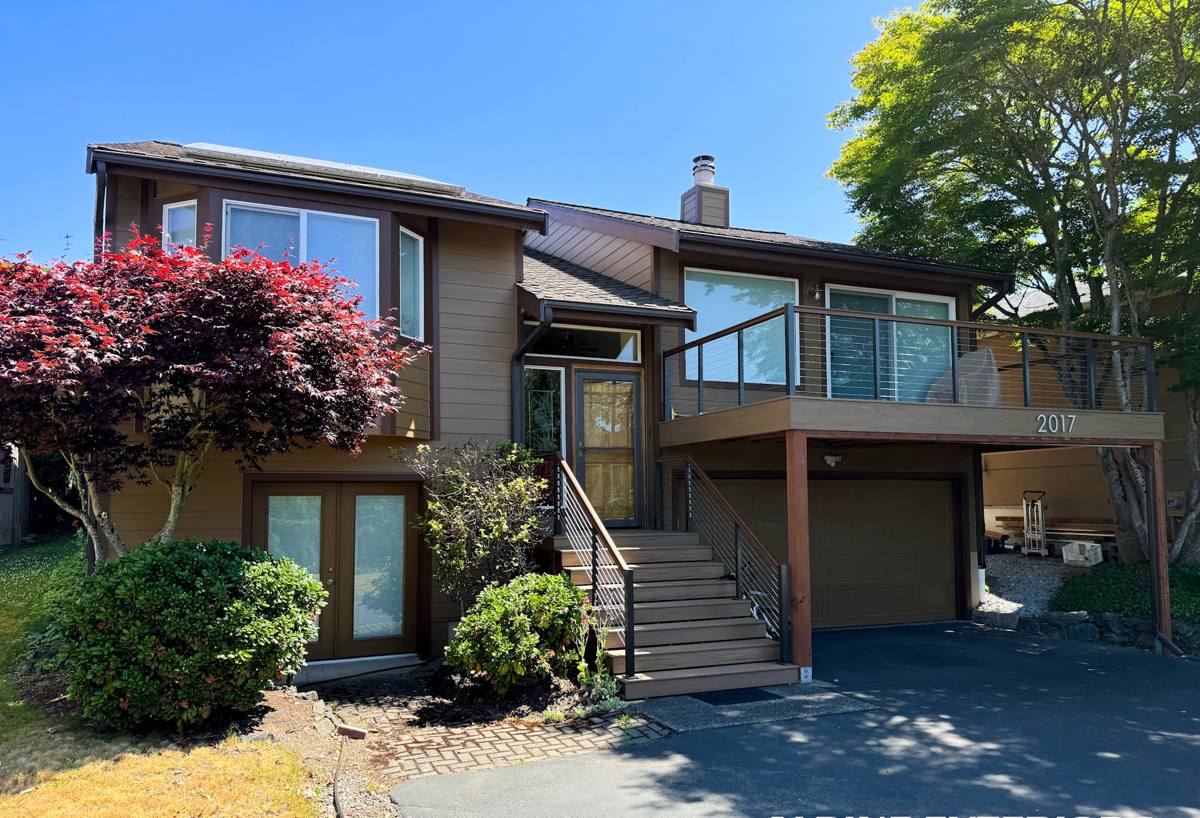
What Marietta's Climate Does to a Roof
Salt Air and Metal Components
Proximity to the water means airborne salt settles on every exterior surface, including your roof. Shingles themselves tolerate this reasonably well, but the metal flashing, fasteners, and vents that make a roofing system actually work are where salt exposure shows up first. Cheap or mismatched metal corrodes faster near the water than it would a few miles inland, and once flashing starts to degrade, water finds its way underneath the shingles instead of running over them.
Driving Rain and Wind-Driven Moisture
Whatcom County gets a lot of rain, but the wind that comes with it off the water is what causes the real damage. Rain that's pushed sideways works its way under shingle tabs, into exposed nail heads, and along poorly sealed valleys and edges in a way that vertical rain never would. A roof built for a calmer inland site, with standard exposure and minimal wind-rated fastening, is more likely to develop leaks in a spot like Marietta.
Moss and Shade
Between the marine humidity and the tree cover common around Ferndale properties, moss finds ideal growing conditions for a good part of the year. Moss isn't just cosmetic — it holds moisture against the shingle surface, works its way under tabs as it grows, and can lift shingles enough to let water in underneath. Roofs with north-facing slopes or heavy shade tend to see the worst of it.
What a Correct Asphalt Shingle Job Looks Like Here
A roof that's going to hold up in Marietta's conditions isn't just about the shingle brand on the wrapper. It comes down to the details underneath and around the shingles that most homeowners never see once the job is done.
- Corrosion-resistant flashing and fasteners, not standard-grade metal that starts pitting within a few seasons near the water
- Proper underlayment coverage, especially at eaves and valleys, so wind-driven rain has a second line of defense if it gets past the shingles
- Correct nailing pattern and placement — high-wind and coastal-adjacent conditions call for tighter fastening than a stock installation
- Balanced attic ventilation, so moisture from inside the home doesn't condense against the roof deck and encourage rot or moss growth from below
- Ice-and-water shield or equivalent membrane at vulnerable transitions — valleys, chimneys, skylights, and low-slope sections
- Shingle selection with algae-resistant granules where shade and moisture make moss and moss-related staining likely
Skip any one of these and the roof may still look fine from the driveway for a year or two. The problems that show up later — soft spots on the deck, staining on interior ceilings, shingles lifting at the edges — usually trace back to one of these details being rushed or skipped during installation.
Choosing Shingles for a Marine-Influenced Property
Not every asphalt shingle product is worth the same premium in every location. For a Marietta home, we weigh a few factors differently than we would for a roof further inland.
| Factor | Why It Matters in Marietta |
|---|---|
| Wind rating | Homes near open water see higher sustained gusts and more frequent storm-driven wind; a higher wind rating reduces tab lift and blow-off risk |
| Algae-resistant granules | Shaded, moisture-heavy conditions accelerate moss and algae growth; treated granules slow it without changing the maintenance schedule to something unrealistic |
| Shingle weight and thickness | Heavier architectural shingles resist wind uplift and impact better than three-tab in exposed locations |
| Warranty structure | Some manufacturer warranties reduce coverage in high-wind or coastal zones; worth reading before assuming full replacement value applies |
We don't push the most expensive shingle line on every roof. We match the product to what the specific property is exposed to — a well-sheltered lot a block off the water doesn't need the same spec as a home with a clear, unobstructed exposure to prevailing wind and rain.
Our Process for a Marietta Roofing Job
Inspection and Assessment
We start by walking the roof and the attic, not just the roof. Deck condition, ventilation, existing moss or algae staining, flashing condition around penetrations, and any signs of past leaks all factor into what the job actually needs — not just what it costs to strip and re-cover.
Honest Scope and Estimate
We give you a clear estimate that separates what's necessary from what's optional. If deck repair is needed, we tell you before the job starts, not as a surprise change order once the old shingles are off. If your existing roof has years of life left and only needs targeted repair, we'll say so.
Installation
Tear-off, deck inspection and repair as needed, underlayment, flashing, ventilation checks, and shingle installation, done in the sequence that actually protects the home — not a rushed order that skips steps to save a day.
Cleanup and Walkthrough
We clear the site of old material and debris, including a magnetic sweep for stray nails, and walk the finished roof with you so you know what was done and what to watch for going forward.
Repair, Recover, or Replace?
Not every roof in Marietta needs a full replacement. The right call depends on the age of the existing roof, the condition of the deck underneath, and how widespread the damage actually is.
| Situation | Typical Approach |
|---|---|
| Isolated leak, otherwise sound roof, shingles under 10-15 years old | Targeted repair — flashing, localized shingle replacement, or sealant work |
| Widespread moss damage or granule loss, deck still sound | Full tear-off and re-roof, since moss damage is rarely isolated to one section |
| Soft spots, sagging, or rot found during inspection | Deck repair required regardless of shingle age — this isn't optional |
| Roof nearing or past manufacturer's expected lifespan | Full replacement, since patching an aging roof usually costs more over time than one correct re-roof |
Costs vary based on roof size, pitch, accessibility, and how much deck repair is needed once the old shingles come off, so we won't quote a number here that wouldn't hold up once we've actually looked at your roof. What we can tell you is that a full, honest inspection costs you nothing and tells you which category your roof falls into.
Maintenance That Actually Matters in This Climate
A correctly installed roof still needs some upkeep in a location like Marietta, mostly centered on moss and debris control rather than anything dramatic.
- Clear moss buildup before it gets thick enough to lift shingle tabs — earlier and gentler is better than aggressive removal later
- Keep gutters clear so wind-driven rain has somewhere to go instead of backing up under the shingle edge
- Trim back tree limbs that keep sections of the roof shaded and damp longer than the rest
- Have flashing and sealant checked periodically, since these fail well before the shingles themselves usually do
- Address small leaks immediately — in a marine climate, moisture that sits in a deck for a season causes far more damage than the original leak
Why a Crew That Already Works Marietta Matters
A roofing crew that mostly works drier, inland areas of Whatcom County can still do competent work, but they're often applying a standard spec to a property that needs more. Knowing which streets sit exposed to open wind, which lots stay shaded and damp most of the year, and how quickly moss comes back on a north-facing slope near the water isn't something you get from a general roofing checklist. It comes from having done the work here repeatedly and seen what holds up and what doesn't.
We work throughout Ferndale and this part of Whatcom County, and Marietta's conditions are part of what we plan for before we ever get on the roof — not something we discover partway through the job.
Get a Straightforward Estimate
If your Marietta home needs a roof inspection, a repair, or a full asphalt shingle replacement, we're glad to take a look and give you a clear, honest assessment of where things stand. There's no pressure and no obligation — just a straight answer about what your roof needs. Use the form below to request your free estimate.