 Ferndale
 What Lynden's Climate Actually Does to a Shingle Roof
Lynden sits inland from the water compared to some of the rest of Whatcom County, but it still gets the same marine weather pattern that defines this whole corner of Washington: long wet winters, short dry summers, and a lot of gray, drippy weeks in between where a roof never really gets a chance to dry out completely. That pattern is what wears out an asphalt shingle roof here faster than the same product would wear out somewhere with a drier climate. It's not one dramatic storm that does the damage — it's months of moisture sitting on the roof deck, in the granules, and under poorly sealed flashing.
A Long, Wet Moss Season
Whatcom County's moss season runs most of the year in shaded, tree-covered areas, and a lot of Lynden properties have exactly that kind of tree cover along the roofline. Moss holds moisture against the shingle surface long after the rest of the roof has dried, which accelerates granule loss and can lift shingle edges enough for wind-driven rain to get underneath. A roof that looks fine from the ground can already have moss working under the tab edges on the north-facing slope.
Driving Rain and Wind-Driven Water
Pacific storm systems that move through this part of Washington often bring rain sideways, not straight down. That matters for roofing because it pushes water uphill under shingle laps, into nail penetrations, and around anything that interrupts the roof plane — vents, chimneys, valleys, skylights. A shingle roof that was installed to a lower standard, with shortcuts on underlayment or flashing, will leak in these conditions even if the shingles themselves are in decent shape.
Salt Air's Slower, Quieter Damage
Salt air is a bigger factor closer to Bellingham Bay and the water, but the same weather systems that carry it also move across the interior parts of the county, including Lynden. Its main effect on a shingle roof isn't the shingles themselves — it's the metal: nails, flashing, vent stacks, and drip edge corrode faster with repeated exposure to moist, salt-tinged air than they would inland in a drier climate. That's part of why fastener and flashing material choice matters as much as the shingle brand on a Whatcom County roof.
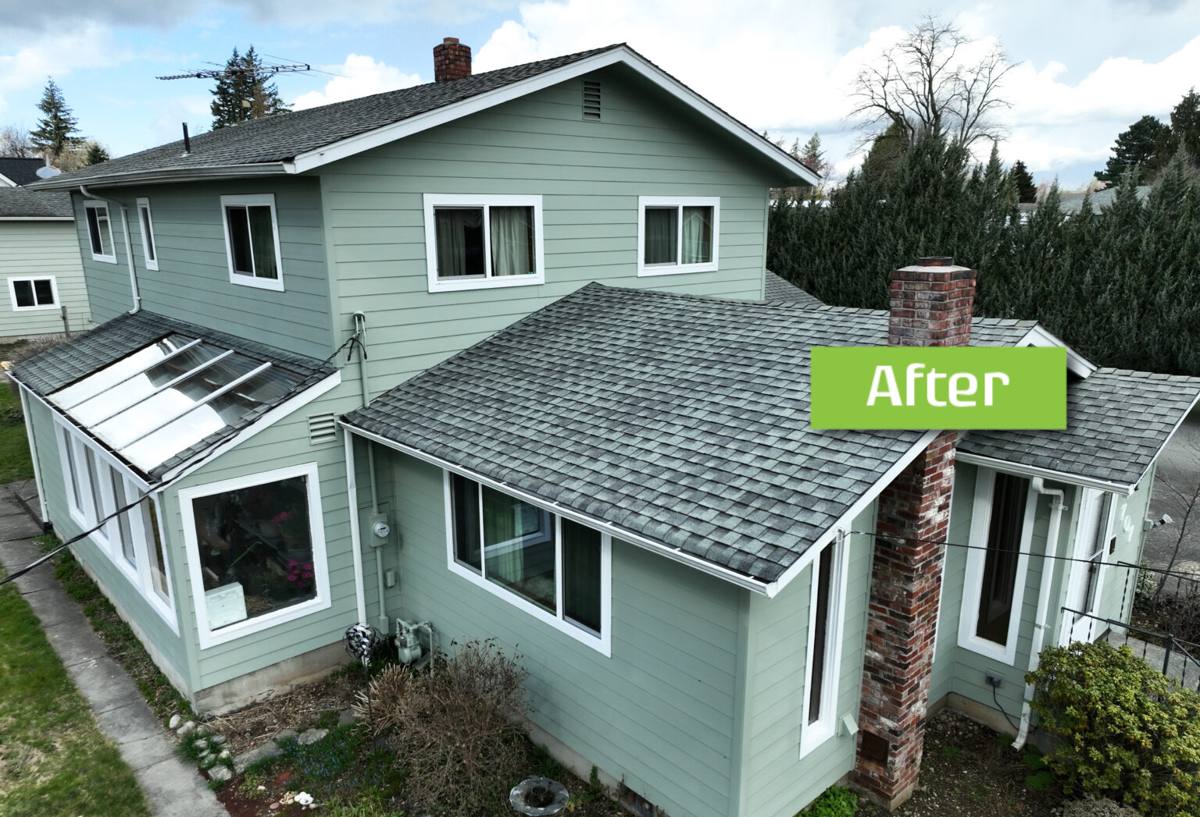
What a Correct Asphalt Shingle Installation Includes
Asphalt shingles are a forgiving, well-understood product, but the roof only performs as well as what's underneath it. Most leaks we get called out for on shingle roofs in this area trace back to the underlayment, flashing, or ventilation — not the shingles.
Underlayment and Ice-and-Water Barrier
A synthetic underlayment across the full deck is the baseline. In this climate, we also install self-adhered ice-and-water membrane at eaves, valleys, and around roof penetrations — the spots where wind-driven rain and standing water are most likely to find a weak point. This isn't an upgrade; on a roof that sees this much sustained rain, it's a basic requirement for a job that's supposed to last.
Nailing Pattern and Fastener Choice
Manufacturer nailing patterns exist for a reason — too few nails, or nails placed too high on the shingle, are one of the most common causes of blow-offs in wind events. We use corrosion-resistant fasteners appropriate for a wet, occasionally salt-influenced climate, and we nail to the pattern the shingle is rated for, not a shortcut version.
Flashing Details Matter More Than the Shingle Itself
Step flashing at walls and chimneys, proper valley metal, and correctly lapped drip edge are what actually keep water out at the places a roof is most likely to fail. A beautiful shingle job with cheap or reused flashing will leak within a few wet seasons. We replace flashing rather than reuse it whenever a roof is opened up for a full replacement.
Ventilation: The Part Homeowners Never See
A shingle roof needs balanced intake and exhaust ventilation to let moisture escape from the attic space. Without it, warm moist air condenses against the underside of the deck, which rots sheathing from the inside and can void a shingle manufacturer's warranty even if the shingles themselves are installed correctly. In a climate as consistently damp as this one, under-ventilated attics are one of the more common problems we find when we tear off an older roof, especially on homes that have had additions or insulation upgrades over the years without anyone revisiting the ventilation.
Choosing a Shingle for This Climate
Not every asphalt shingle product is built the same way, and the right choice depends on how much shade and moss exposure the roof gets, how exposed it is to wind, and the homeowner's budget and timeline for replacement.
| Shingle Type | Typical Lifespan Here | Moss/Algae Resistance | Wind Rating |
|---|---|---|---|
| Standard 3-tab | Shorter end of the range, given moss and moisture exposure | Standard granules only, unless algae-resistant option is chosen | Lower; more prone to lifting in driving wind and rain |
| Architectural / laminate | Longer than 3-tab under the same conditions | Usually available with algae-resistant granules | Higher, due to thicker, laminated construction |
| Impact-resistant laminate | Comparable to standard architectural, with added durability | Usually available with algae-resistant granules | Highest of the three; better suited to exposed sites |
For most Lynden homes, we recommend an architectural shingle with algae-resistant granules as the practical baseline — the extra upfront cost over 3-tab is modest compared to the difference in how the roof handles moss and driving rain over its life. We don't push impact-resistant or premium lines on every job; it's a fair option on more exposed roofs, but it's not required for every property, and we'll tell you honestly when the upgrade isn't worth the added cost for your situation.
Our Process for a Lynden Re-Roof or Repair
- On-site inspection of the current roof, deck condition, ventilation, and flashing — not just a look at the shingles from the ground.
- A written estimate that spells out the shingle line, underlayment, ice-and-water coverage, and flashing scope, so there's no ambiguity about what's included.
- Tear-off and deck inspection, with any soft or rotted sheathing replaced before anything new goes down.
- Installation of underlayment, ice-and-water membrane, new flashing, and shingles to manufacturer specification.
- Ventilation check and correction if intake or exhaust airflow is inadequate for the attic space.
- Full site cleanup, including a magnetic sweep for stray nails, and a final walkthrough before we consider the job done.
Maintenance That Actually Extends Roof Life Here
A correctly installed shingle roof in this climate still needs some upkeep. Most of it is simple and doesn't require a professional every time.
- Clear moss buildup on shaded slopes before it spreads across the whole roof plane, using a method that doesn't damage granules.
- Keep gutters and downspouts clear so water isn't backing up under the lowest course of shingles.
- Trim back tree limbs that keep sections of the roof shaded and damp longer than the rest.
- Check the attic occasionally for musty smells or damp insulation, which can point to a ventilation or flashing issue before it becomes a visible leak.
- Have the roof looked at after any significant windstorm, even if nothing looks obviously wrong from the ground.
Why a Crew That Already Works Lynden Roofs Differently
Roofing crews that mostly work drier climates tend to under-build for what this area actually needs — less ice-and-water coverage, lighter flashing details, ventilation sized for a different set of assumptions. A crew that works Whatcom County regularly, including Lynden and the surrounding Ferndale area, builds every roof assuming the long wet season and moss exposure are the normal case, not the exception. That shows up in small decisions throughout the job: where ice-and-water membrane gets extended, how valleys are detailed, and how much attention goes into fastener and flashing material in a climate that's harder on metal than most.
Local experience also means fewer surprises around permitting and inspection timelines specific to the county, and a better read on what's normal for the housing stock in this area — older farmhouses with simple gable roofs sit alongside newer builds with more complex rooflines, and each comes with its own ventilation and flashing considerations.
Warranties: What's Ours and What's the Manufacturer's
An asphalt shingle roof carries two separate warranties, and it's worth understanding the difference. The manufacturer's warranty covers defects in the shingle material itself, but it typically requires the roof to be installed to their exact specification — correct nailing pattern, proper ventilation, compatible underlayment — or the warranty can be reduced or voided. Our workmanship warranty covers our installation itself, separate from the manufacturer's coverage. We'll walk you through both in plain terms before the job starts, including what's covered, what isn't, and what would void either one.
If you're weighing a repair against a full replacement, or just want an honest read on how much life is left in your current roof, we're happy to take a look. Reach out for a free, no-pressure estimate using the form below.