 Ferndale
 Siding Built for a Salt-Air, Rain-Heavy Coastline
Homes around Lummi Nation sit close to Bellingham Bay, which means the exterior of a house is doing a different job here than it does ten miles inland. Salt-laden air moves off the water and settles on every north- and west-facing wall. Driving rain off Georgia Strait weather systems hits siding at an angle, not just straight down. And because the marine layer keeps humidity high for months at a stretch, moss and algae get a long runway to establish themselves on anything that stays damp. Siding in this stretch of Whatcom County has to handle all three at once, year after year, without babysitting from the homeowner.
We install James Hardie fiber cement siding exclusively, and this page is specifically about what that product needs to look like and be installed like on a home in the Lummi Nation area. It's not a generic overview of Hardie siding — it's what we've learned putting it on homes exposed to this exact combination of salt, rain, and shade-driven moss growth.
Why Salt Air Changes the Siding Conversation
Salt air is corrosive to metal and slowly abrasive to painted wood surfaces. Fasteners, flashing, and trim accessories all take more abuse near the water than they do a few miles inland. This matters for two reasons on a siding job:
- Fastener choice matters more here. Hardie's own installation specs call for corrosion-resistant fasteners, and in a salt-exposed zone like this, that's not a box to check and move past — it's the difference between trim that holds for decades and trim that starts weeping rust streaks in five years.
- Factory-cured finish holds up better than field-applied paint. James Hardie's ColorPlus finish is baked on and cured at the factory, which gives it better adhesion and UV/salt resistance than a coat of paint rolled on-site after installation. In a salt environment, finish integrity is what keeps the board from chalking and fading unevenly.
- Caulking and sealant joints need real attention. Salt air accelerates the breakdown of cheap sealants. Every joint — around windows, at trim boards, at butt joints — needs a sealant rated for exterior/marine-adjacent exposure, not whatever is cheapest at the box store.
Why Driving Rain Demands Correct Water Management
Ferndale-area storms rarely fall straight down. Wind off the water pushes rain sideways into walls, which puts pressure on every horizontal seam and every penetration in the siding. This is where installation quality — not the siding material itself — decides whether a wall stays dry.
What correct water management actually involves
| Component | What it does | Why it matters here |
|---|---|---|
| Weather-resistive barrier (housewrap) | Second line of defense behind the siding | Catches any water that gets past the cladding during a wind-driven storm |
| Rainscreen / drainage gap | Lets water that gets behind the siding drain and air-dry | Critical in a climate where walls rarely get a stretch of dry days to dry out on their own |
| Flashing at windows, doors, and penetrations | Directs water outward and downward, away from the sheathing | The single most common source of hidden rot when installed wrong or skipped |
| Proper board overlap and fastening pattern | Keeps joints tight against wind-driven rain | Hardie's specs exist for a reason — this is where amateur installs fail first |
None of this is unique to Hardie siding — it's true of any cladding. But because fiber cement is dimensionally stable and doesn't warp or cup the way wood-based products can, it holds a tight seal at these details far longer, as long as the install itself was done right.
Why Moss Season Is a Real Design Factor Here
Shaded walls, tree cover, and a wet climate that doesn't fully dry out for months make moss and algae growth a predictable problem on north-facing and heavily shaded siding in this area. This isn't a defect in any siding product — it's biology finding a damp surface. But some materials handle it better than others.
- Fiber cement doesn't feed mold or rot the way wood-based siding can, since it has no organic wood fiber for fungi to break down.
- A hard, factory-cured finish is easier to keep clean — a periodic soft wash removes surface growth without damaging the substrate underneath.
- Ventilated wall assemblies (the rainscreen gap mentioned above) reduce how long a wall stays damp, which is the actual variable that determines how fast moss establishes itself.
We're not going to tell a homeowner moss won't ever appear on a shaded wall near the water — it will, on any siding material, eventually. What correct installation and material choice do is slow that process down and make cleaning it off safe and easy instead of something that damages the siding.
What a Correct James Hardie Install Looks Like Here
Product selection
James Hardie's HZ5 product line is engineered for regions with more moisture and freeze-thaw cycling than the Southeast/Gulf-focused HZ10 line. Whatcom County's coastal climate falls squarely in HZ5 territory, and using the correctly rated product line isn't cosmetic — it affects the moisture and durability performance of the board itself.
Fastening and clearances
Correct nail spacing, correct fastener penetration into structural framing (not just sheathing), and proper clearance between the bottom of the siding and grade, roofing, or decking surfaces all matter more in a wet climate. Too little clearance and the bottom course of siding sits in a damp microclimate that never fully dries — one of the more common mistakes we see on older installs in this area.
Trim and accessory details
Corner boards, window trim, and butt joints are where most siding failures actually start, not on the flat field of the wall. We treat every one of these details — flashing above trim, sealed but not sealed shut, back-primed cuts — as part of the job, not an afterthought after the field boards go up.
Our Process for a Lummi Nation Siding Project
- On-site assessment. We look at sun/shade exposure, wind direction relative to the water, existing moisture damage, and current water management (or lack of it) before quoting anything.
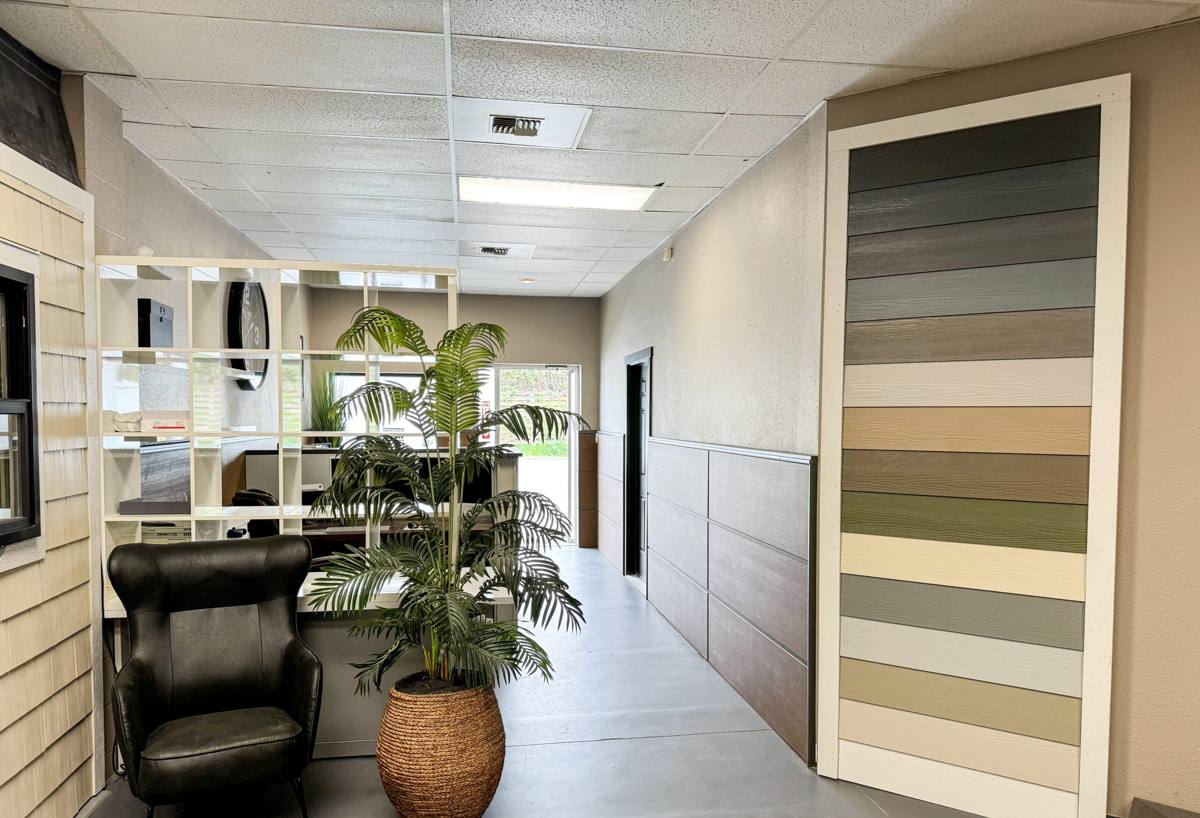
- Product and color plan. We recommend the correct Hardie line and profile (lap, panel, shingle-style) for the home's exposure, and walk through ColorPlus options that hold up to UV and salt without repainting.
- Tear-off and sheathing check. Old siding comes off and we inspect the sheathing underneath for rot or existing moisture damage before anything new goes on — this is the step that gets skipped on rushed jobs and causes problems years later.
- Water management install. Housewrap, drainage gap, and flashing go in per spec, matched to this climate, before a single piece of siding is hung.
- Siding install to Hardie spec. Correct fastener type, spacing, and clearances — no shortcuts on the details that matter most in a wet, salty environment.
- Final walkthrough. We go over caulking, trim, and clearances with the homeowner before calling the job done.
Why a Crew That Already Works This Area Matters
A siding crew that mostly works dry, inland climates can install Hardie siding perfectly well by the book and still get water management details wrong for a coastal, salt-air, high-rain area — because those details aren't the same everywhere. A crew that regularly works around Ferndale and the water knows which walls need extra flashing attention, which fastener spec actually holds up to the salt exposure here, and where moss is going to be a maintenance factor from day one versus a non-issue. That local pattern recognition is the difference between a siding job that looks right at handoff and one that still looks right in year fifteen.
What This Costs and What Drives the Price
Every home is different, so we don't quote sight-unseen numbers on a page. What actually moves the price on a project in this area:
| Cost Factor | Why It Matters Here |
|---|---|
| Extent of existing water damage | Rotten sheathing found during tear-off adds repair scope before new siding can go on |
| Home's exposure to wind-driven rain | West/north-facing walls near the water often need more flashing and detail work |
| Trim complexity | Corners, dormers, and multiple rooflines multiply the labor-intensive detail work |
| Siding profile and finish choice | Lap vs. panel vs. shingle-style, and standard vs. premium ColorPlus finishes, price differently |
| Access and site conditions | Tree cover, slope, and staging space affect labor time |
A Quick Checklist for Homeowners Evaluating Bids
- Does the bid specify the Hardie product line (HZ5 for this climate) by name, or just "Hardie siding"?
- Does it include a rainscreen/drainage gap, or just housewrap directly under the siding?
- Does it name the fastener type and spacing, and is it corrosion-resistant hardware appropriate for a salt-air area?
- Does it include sheathing inspection and repair as a line item if rot is found during tear-off?
- Is flashing at windows, doors, and trim called out specifically, not lumped into "trim work"?
- Is the crew familiar with this specific stretch of coastline, or mostly experienced inland?
If you're weighing a siding replacement or repair near Lummi Nation and want a straight answer about what your home actually needs, we're happy to take a look. The estimate is free, there's no pressure, and you'll get a plan specific to your home's exposure — not a generic quote.