 Ferndale
 Siding Built for Lummi Nation's Coastal Exposure
Homes in and around Lummi Nation sit closer to saltwater than almost anywhere else in Whatcom County. That proximity is part of what makes the area beautiful, and it's also exactly what wears out the wrong siding material faster than homeowners expect. Salt-laden air, wind-driven rain off Bellingham Bay and the Strait of Georgia, and a shoulder season that stays damp and shaded for months add up to conditions that punish anything less than a properly engineered, correctly installed exterior. We install James Hardie fiber cement siding here for that reason, and only that reason — it's the one product system we've found holds up to this specific combination of stressors without turning into a maintenance project for the homeowner.
This page is about one service in one place: fiber cement siding installation for homes in the Lummi Nation area. We're not going to cover every siding option on the market or every neighborhood we work in — just what this climate demands, what a correct installation actually involves, and why the crew doing the work matters as much as the material itself.
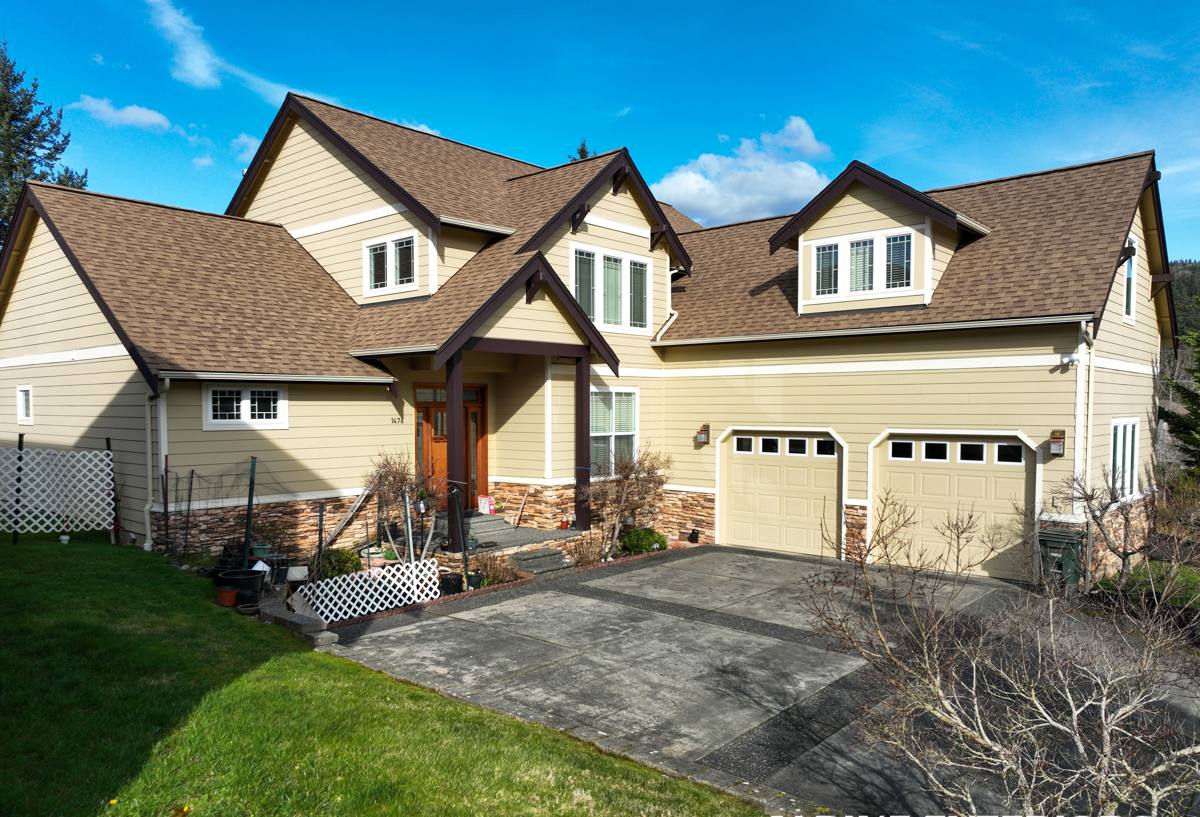
What This Climate Actually Does to Siding
Salt air
Airborne salt doesn't just sit on a wall — it works into seams, fasteners, and any exposed edge of a building material. Metals corrode faster near saltwater, and organic or wood-based sidings absorb the moisture that salt air carries more readily than they'd absorb plain rainwater. Over years, that's a slow, steady degradation that shows up as rust streaking, swelling, and finish failure well before a siding product's rated lifespan.
Driving rain
Storms coming off the water don't fall straight down — they hit siding at an angle, under wind pressure, which pushes water into laps, joints, and butt seams that a calm-weather rain would never reach. A siding system that isn't detailed for wind-driven rain will eventually let water behind the cladding, and once that happens the problem is inside the wall, not on the surface where you can see it.
The long moss season
Whatcom County's wet season stretches long, and shaded, north-facing walls near tree cover — common throughout this area — can stay damp for weeks at a stretch. That's exactly the environment moss and algae need. Some siding materials feed that growth or trap moisture against the substrate; others resist it because the material itself doesn't hold water and the factory finish doesn't give organic growth anything to grip.
Why Fiber Cement Is the Right Answer Here
James Hardie fiber cement is cement, sand, and cellulose fiber, and none of those three ingredients rot, corrode, or feed mold the way wood-based products can. It doesn't absorb bulk water into its core structure the way engineered wood siding does, and it's non-combustible, which matters increasingly to insurers and to homeowners thinking about wildfire risk in drier months. The ColorPlus factory finish is baked on under controlled conditions rather than field-applied, which means the color layer itself resists the fading and cracking that site-applied paint goes through when it's exposed to years of salt air and UV.
Hardie also builds region-specific product lines engineered for different climate zones — HZ5 for harsher, wetter, freeze-prone regions. Whatcom County's coastal exposure is exactly the kind of environment those engineering choices were made for. This isn't marketing language; it's the reason we standardized on this one manufacturer instead of carrying multiple siding lines.
What a Correct Fiber Cement Installation Involves
Fiber cement performs exactly as well as it's installed — no better. Most of the failures we get called out to inspect on other contractors' work trace back to installation shortcuts, not the material itself. A correct job includes:
- A proper weather-resistive barrier installed and lapped correctly before any siding goes up
- Rainscreen or drainage gap detailing appropriate to a high-moisture coastal site, so any water that gets behind the cladding can drain and dry
- Correct fastener type, spacing, and penetration depth — Hardie specifies these precisely, and skipping them voids the manufacturer warranty
- Proper clearance at grade, decks, and roof lines so siding never sits in standing water or snow load
- Factory-caulked or correctly field-sealed joints at every seam, corner, and penetration
- Flashing integrated at every window, door, and roof intersection — not just caulk bridging the gap
- Panel and lap siding installed to the manufacturer's specified exposure, not "close enough"
Any one of these done wrong can let water behind the siding, and on a saltwater-adjacent property that moisture problem compounds faster than it would inland.
Cladding Format Options
| Format | Best fit | Notes for this area |
|---|---|---|
| HardiePlank lap siding | Most single-family homes | Traditional look, wide color range, proven in wind-driven rain when laps are correctly overlapped |
| HardiePanel vertical siding | Accent walls, modern or craftsman styling | Fewer horizontal laps means fewer water-entry points on exposed elevations |
| HardieShingle | Gable accents, coastal cottage styling | Decorative use; still needs the same drainage detailing behind it |
| Trim & soffit | Every project | Matching fiber cement trim avoids the mismatched decay rate you get pairing wood trim with fiber cement field siding |
Our Process for Lummi Nation Projects
1. On-site assessment
We look at existing siding condition, sheathing and framing where accessible, drainage paths around the foundation, tree cover and shade patterns, and which elevations take the worst of the weather off the water. That assessment drives the plan — not a generic spec sheet.
2. Tear-off and substrate check
Old siding comes off and we check what's underneath. In coastal, damp-prone areas we routinely find sheathing that's absorbed more moisture than the old cladding let on. This is the point where hidden problems get fixed, not covered over.
3. Weather barrier and drainage plane
This layer is what actually keeps a home dry — the siding is the second line of defense, not the first. We install and lap the barrier correctly and add drainage detailing suited to a high-moisture site.
4. Fiber cement installation to manufacturer spec
Fastening, spacing, flashing, and joint treatment all follow Hardie's published installation requirements, which is also what keeps the manufacturer warranty intact.
5. Final detailing and walkthrough
Caulking, touch-up paint at cut edges, and a walkthrough so the homeowner understands what was done and what maintenance — if any — to expect going forward.
Maintenance Expectations for This Location
Fiber cement is low-maintenance, not zero-maintenance. In a salt-air, high-moss environment, homeowners should still plan on:
- An annual rinse-down to clear salt residue and organic buildup, especially on shaded or north-facing walls
- Periodic caulk inspection at joints and penetrations — caulk ages faster than the siding itself
- Keeping gutters clear so overflow doesn't run down the face of the siding repeatedly
- Trimming back vegetation that keeps a wall section shaded and damp longer than it needs to be
None of this is unusual upkeep — it's the same basic care any exterior needs near saltwater, and it's considerably less than what wood-based or vinyl products typically require in this same setting.
Why We Don't Install Other Materials Here
We get asked about vinyl and engineered wood siding regularly, and we're upfront about why we don't install them. Vinyl can warp and gap in wind-driven rain conditions, and its seams are a weak point exactly where this climate attacks hardest. Engineered wood products depend heavily on field-applied sealing at cut edges and joints to keep moisture out; miss one edge in a salt-air environment and that's where deterioration starts. We're not saying these products fail everywhere — we're saying we've made a professional call that they're not the right standard for what this specific coastline does to a house, and we'd rather install one product correctly than offer several and hope conditions cooperate.
Why the Local Crew Matters
A contractor who already works this stretch of Whatcom County knows which elevations on a given lot take the worst weather, how far salt exposure typically reaches inland from the water, and how long moss-prone shaded walls actually stay wet through the fall and winter. That local pattern recognition shows up in small decisions — where to add extra flashing attention, which walls need tighter joint sealing, how much drainage capacity to build in — that a crew unfamiliar with this specific coastline might not think to prioritize.
Get an Estimate
If you're planning a siding replacement in the Lummi Nation area, we're happy to come take a look, walk the property with you, and put together a clear, honest estimate — no pressure, no obligation. Use the form below to get started.