 Ferndale
 Building Decks for Lummi Nation's Coastal Conditions
Homes around Lummi Nation sit close to the water, and that changes what a deck needs to survive. Between Bellingham Bay and the Lummi Peninsula's shoreline exposure, decks here take on salt-laden air, wind-driven rain that gets up under railings and into ledger boards, and a moss season that can run from October well into April. A deck built to a generic spec sheet will look fine for a year or two. A deck built for this specific stretch of Whatcom County holds up for decades.
We build and repair decks throughout Ferndale and the surrounding Lummi Nation area, and the lessons from one job carry directly into the next because the climate challenge doesn't change from property to property — only the layout does.
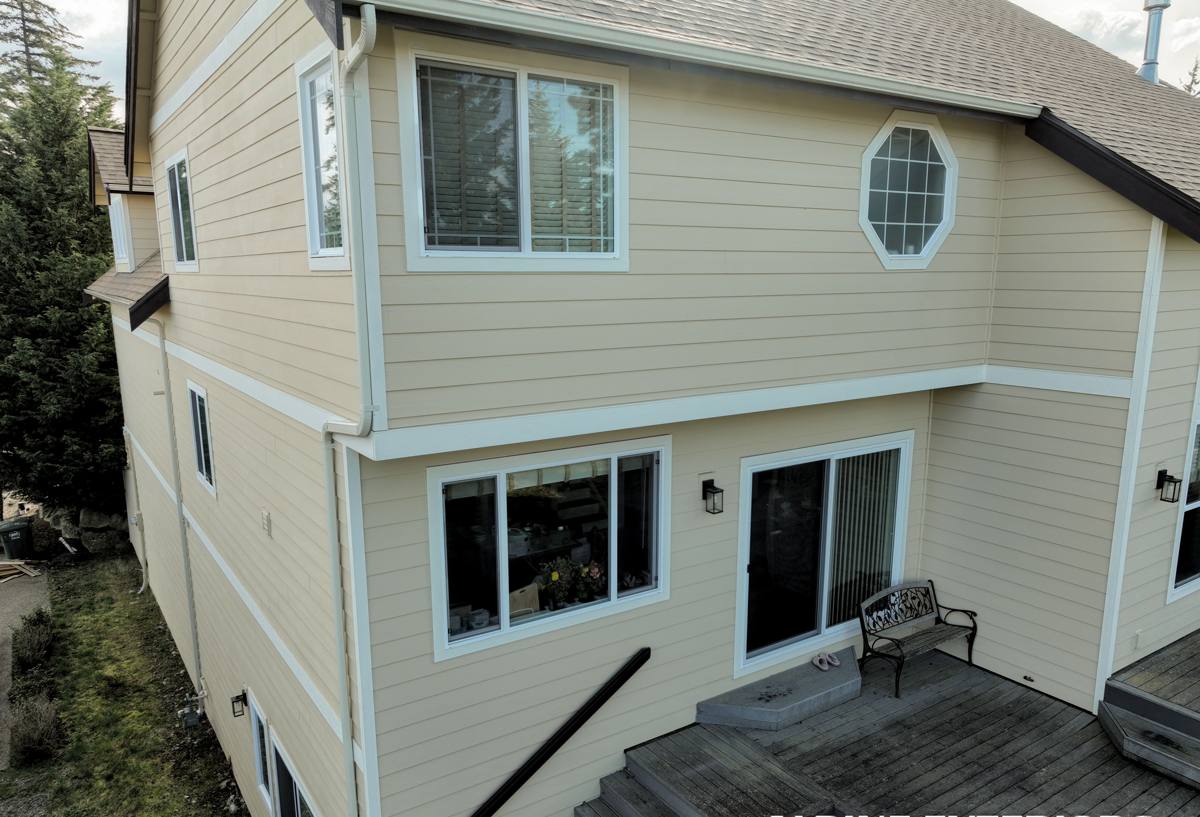
What Salt Air and Marine Exposure Do to a Deck
Proximity to saltwater is the single biggest difference between a deck built here and one built inland. Salt in the air accelerates corrosion on anything metal — fasteners, joist hangers, post bases, railing hardware. Standard hot-dip galvanized fasteners can start showing rust streaks within a few seasons in a marine environment; the fastener itself may still hold, but the staining down the face of a board and the eventual weakening of the connection are real problems.
Where corrosion shows up first
- Joist hanger nails and screws, especially where hangers sit closest to grade
- Railing post connections and any exposed structural bolts
- Fastener heads on the deck surface itself, where standing water sits longest
- Metal post caps and decorative hardware left unrated for coastal use
Our standard for anything built in this area is stainless steel or coated fasteners rated for coastal/marine use at every structural connection, not just the visible surface screws. It costs more up front than mixed hardware grades, but it's the difference between a deck that needs hardware replaced in year eight versus one that doesn't.
Driving Rain and Where Decks Actually Fail
Whatcom County doesn't just get rain — it gets a lot of it moving sideways off the water, and that matters more for a deck's structure than most homeowners expect. The point where a deck ledger board attaches to the house is the single most common failure location we find on older decks in this area, and it's almost always a moisture problem rather than a structural one.
The ledger connection, done right
A correct ledger installation includes flashing that directs water away from the house sheathing, not just a board bolted to the rim joist. When flashing is missing, installed backwards, or the wrong material for the siding it meets, water works its way behind the ledger over years. By the time it's visible — soft trim, staining, a spongy spot in the decking near the house — the rot is usually already into the rim joist or the wall framing behind it. We check and correctly flash every ledger connection as a non-negotiable part of new deck builds and any deck reattached during a repair.
Drainage under the deck
Driving rain also means water gets pushed sideways under the deck itself, not just straight down through the gaps. Proper board spacing, a slight slope away from the house, and clear ventilation underneath all matter more here than in drier parts of the state. A deck built tight to grade with no airflow underneath will trap moisture against the framing regardless of what decking material sits on top.
The Long Moss Season
Moss and algae growth on deck surfaces is mostly a function of shade, moisture, and time — and this area gives you plenty of all three for a good chunk of the year. Moss doesn't just look bad; it holds moisture against the board surface and makes the deck slick and genuinely dangerous underfoot, especially on stairs.
What actually reduces moss buildup
- Decking material choice — some materials shed moisture and resist organic growth far better than others
- Board spacing and airflow — tighter, poorly spaced boards trap damp debris
- Sun exposure and nearby tree cover, which we factor into material recommendations during the estimate
- A basic seasonal cleaning routine, which we'll walk you through regardless of what material you choose
No deck material is moss-proof in a climate like this. The goal is choosing a material and a build that keeps moss manageable with reasonable upkeep, not promising a maintenance-free surface that doesn't exist here.
Decking Material Options for This Climate
There isn't one "correct" material for every deck — it depends on budget, how much maintenance you want to take on, and how exposed the deck is to weather. Here's how the common options actually perform in Ferndale and Lummi Nation's specific conditions.
| Material | Moisture/Salt Air Performance | Moss & Algae Resistance | Maintenance |
|---|---|---|---|
| Pressure-treated wood | Good if properly sealed and re-sealed on schedule | Moderate — needs regular cleaning | Highest — annual inspection, periodic sealing |
| Cedar | Naturally moisture-resistant, but exposed cut ends need sealing | Moderate | Moderate — periodic staining/sealing |
| Composite decking | Excellent — doesn't absorb water like wood | Good, though surface texture and shade still affect growth | Low — occasional washing |
| PVC/cellular decking | Excellent — fully synthetic, no wood fiber to hold moisture | Best of the common options | Lowest — soap and water rinse |
Composite and PVC decking cost more per square foot than wood, but in a marine, high-rain climate the reduced maintenance and lower moisture-related failure risk often make up the difference over the life of the deck. We'll walk through the real trade-offs for your specific site and budget rather than push one product line.
Framing and Fasteners: Where We Don't Cut Corners
The decking surface is what you see, but the framing underneath is what determines whether the deck is safe and how long it lasts. In this climate, we treat the following as standard, not upgrades:
- Stainless or coded coastal-rated fasteners and hangers at every structural connection
- Properly flashed ledger boards with correct water diversion at the house connection
- Footings set to local frost and soil requirements, sized correctly for the deck's actual load
- Joist tape or comparable protection on top of framing lumber to slow moisture intrusion at fastener penetrations
- Railing posts through-bolted rather than surface-mounted where the deck height requires it
None of this is visible once the deck is finished, which is exactly why it's worth asking a contractor directly what fastener grade and flashing method they use before work starts.
Permits and Whatcom County Requirements
Deck projects above a certain size or height typically require a permit and inspection, and requirements can differ slightly depending on whether the property falls under Whatcom County jurisdiction or tribal land use rules specific to the Lummi Nation area. We handle the permit process as part of the job and confirm the correct requirements for your specific property before we start design work, so there are no surprises partway through the build.
Our Process for a Lummi Nation Deck Project
- On-site assessment — we look at sun exposure, drainage patterns, existing structure (for repairs or replacements), and how exposed the site is to wind and salt air.
- Material and design discussion — honest trade-offs on decking material, railing style, and layout based on your budget and how much maintenance you want to take on.
- Permit confirmation and structural design — sized footings, correct span tables, and a ledger/flashing plan matched to your home's siding and wall assembly.
- Build — coastal-rated fasteners, proper flashing, correct airflow and drainage underneath, and inspection-ready framing at every stage.
- Walkthrough — we explain what maintenance your specific material and site actually need, so the deck performs the way it's supposed to for years, not just for the first season.
Repairs and Replacing an Existing Deck
A lot of the calls we get from the Lummi Nation area aren't new builds — they're older decks showing the classic signs of this climate: soft boards near the house, rusted fastener heads bleeding down the siding, moss buildup that's become a slip hazard, or a ledger connection that's finally failed after years of trapped moisture. We assess whether a deck can be safely repaired at the framing level or whether the structural issues mean a rebuild is the more honest recommendation. We won't resurface a deck with a compromised ledger connection or rotted framing just to make it look fixed.
If you're planning a new deck or dealing with an aging one in Lummi Nation or elsewhere around Ferndale, we're happy to take a look and give you a straightforward, no-pressure estimate — including what we'd actually recommend for your site's sun, wind, and moisture exposure. Reach out using the form below to get started.