 Ferndale
 Why Everson Homes Need Siding Built for This Climate
Everson sits inland from the coast, but it doesn't escape the weather patterns that define Whatcom County. Storms roll off the Strait and push rain sideways across the Nooksack valley for days at a time. Winters stay damp and mild rather than cold and dry, which means moisture sits against exterior walls far longer here than it would in a drier climate. Add in the shade from mature trees along many Everson properties and you get long stretches where siding simply doesn't get a chance to dry out between rain events.
That combination — driving rain, sustained dampness, and shaded, slow-drying wall surfaces — is exactly the environment that wears out the wrong siding material fastest. It's also why moss and algae growth is a near-constant maintenance issue for homeowners in this area, not an occasional nuisance. Siding here needs to shed water aggressively, resist fungal growth on its surface, and hold its finish without cracking or absorbing moisture at the seams. Most siding materials get one or two of those things right. Very few get all three.
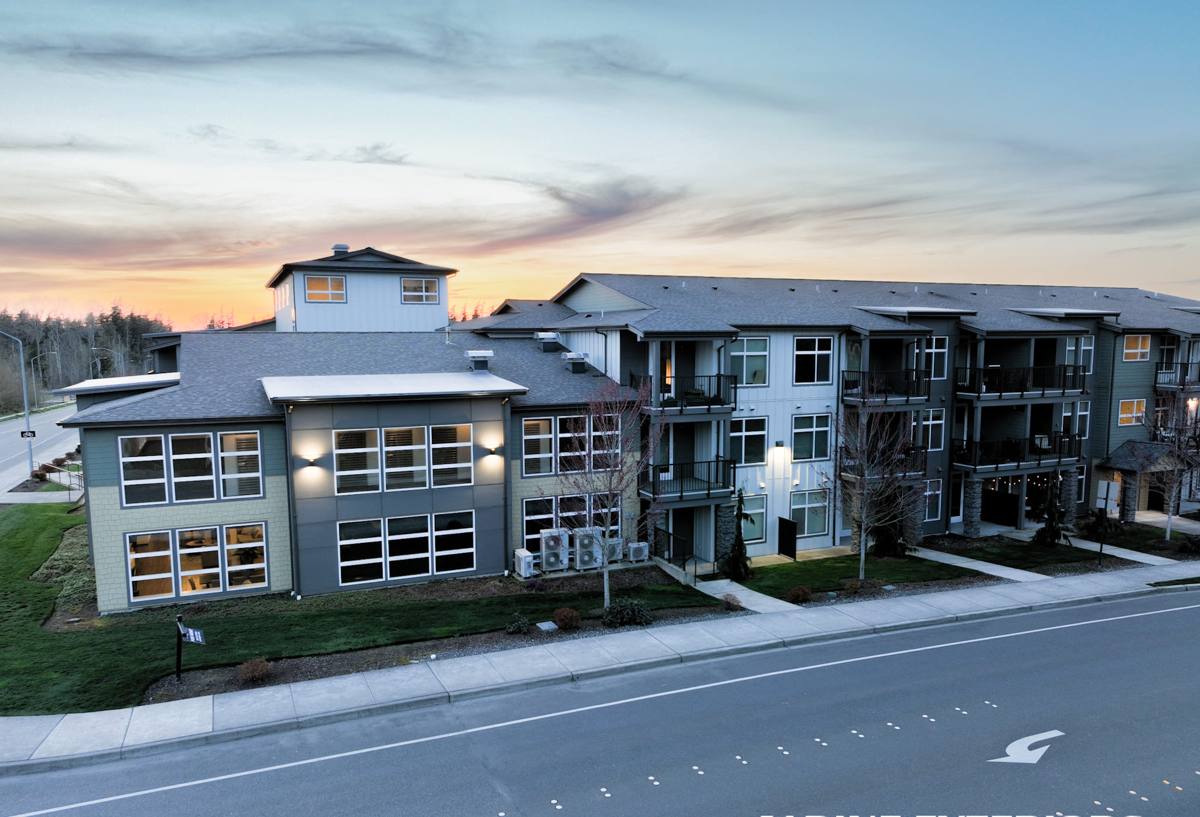
Why We Only Install James Hardie
Our company made a deliberate decision to install James Hardie fiber cement exclusively — not vinyl, not LP SmartSide, not Cemplank or Allura, not primed spruce or cedar. That's not a marketing position, it's a maintenance-and-longevity position based on what actually holds up in Whatcom County's weather.
Vinyl siding is lightweight and low cost, but it flexes and can warp in temperature swings, and its seams and panel laps give wind-driven rain an entry point. Wood products like cedar and primed spruce look great initially but need repainting, caulking, and moisture vigilance on a schedule most homeowners can't keep up with in a climate this wet — and once wood siding takes on moisture, rot follows quickly. Engineered wood products like LP SmartSide perform reasonably well but are still wood-based composites, meaning they carry some of the same moisture-sensitivity concerns at cut edges and fastener points. Other fiber cement brands (Cemplank, Allura) are chemically similar to Hardie, but we've standardized on one product line so our crews install to one spec, one flashing detail, and one warranty structure, every time, with no guesswork.
James Hardie's fiber cement is non-combustible, dimensionally stable in wet-dry cycling, and finished at the factory with ColorPlus Technology — a baked-on finish that resists fading and chipping far better than field-applied paint. For a market like Everson, where siding sits wet more often than it sits dry, that stability matters more than almost any other spec.
What Correct Installation Requires in This Climate
James Hardie siding performs to its rated lifespan only when it's installed to manufacturer spec — and in a high-rain-exposure area like Whatcom County, the details that get skipped on a rushed job are exactly the details that cause problems five or ten years down the road. A correct installation on an Everson home includes:
- A drainable weather-resistive barrier behind the siding, not just housewrap stapled flat against the sheathing
- Proper flashing at every window, door, and penetration, integrated with the water-resistive barrier in the correct shingle-lap order
- Minimum clearance gaps at the bottom of the siding, at grade, and at roof-to-wall intersections so water has somewhere to go
- Correct fastener type, placement, and spacing per the Hardie installation manual — not generic nailing patterns
- Factory-cut and factory-primed edges wherever possible, with any field cuts re-sealed per spec
- Caulking only where Hardie's install guide calls for it — over-caulking traps moisture just as often as under-caulking lets it in
Skip any one of these and you can still end up with moisture intrusion behind fiber cement siding that looks fine from the curb. That's the trap: fiber cement is forgiving on the surface, which means a bad install can go unnoticed for years before it shows up as soft sheathing or interior staining.
Matching the Product Line to the Site
James Hardie makes several product lines, and part of doing this job right is picking the right one for the specific exposure a home faces — not just defaulting to whatever's cheapest or most common.
| Product Line | Best Suited For | Relevant to Everson |
|---|---|---|
| HardiePlank Lap Siding (HZ10) | Standard climate exposure, most residential builds | Solid baseline choice for most Everson homes away from heavy tree cover or direct storm exposure |
| HardiePlank Lap Siding (HZ5) | Higher moisture/freeze-thaw regions | Often the better call for shaded, slow-drying lots or homes taking the brunt of prevailing storm wind |
| HardiePanel Vertical Siding | Board-and-batten style, accent walls, gable ends | Useful for gable peaks and accent sections where lap siding isn't the right look |
| HardieTrim | Corners, fascia, window/door trim | Pairs with any lap or panel choice; keeps trim from becoming the weak point in an otherwise solid install |
The HZ5 vs. HZ10 distinction is engineering-specific to moisture and freeze-thaw exposure, and it's one of the reasons a generic, out-of-area install crew can get the spec wrong. Local exposure conditions — how much direct rain a wall face takes, how much shade keeps it from drying, how close it sits to grade — should drive that decision, not a one-size-fits-all default.
Color and Finish Considerations for a Damp Climate
ColorPlus Technology finishes are baked on in a controlled factory environment, which gives far more consistent, fade-resistant color than field-painted siding — a real advantage in a climate where field-applied paint has to cure in unpredictable, often damp conditions. For Everson homes specifically, darker ColorPlus finishes show moss and algae streaking more readily than lighter, more muted tones, simply because contrast makes it visible sooner. That's not a reason to avoid dark colors, but it's worth factoring into the decision if low-maintenance appearance matters to you — lighter and mid-tone finishes tend to go longer between exterior washes before staining becomes visually obvious.
Our Installation Process
Every Everson project follows the same sequence, regardless of home size:
- On-site assessment: we walk the exterior, check existing sheathing and moisture conditions, and identify problem areas — north-facing walls, shaded sections, grade clearance issues — before quoting anything
- Product line selection: HZ5 vs. HZ10, plank vs. panel, and trim package chosen based on actual exposure, not a default package
- Tear-off and sheathing check: old siding removed, sheathing inspected and repaired as needed before anything new goes up
- Water-resistive barrier and flashing: installed per Hardie spec, with extra attention to window/door integration and roof-to-wall transitions
- Siding installation: fastened, spaced, and gapped to manufacturer tolerances
- Trim, caulking, and final inspection: finished with HardieTrim details and a final walk-through before we call the job done
We don't skip steps to save a day on the schedule. In a climate this wet, the steps that get skipped are the ones that come back as callbacks two or three winters later.
Why Local Install Experience Matters
A crew that's worked Whatcom County exterior projects before understands things a generalist crew has to learn on the job: which wall orientations take the worst of the driving rain, how much moss pressure to expect on shaded siding, how local grade and drainage conditions affect where water sheds off a house. That knowledge shapes real decisions — HZ5 vs. HZ10, where to add extra flashing attention, which finish tones will hold up with less washing. It's the difference between a crew installing generic siding and a crew installing siding correctly matched to this specific climate.
Cost Factors Homeowners Should Understand
James Hardie siding costs more upfront than vinyl and is competitive with or below quality wood siding once you account for long-term maintenance. Several factors move the price on any given Everson project:
| Factor | Effect on Cost |
|---|---|
| Sheathing condition underneath old siding | Rot or moisture damage found during tear-off adds repair cost before new siding goes up |
| HZ5 vs. HZ10 product selection | HZ5 typically carries a modest premium, justified on higher-exposure wall faces |
| Home complexity (dormers, gables, trim detail) | More corners, cuts, and trim transitions increase labor time |
| Color and finish selection | Standard ColorPlus colors vs. premium or custom finishes affect material cost |
| Access and site conditions | Steep lots, limited access, or extensive landscaping can add labor time |
We give straightforward, itemized quotes so you can see where the cost is actually going, rather than one flat number with no breakdown.
Signs Your Current Siding Is Already Failing
Whatcom County's moisture load means siding problems often show up before most homeowners expect them. Watch for:
- Persistent moss or algae streaking that returns quickly after cleaning
- Soft spots or visible warping, especially near the bottom courses or around windows
- Paint that's peeling or bubbling rather than just fading
- Visible gaps or separation at seams and corners
- Musty odor or staining on interior walls that share an exterior wall
- Siding that feels damp or spongy to the touch after a dry stretch
Any of these are worth a professional look before they turn into sheathing or structural repairs.
If you're weighing a siding replacement for a home in Everson or elsewhere in Whatcom County, we're happy to walk the property, look at your specific exposure, and put together a straightforward, no-pressure estimate — use the form below to get started.