 Ferndale
 Sumas Sits Right in the Path of Whatcom County's Toughest Weather
Homes in and around Sumas take a beating that a lot of siding products were never built to handle. Wind-driven rain comes in sideways off the lowlands more often than most homeowners realize, moisture sits in shaded north walls for weeks at a time, and the moss season here doesn't really end — it just slows down. Add in the salt-tinged marine air that moves through Whatcom County off Puget Sound and the Strait of Georgia, and you've got a combination that finds every weak seam, every unsealed cut end, and every gap in a house's water management system.
This isn't a page about siding in general. It's about what fiber cement siding needs to do specifically for a Sumas home, what a correctly installed job actually looks like, and why we send the same local crew back to this area again and again instead of rotating in whoever's available that week.
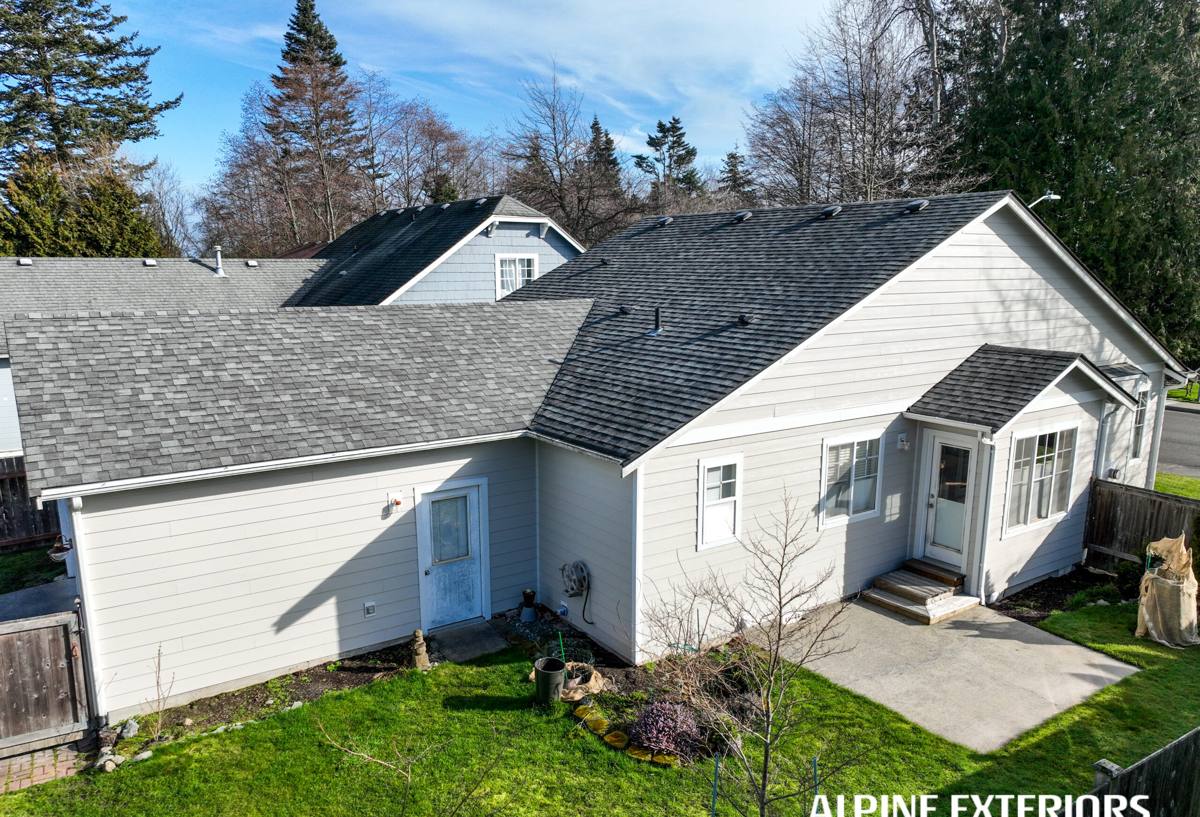
What This Climate Does to the Wrong Siding Choice
We get asked constantly why we don't install vinyl, LP SmartSide, or cedar anymore. The honest answer is that we watched how each one performs after a few Whatcom County winters, not how it performs in a brochure.
| Material | How It Handles Driving Rain | Moss/Algae Behavior | Long-Term Maintenance |
|---|---|---|---|
| Vinyl | Panels can warp or bow when moisture and temperature swing; seams rely on lap-over fit, not sealed joints | Moss and algae take hold in shaded, damp panel overlaps | Low upkeep but limited lifespan in wind-driven rain zones; brittle over time |
| Cedar / primed wood | Absorbs moisture at end grain and fastener holes; needs a tight paint film to stay ahead of it | Moss thrives on organic wood surface, especially north and shaded walls | Repaint and re-caulk on a recurring cycle; rot risk if maintenance slips |
| LP SmartSide | Engineered wood strand product; performs well when detailed correctly, but edge-swell risk if end cuts and joints aren't sealed exactly to spec | Better than raw wood, but still an organic substrate underneath the coating | Manufacturer requires strict field-sealing of every cut; skipped steps show up later as swelling |
| James Hardie fiber cement | Non-combustible cement composite; doesn't absorb and swell like wood-based products when installed with proper clearances and flashing | ColorPlus factory finish is engineered to resist moss and algae growth better than field-painted or raw wood surfaces | No repainting cycle under normal conditions; occasional gentle cleaning is typically all that's needed |
None of these products are junk — vinyl is cheap and cedar looks great fresh off the truck. But in a climate that stays wet for months at a stretch, the products with organic cores or fit-dependent seams are the ones that give us callbacks. That's the real reason we standardized on one product line instead of offering all of them.
Why We Only Install James Hardie Fiber Cement
James Hardie's fiber cement is cement, sand, and cellulose fiber, engineered specifically to not behave like wood. It doesn't have a wood core to swell, rot, or feed moss the way organic siding substrates do. Hardie also builds climate-specific product lines — the HZ5 and HZ10 formulations are engineered for different moisture and freeze conditions across the country, which matters in a county where the wet season is long and the wall assembly rarely gets a chance to fully dry out between storms.
ColorPlus Finish vs. Field Paint
The factory-applied ColorPlus finish is baked on under controlled conditions, which gives it more consistent coverage and better resistance to fading and moss/algae staining than a field-painted board. That matters here specifically because north-facing and shaded walls in Sumas hold moisture longer, and a weak paint film is exactly where moss gets its first foothold.
Non-Combustible Composition
Fiber cement is non-combustible, which is a meaningful difference from wood-based and vinyl siding in wildfire-adjacent and rural-adjacent parts of Whatcom County, even though our bigger day-to-day concern here is moisture, not fire.
Warranty Structure
James Hardie backs its siding with a strong, transferable limited warranty on the material and a separate finish warranty on ColorPlus color. That warranty is only meaningful if the installation itself follows Hardie's published fastening, clearance, and flashing requirements — which is the next section, and the part most installers get wrong.
What a Correct Fiber Cement Installation Actually Involves
Fiber cement siding fails prematurely almost never because of the product itself — it fails because of installation shortcuts. Here's what we check on every Sumas job, whether it's a full re-side or a repair section:
- Weather-resistant barrier installed continuously behind the siding, lapped correctly with flashing at every penetration
- Minimum required clearance maintained between the bottom of the siding and roofing, decks, and grade
- Proper starter strip at the base course so the first row sits at the correct angle and drains correctly
- Kick-out flashing installed at every roof-to-wall intersection so runoff is directed into the gutter, not behind the siding
- All factory cut ends sealed per manufacturer spec before installation, not painted over afterward
- Fasteners driven at the correct pattern and depth — not overdriven, which cracks the board and opens a water path
- Butt joints and trim sealed with a compatible, paintable sealant rated for exterior exposure
- Ventilation gaps preserved where the wall assembly calls for a rainscreen, especially on shaded and north-facing elevations
Every one of these steps exists because of a specific failure mode we've seen on homes where they were skipped. Skipping kick-out flashing, for example, is a small omission that shows up two or three winters later as a stained or soft section of wall right below a roof line — exactly the kind of slow damage that's hard to trace back to the original install.
Our Process, Start to Finish
1. On-Site Assessment
We look at the existing siding, the condition of the sheathing underneath where accessible, drainage patterns around the foundation, and which elevations get the most weather exposure. This tells us where extra attention to flashing and clearance is needed.
2. Tear-Off and Substrate Check
Old siding comes off and we inspect the sheathing and existing barrier for moisture damage before anything new goes up. Covering a wet or compromised substrate with new siding just locks the problem in.
3. Weather Barrier and Flashing
We install or verify the weather-resistant barrier, then detail every window, door, and roof-to-wall intersection with flashing before a single piece of Hardie board goes on.
4. Installation to Manufacturer Spec
Fastening, clearances, joint treatment, and sealing all follow James Hardie's published installation requirements — not shortcuts, not "close enough."
5. Final Inspection and Warranty Registration
We walk the finished job looking specifically for anything that could let water in over time, then register the installation so the manufacturer warranty is properly in place for the homeowner.
Cost Factors for a Sumas Siding Project
We don't publish flat per-square-foot pricing because it genuinely depends on the house, but these are the variables that move the number most on jobs in this area:
| Factor | Why It Affects Cost |
|---|---|
| Existing siding removal | Tear-off of old wood, vinyl, or damaged material adds labor before new siding can start |
| Substrate repair | Rot or moisture damage found during tear-off has to be repaired before re-siding, common on homes with a history of the maintenance-heavy materials in the table above |
| Home size and wall complexity | Cutouts, dormers, and multiple roof lines mean more flashing detail and cut work |
| Siding profile and trim package | Lap width, trim boards, and accent details change material and labor quantities |
| ColorPlus color selection | Standard colors versus specialty colors can affect lead time and material cost |
| Site access | Tight lots, fencing, or limited staging area can add labor time |
Why a Local Crew Matters More Than It Sounds Like It Would
A crew that regularly works Sumas and the surrounding Ferndale area already knows which elevations on a typical local house catch the worst of the wind-driven rain, how long the moss season really runs here, and what the wall assembly needs to survive it. That's not something you get from a national installer passing through once. It also means faster response if a warranty question or a minor issue comes up after the job is done — we're not driving in from out of the area, we're already here.
Consistency matters too. Every crew we send follows the same James Hardie installation standard on every job, which means the quality of your install doesn't depend on which subcontractor happened to be available that month.
Living With Fiber Cement Siding After Installation
One of the practical upsides of switching to fiber cement in this climate is how little ongoing maintenance it demands compared to wood or repainted siding. There's no repainting cycle to keep up with under normal conditions. Homeowners typically just need an occasional gentle rinse to keep pollen, dust, and any surface moss spores from building up, especially on shaded walls. Keeping gutters clear and grading water away from the foundation still matters — no siding product overcomes a house that's constantly wet at the base — but the siding itself is no longer the weak link.
If you're weighing a re-side in Sumas or anywhere around Ferndale, we're glad to come take a look, walk the exterior with you, and give you a straight, no-pressure estimate based on your actual house — not a generic quote. Use the form below to get started.