 Ferndale
 Decking in a Marine Climate Isn't a One-Size-Fits-All Job
Homes near Fairhaven and around Ferndale sit close enough to the water and the marine air moving off Bellingham Bay that decking takes a different kind of abuse than it would twenty miles inland. Salt-laden air accelerates corrosion on hardware, driving rain finds its way into any gap that wasn't detailed correctly, and Whatcom County's long, low-sun winters keep decks damp and shaded for months at a stretch. A deck that would hold up fine in a drier climate can start showing problems here within a couple of seasons if it wasn't built with this specific exposure in mind.
Composite decking is a strong fit for this environment when it's installed correctly, but "composite" isn't a magic word that makes moisture and moss stop being a concern. The material choice matters, and so does the installation underneath it — arguably more so.
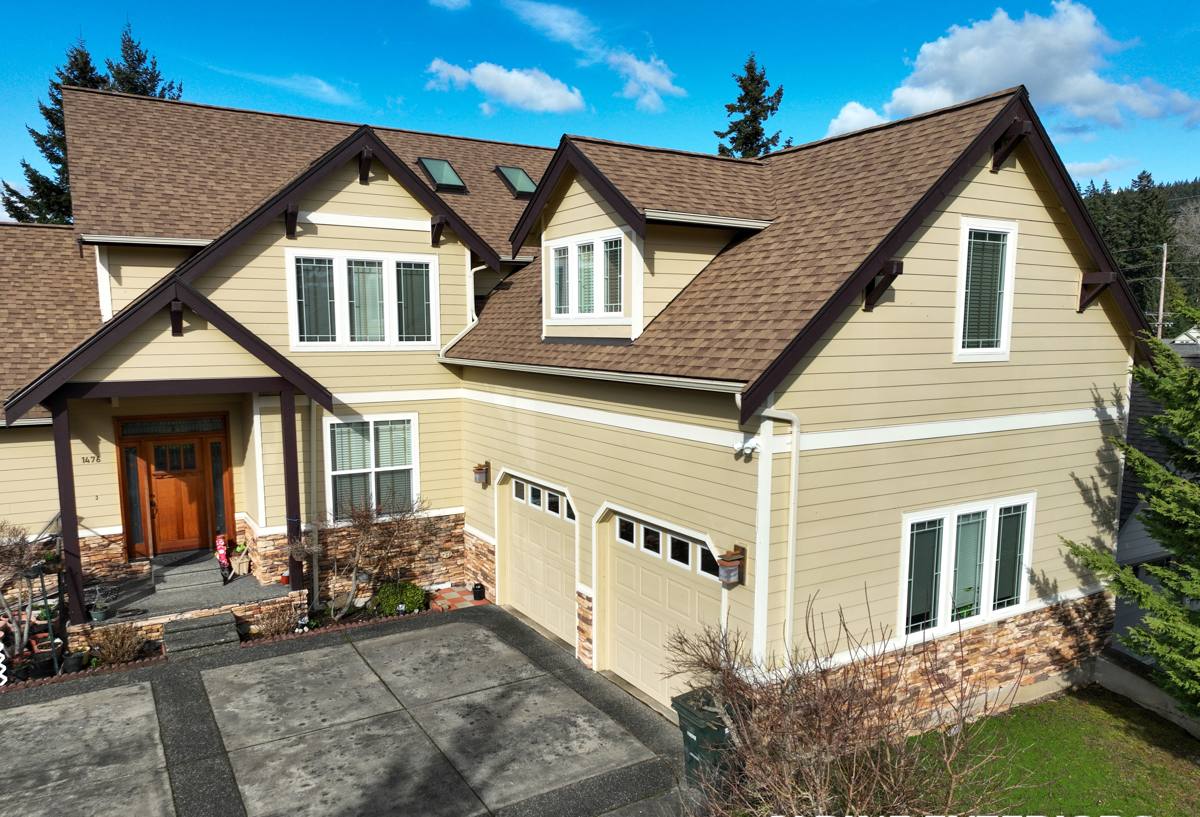
What Fairhaven-Area Homes Actually Need From a Deck
Moisture Management
Driving rain here doesn't just fall straight down — wind-driven storms off the water push moisture sideways, under railings, and into board end cuts and fastener holes. A deck built for this climate needs consistent drainage slope, gapped boards sized for our humidity swings, and flashing details at the ledger board that actually shed water away from the house rather than trapping it against the rim joist.
Salt Air and Corrosion
Proximity to the bay means airborne salt settles on everything, including the fasteners and structural hardware under the deck boards you never see. Standard hardware can start showing rust and pitting well before the decking itself shows any wear, which is a problem because failing hardware is a structural issue, not a cosmetic one.
Moss, Algae, and Shade
Whatcom County's moss season is long — many properties get shaded, damp conditions for a good chunk of the year, especially decks tucked under tree cover or on the north side of a house. Moss and algae need a foothold, and the surface texture, drainage gaps, and airflow underneath the deck all affect how fast that foothold forms.
Composite vs. Other Decking Materials for This Climate
| Material | Moisture Behavior | Maintenance Burden | Moss/Algae Resistance |
|---|---|---|---|
| Quality composite (capped) | Doesn't absorb water like wood; resists rot and splintering | Periodic washing; no staining or sealing | Good, especially with a capped, textured surface, though buildup can still occur in deep shade |
| Pressure-treated wood | Absorbs moisture, prone to cupping and checking in wet-dry cycles | Regular staining/sealing to keep water out | Poor — porous surface holds moisture and organic growth |
| Cedar | Naturally moisture-resistant but still a wood product | Sealing and upkeep to preserve color and protection | Moderate; still needs cleaning in shaded, damp spots |
| Uncapped composite | Can absorb moisture at the surface over time depending on formulation | Lower than wood, higher than capped composite | Fair — more prone to surface staining than capped boards |
We install capped composite as our standard recommendation for coastal Whatcom County properties specifically because the cap layer resists moisture absorption and staining better than uncapped boards, without the annual sealing cycle that wood requires. That's a judgment call based on how these products actually perform in our climate over years, not a knock on wood as a material — it just asks more of a homeowner in an environment like this one.
What a Correct Composite Decking Installation Actually Involves
Substructure and Framing
The composite boards only perform as well as what's underneath them. That means proper joist spacing for the specific composite product (composite often needs tighter spacing than lumber decking to prevent flexing), a ledger board properly flashed and sealed against the house, and framing lumber that's rated for ground contact or exterior exposure where it's needed.
Fasteners and Hardware
In a salt-air environment, we use corrosion-resistant, coated fasteners and structural hardware rated for coastal exposure — not standard interior-grade hardware that will pit and stain within a few seasons. This is the kind of detail that's invisible once the deck is finished but determines how long the structure holds up underneath the decking surface.
Drainage and Airflow Beneath the Deck
We build in proper slope away from the house and keep airflow open underneath the deck so moisture doesn't sit trapped against the framing. Skirting, if used, gets vented rather than sealed tight, because a sealed, damp cavity under a deck is exactly the kind of spot that grows problems you won't see until they're expensive.
Board Spacing and Cut-End Sealing
Composite boards expand and contract with temperature and moisture. Gapping has to account for that movement, and any field-cut ends need to be treated per the manufacturer's specification so water doesn't wick into exposed core material at the cut.
Our Process for a Fairhaven-Area Composite Deck
- On-site assessment — we look at drainage, sun/shade exposure, existing structure (if it's a rebuild), and how exposed the site is to wind-driven rain and salt air.
- Structural evaluation — checking ledger attachment, existing framing condition, and whether footings or posts need repair or replacement before new decking goes down.
- Material selection — walking through composite options and color/texture choices suited to the home and the site's shade level.
- Framing and flashing — building or reinforcing the substructure with coastal-rated hardware and correct ledger flashing.
- Composite board installation — proper spacing, fastening method, and stair/railing integration.
- Final walkthrough — reviewing drainage, railing security, and care basics with the homeowner before we consider the job done.
Cost Factors for Composite Decking Projects
| Factor | Why It Affects Cost |
|---|---|
| Deck size and shape | More square footage and complex angles or multiple levels increase material and labor |
| Substructure condition | Rebuilding or reinforcing framing costs more than decking over sound existing structure |
| Composite product tier | Capped, higher-end composite boards cost more upfront than base-grade options |
| Railing and stair systems | Custom railing, especially composite or metal-and-composite combinations, adds to the total |
| Site access | Difficult access or significant grade changes can increase labor time |
We don't quote a job without seeing the site — a flat, easily accessed deck rebuild and a multi-level deck on a sloped, shaded lot are different projects even at the same square footage. A broad range for a straightforward composite deck project runs from a few thousand dollars for a small deck to well into five figures for a large, multi-level structure with custom railing — but the only honest number is one based on your specific site.
Maintaining a Composite Deck in Whatcom County's Climate
Composite is lower-maintenance than wood, not maintenance-free. In a climate with this much rain and shade-driven moss pressure, a little seasonal attention keeps a deck looking and performing the way it should for the long haul.
- Sweep off leaves, needles, and debris regularly, especially in fall and during moss season, so organic matter doesn't sit and hold moisture against the boards
- Wash the surface periodically with a mild soap and water or a manufacturer-approved composite cleaner to prevent algae and moss buildup, particularly in shaded areas
- Keep gutters and downspouts near the deck clear so runoff isn't dumping extra water onto the deck surface
- Check railing posts and stair connections annually for looseness — hardware in salt air is the first thing to show wear
- Trim back overhanging vegetation where practical to reduce shade and speed up drying between rain events
- Avoid pressure-washing at close range or high pressure, which can damage the cap layer on composite boards
Why It Matters to Hire a Crew That Already Works This Area
A contractor who works regularly around Ferndale and the surrounding Whatcom County coastline already knows how wind-driven rain behaves on an exposed lot, how much shade a typical property gets through the winter, and which hardware and detailing choices actually hold up against salt air over years rather than months. That's not something you get from a generic installation manual — it's the kind of judgment that comes from building and maintaining decks in this specific climate, not a milder inland one where those details matter less. It also means we're a known, findable local business if you ever need a hardware check, a repair, or a question answered five years down the road.
If you're planning a new composite deck or replacing an aging one near Fairhaven or elsewhere around Ferndale, we're glad to take a look at your site and walk you through what it would take to build it right for this climate. Reach out for a free, no-pressure estimate using the form below.