 Ferndale
 Building Decks for Point Roberts' Unusual Coastal Exposure
Point Roberts sits on its own small peninsula, surrounded on three sides by the Strait of Georgia and Boundary Bay. That geography means homes here take a different kind of weather beating than most of Whatcom County. Wind comes off open water with almost nothing to slow it down, salt spray settles on every exterior surface within a mile or two of shore, and the same marine air that keeps summers mild also keeps decks damp for days after a storm passes. A deck built to a generic Pacific Northwest spec will survive here — but it won't age well, and it won't last as long as one built specifically for this exposure.
We've worked on homes throughout Whatcom County long enough to know that Point Roberts isn't just "Ferndale but on the water." The combination of salt air, driving rain that comes in sideways during winter storms, and a moss season that can run seven or eight months out of the year changes almost every material and construction decision on a deck project.
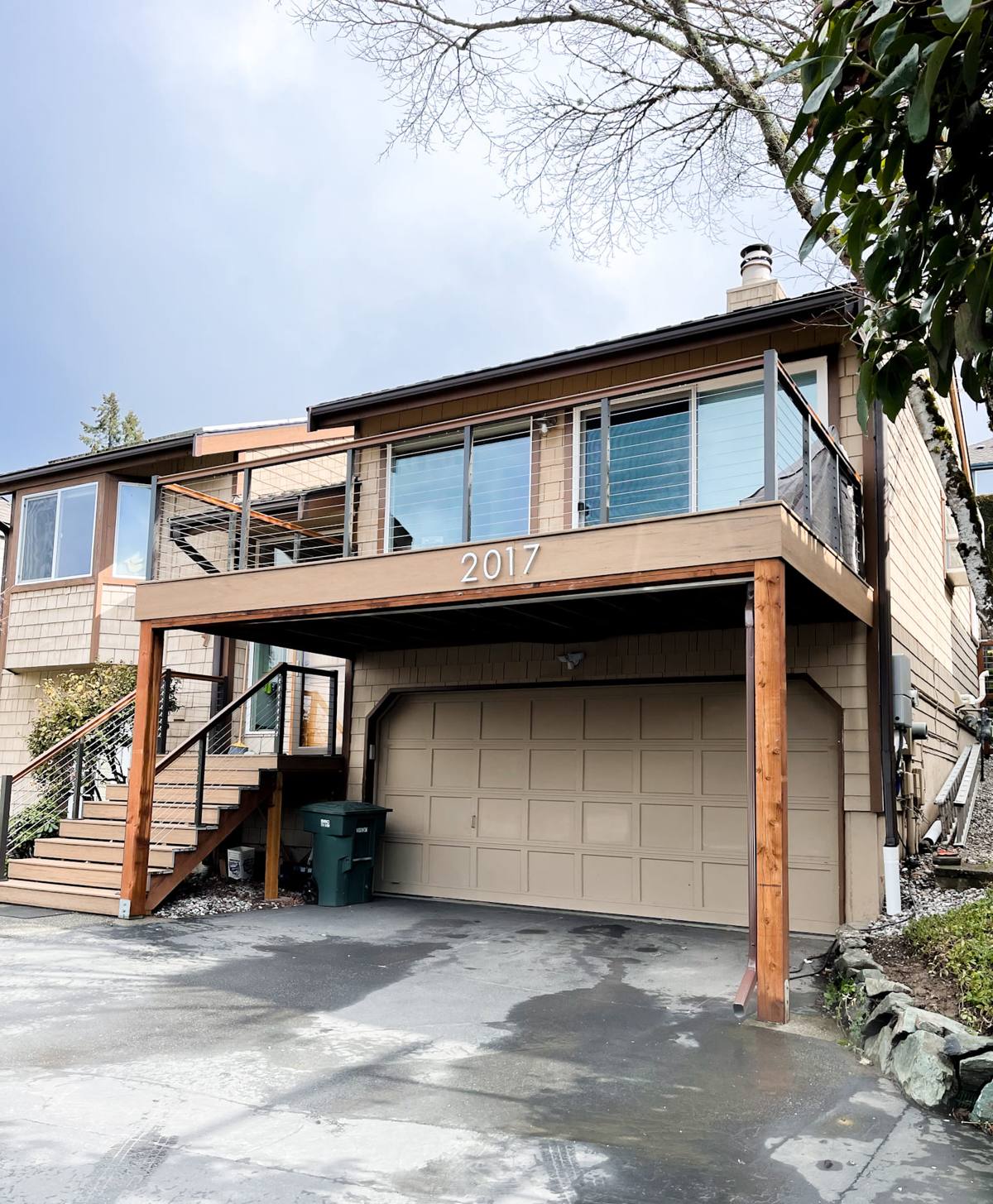
What Salt Air, Rain, and Moss Actually Do to a Deck
Salt air and metal fasteners
Salt-laden air accelerates corrosion on anything less than fully rated hardware. Standard hot-dip galvanized fasteners can start showing rust streaks within a couple of seasons this close to the water. Every ledger bolt, joist hanger, and screw needs to be stainless steel or a coating specifically rated for coastal/marine exposure — not just "exterior-rated," which is the minimum spec for inland builds and not enough here.
Driving rain and end-grain
Wind-driven rain doesn't just fall on a deck, it gets pushed into joints, under boards, and into any exposed end-grain on joists, beams, or fascia. Untreated or poorly sealed end-cuts are where rot almost always starts first. Proper flashing at the ledger board — the single most common failure point on decks anywhere — matters even more here because that connection sees both standing water and wind pressure most of the year.
Moss and constant dampness
A long moss season means a deck surface rarely gets a real chance to dry out completely between storms, especially on the north or shaded sides of a house. Moss holds moisture against the decking material, and on wood surfaces that moisture cycle is what drives cupping, splintering, and eventual rot. It also makes the surface genuinely slick — a real slip hazard on stairs and landings, not just a cosmetic issue.
Decking Material Choices for This Exposure
There's no single "best" decking material for every Point Roberts property — it depends on budget, how exposed the site is, and how much upkeep you want to take on. Here's how the common options actually compare for this climate:
| Material | Moss/moisture resistance | Maintenance | Coastal durability |
|---|---|---|---|
| Pressure-treated wood | Fair — needs sealing | Annual cleaning + resealing | Good if fasteners and sealant are kept up |
| Cedar | Good — naturally resistant | Periodic oil/stain to prevent graying | Very good, ages well with upkeep |
| Composite decking | Excellent — won't rot | Occasional wash to clear moss/algae film | Excellent; check warranty terms on coastal use |
| PVC decking | Excellent — fully synthetic | Low — rinse as needed | Excellent, but confirm slip-resistance rating |
Composite and PVC decking have become popular in this area for good reason: they don't absorb moisture the way wood does, so moss sits on the surface rather than soaking in, and a simple rinse or scrub keeps them looking right. The trade-off is upfront cost and, on some products, a slicker surface when wet — which matters more here than in a drier climate, so we pay attention to slip-resistance ratings when we spec composite boards for a Point Roberts job. Cedar remains a solid choice for homeowners who want a natural look and are willing to stay on top of refinishing every couple of years; skipping that maintenance is where cedar decks in this area get into trouble.
Structural Details That Matter More Here Than Inland
Ledger board flashing
This is where the deck attaches to the house, and it's the single most water-exposed connection in the entire structure. Correct flashing — installed in the right order relative to the house's existing weather-resistive barrier — keeps wind-driven rain from working its way behind the siding at that joint. Get this wrong and you're not just risking the deck, you're risking water intrusion into the house framing itself.
Joist and beam spacing
Wider board spans in wet climates should generally be built tighter than code minimum, not because the code is wrong but because a slightly stiffer deck sheds water faster and shows less deflection over years of freeze-thaw and wet-dry cycling. It's a small upfront cost for a meaningfully longer service life.
Fastener selection
As covered above, stainless steel or marine-rated hardware throughout — not just at the ledger. This includes hidden fastener clips if you're going with composite or PVC decking, since those clips take on the same corrosion risk as any other exposed metal.
Airflow underneath
Proper under-deck ventilation keeps the framing drying out between rain events instead of sitting damp. On lower decks close to grade, this sometimes means adjusting joist height or adding venting details that a standard build wouldn't include.
Surface Treatments and Moss Management
No decking material is completely moss-proof if it sits shaded and damp long enough, but there's a real difference in how easy each is to keep clean:
- Composite and PVC: rinse with a garden hose or use a deck-safe cleaner once or twice a year; avoid pressure washing directly into the board grain, which can void some warranties.
- Cedar: a breathable, water-repellent finish reapplied every 1-2 years slows moss growth and keeps the wood from graying prematurely.
- Pressure-treated wood: sealing yearly and keeping gutters/downspouts clear nearby reduces the standing water that feeds moss growth.
- All materials: trimming back overhanging branches and vegetation that shade the deck helps it dry faster after storms, which is often the single cheapest thing a homeowner can do to slow moss.
Our Process for a Point Roberts Deck Project
- On-site assessment — we look at sun exposure, prevailing wind direction, existing drainage, and how close the build site is to open water, since exposure can vary block to block out here.
- Material and design consultation — we walk through the trade-offs above based on your budget and how much maintenance you want to take on long-term.
- Structural plan — ledger flashing detail, fastener spec, joist layout, and ventilation are all decided before framing starts, not adjusted on the fly.
- Build — framing, decking, railing, and stairs, with inspection points along the way rather than just at the end.
- Final walkthrough — we go over basic maintenance specific to the material you chose, so you know what upkeep actually looks like in this climate.
A Practical Checklist Before You Commit to a Deck Plan
- Confirm all fasteners and hardware are stainless steel or marine-rated, not standard exterior-grade
- Ask specifically how the ledger board will be flashed against wind-driven rain
- Decide upfront how much annual maintenance you're willing to do — this should drive material choice
- Check slip-resistance ratings if you're considering composite or PVC decking
- Ask about under-deck airflow, especially for low decks close to grade
- Get a clear answer on how nearby vegetation and shade will affect moss growth on your specific site
Why Local Experience on This Specific Peninsula Matters
Point Roberts is geographically part of Whatcom County but physically cut off from the rest of it — access runs through Canada, and the weather exposure is genuinely different from Ferndale proper or other inland parts of the county. A crew that hasn't built here before is guessing at fastener specs, flashing details, and material choices that we've already worked out through repeated jobs on this coastline. That's not a knock on other contractors — it's just that this exposure rewards specific experience, and a deck is a big enough investment that guesswork is expensive to fix later.
We're a Ferndale-based crew that already knows this stretch of coastline, and we'd rather spend the estimate visit talking through what your specific lot needs than pushing a one-size-fits-all package. If you're planning a new deck or replacing one that hasn't held up to the salt air and rain, we're happy to come take a look and give you a straight answer on what it'll take. Reach out for a free, no-pressure estimate using the form below.