 Ferndale
 Why New Roof Installation in Cordata Is Different From a Generic Reroof
Cordata sits close enough to Bellingham Bay and the Whatcom County coastline that homes here deal with a specific combination of stressors most inland roofing guides never mention: salt-laden air moving in off the water, long stretches of driving, wind-pushed rain, and a moss season that can run from early fall through late spring. None of these problems is dramatic on its own. Together, over ten or fifteen years, they're what separates a roof that quietly does its job for thirty years from one that starts leaking, staining, and shedding granules by year twelve.
A new roof installation done right for this area isn't just "put new shingles on." It's a set of decisions about materials, fasteners, underlayment, ventilation, and flashing detail that specifically account for the way Cordata's climate attacks a roof system over time. That's the lens we bring to every install in this neighborhood.
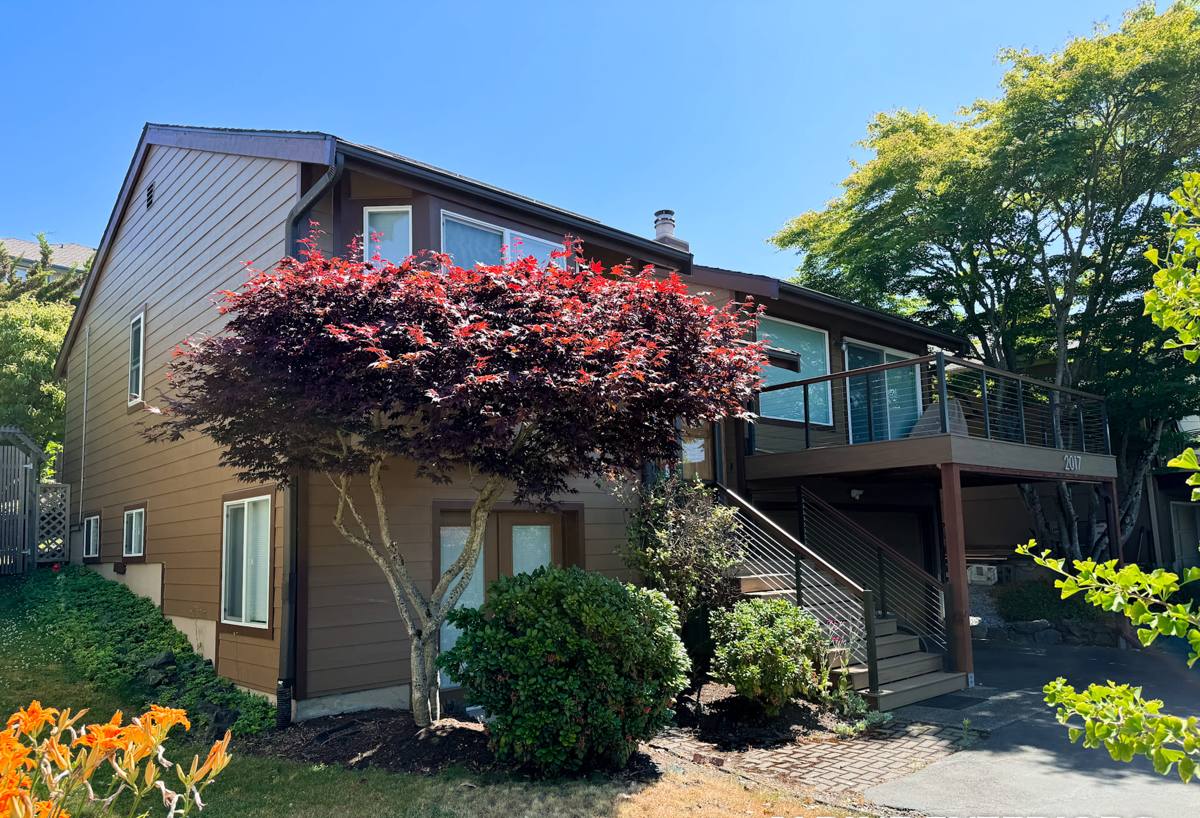
What the Climate Actually Does to a Cordata Roof
Salt Air and Metal Fatigue
Airborne salt doesn't need to be blowing in off the water at gale force to matter. A steady, low-level exposure is enough to accelerate corrosion on unprotected metal — nail heads, flashing, vent stacks, and gutter hardware are the first places it shows up. Standard electro-galvanized fasteners and thin-gauge flashing that might last decades in a drier inland town can start showing rust streaks and pitting well before that here. It's a slow problem, which is exactly why it gets ignored until a roof is already failing at the edges.
Driving Rain and Wind-Driven Water Intrusion
Whatcom County storms don't always come straight down. Wind-driven rain gets pushed sideways and upward under shingle tabs, around chimney flashing, and into any gap in the underlayment that a calmer climate could tolerate. This is why the underlayment system and flashing detail matter more here than the shingle brand printed on the wrapper — water finds the weak point, and on a windy coastal property, water is coming from more directions than straight down.
Moss Season and What It Actually Does to Shingles
Cordata's shaded lots, moisture, and mild temperatures are close to ideal growing conditions for moss, and a long moss season means a roof spends a large part of the year holding onto damp organic material instead of drying out between rain events. Moss itself doesn't punch holes in a roof, but it does two things that shorten a roof's life: it holds moisture against the shingle surface longer than the shingle was designed for, and its root structure gradually lifts shingle edges, which is exactly where wind-driven rain gets its opening.
What a Correct New Roof Installation Involves
A proper tear-off and reinstall is a sequence, and skipping steps is how a roof looks fine for two or three years and then fails early. Here's what we consider non-negotiable on every Cordata install:
- Full tear-off to the deck — layering new shingles over old traps moisture and hides deck damage; we don't do it on new installs.
- Deck inspection and repair — soft, delaminated, or water-stained sheathing gets replaced before anything new goes down, not covered up.
- Ice-and-water shield at vulnerable zones — eaves, valleys, and around penetrations get a self-adhering waterproof membrane, not just felt.
- Synthetic underlayment across the field — more tear-resistant and more water-resistant than old-style felt, and it holds up better during a multi-day install if weather rolls in mid-project.
- Corrosion-resistant fasteners and flashing — given the salt air factor above, we don't use bargain-grade galvanized hardware on coastal-exposed homes.
- Properly detailed flashing at every penetration — chimneys, skylights, vent stacks, and wall intersections are where the vast majority of "mystery leaks" actually originate.
- Balanced intake and exhaust ventilation — covered in more detail below, but it's not optional.
- Final inspection walk-through — before we consider the job done, not after a callback.
Ventilation and Moisture Management
Attic ventilation gets treated as an afterthought on a lot of roof jobs, and in a drier climate that oversight might not cost much. In Cordata's damp, moss-prone environment, it can quietly ruin a roof from the inside. A roof deck that can't breathe traps warm, moist air against the underside of the sheathing, which leads to condensation, premature deck rot, and shortened shingle life from the top and bottom at the same time.
Correct ventilation balances intake (usually at the soffits) with exhaust (ridge vents, box vents, or a powered option where the roof geometry requires it). We size and place vents based on the actual attic volume and roof shape of the home, not a one-size formula, because an unbalanced system — lots of exhaust with weak intake, or vice versa — can perform worse than no mechanical ventilation at all.
Material Options and How They Hold Up Locally
There's no single "correct" material for every home — budget, roof pitch, home style, and how long the owner plans to stay in the house all factor in. What matters is picking a material with eyes open about how it performs under Cordata's specific conditions.
| Material | How It Performs Here | Typical Lifespan | Maintenance Consideration |
|---|---|---|---|
| Architectural asphalt shingle | Good all-around performer; algae-resistant granule options help with moss/moisture staining | 25–30 years | Periodic moss and debris removal recommended |
| Standing seam metal | Sheds moss and water very well; needs marine-grade or coated fasteners near the coast to resist salt corrosion | 40–60 years | Low; check fastener condition at coatings' warranty milestones |
| Synthetic/composite shingle | Resists moisture absorption and moss growth better than wood-based products | 30–50 years | Low to moderate |
| Cedar shake | Attractive but higher-maintenance; needs deliberate ventilation and treatment to manage moisture and moss in this climate | 20–30 years with upkeep | High — regular treatment and moss control needed |
We'll walk through these trade-offs honestly during an estimate rather than steering every homeowner toward the same product. A steep, heavily shaded Cordata roof under mature trees has different moss and moisture pressure than an open, sun-exposed one, and that should influence the material conversation.
Our Installation Process
- On-site assessment — we inspect the existing roof, deck condition, ventilation setup, and any problem areas (chronic moss, past leak history, flashing wear) before quoting anything.
- Written estimate — clear scope, material choice, and price, with the trade-offs explained rather than buried in fine print.
- Scheduling around weather — we plan installs with the region's rain patterns in mind and stage material delivery to minimize how long the deck sits exposed.
- Tear-off and deck inspection — old material removed, deck checked and repaired as needed.
- Underlayment, flashing, and moss-resistant shingle or material installation — installed to manufacturer specification, not shortcuts.
- Ventilation balancing — intake and exhaust checked and adjusted for the specific attic.
- Cleanup and magnetic sweep — job site and yard cleared of debris and stray fasteners.
- Final walk-through — we review the finished roof with the homeowner before calling it complete.
Permits, Codes, and Working Locally
Roof replacement work in and around Ferndale falls under Whatcom County and applicable local building code requirements, including wind and snow load considerations for the region. We handle the permitting process as part of the job rather than leaving it to the homeowner to sort out, and we build to code rather than treating it as a minimum to talk our way around.
Choosing a Roofing Crew for a Cordata Home: What to Actually Check
Roofing is a trade where the difference between a good job and a bad one often isn't visible until years later, which makes vetting a contractor more important than it feels in the moment. A few things worth confirming before signing anything:
- Current Washington contractor licensing and active liability insurance — ask to see it, not just hear about it.
- A written, itemized estimate that specifies underlayment type, fastener type, and ventilation plan — not just "new roof, $X."
- Manufacturer certification if you're going with a material that offers an enhanced warranty tied to certified installers.
- A real local track record in this specific area, not just a regional service radius on a website.
- Clear answers about how they handle deck damage discovered mid-tear-off, before it becomes a change-order surprise.
- A plan for debris and fastener cleanup, including yard protection during the job.
Why Local Cordata Experience Matters
A crew that already works this neighborhood knows which streets sit under heavier tree canopy and see faster moss return, which lots catch more wind coming off the flatter open areas nearby, and how the local permitting process actually runs day to day. That's not a marketing point — it's the difference between a generic install and one that's actually tuned to how this specific roof, on this specific lot, in this specific corner of Whatcom County, is going to age over the next twenty-plus years.
We're not guessing at regional climate factors from a spec sheet. Salt air, driving rain, and moss season are the baseline conditions we plan every install around, because they're the conditions your roof will actually face for as long as you own the home.
Ready to Talk Through Your Options?
If you're weighing a new roof for a Cordata home, we're glad to come take a look, walk the roof and attic, and put together a straightforward, itemized estimate — no pressure, no upsell script. Use the form below to request your free estimate and we'll get back to you to schedule a time that works.