 Ferndale
 Why Cordata Decks Wear Differently Than You'd Expect
A deck in Cordata doesn't fail the way a deck fails in a dry climate. Out here, the damage is rarely sudden — it's cumulative. Months of driving rain soak into end grain and fastener holes, a marine-influenced airflow off the Salish Sea keeps humidity elevated even on days it isn't raining, and a moss season that can stretch from fall through spring keeps organic growth working into every seam and gap. By the time a board looks obviously bad, the structure underneath it has often been quietly absorbing moisture for a year or more.
That's the pattern we see on repair calls throughout the Ferndale area and into Whatcom County generally: homeowners notice a soft spot or a stain, but the real problem is a few boards away, hidden under the ledger flashing or down at the post bases where water collects and never fully dries between storms.
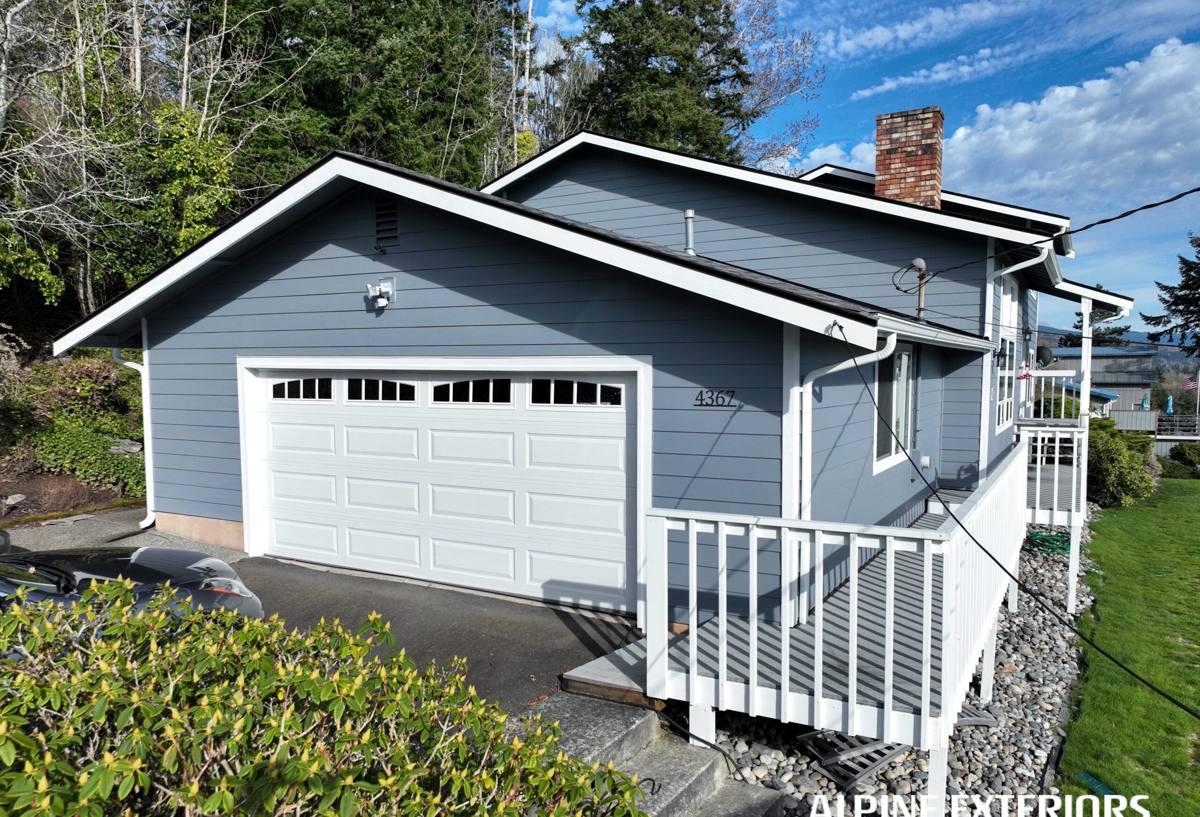
Signs a Cordata Deck Needs Attention
Most deck problems show up in a handful of predictable places. Knowing what to look for — and where — helps you catch a repair while it's still a repair, instead of letting it become a full rebuild.
- Soft, spongy, or springy decking boards, especially near the house or along the outer rim joist
- Dark staining or a persistent green tinge where moss or algae has taken hold and stayed damp
- Gaps opening up between boards, or fasteners backing out and standing proud
- Rust streaks bleeding from screw heads or nail holes — a sign the fastener itself is failing
- Visible sagging along a stair stringer, guard rail post, or the deck's outer edge
- A ledger board (where the deck attaches to the house) that feels damp or shows staining on the siding above it
- Wobbly railings or posts that move more than a small amount when pushed
Any one of these on its own might be minor. Several together, especially near the ledger connection, usually means moisture has been getting into the framing for a while.
Repair or Replace? How We Make That Call
Not every deck problem calls for a full tear-off, and not every "just replace a board" job is actually that simple underneath. The honest answer depends on what's happening structurally, not just what's visible on the surface.
| Situation | Usually a Repair | Usually a Rebuild |
|---|---|---|
| Decking boards | A handful of boards cupped, split, or rotted | Most of the surface is failing at once |
| Framing (joists/beams) | Isolated soft spots near one board | Widespread soft or spongy framing, especially at the ledger |
| Fasteners | Localized rust or backed-out screws | Original fasteners are the wrong grade throughout |
| Railings/posts | One or two loose posts, re-securable | Post bases are rotted or undersized for current code |
| Age of structure | Under 15 years, built to a reasonable standard | Older structure with no visible flashing or ledger protection |
We inspect before we quote either direction. A deck that "just needs a board" sometimes needs a joist too, and we'd rather tell you that up front than have you call back in a year.
What a Correct Deck Repair Actually Involves
Structural Inspection First
Before any board comes off, we check the framing that's carrying the load: joists, the ledger connection to the house, beam and post condition, and how water has been draining (or not draining) around them. In a climate that gets as much sustained rain as Whatcom County does, the ledger connection is the single most important thing to get right — it's the point where the deck meets the house, and it's the most common place for hidden rot to start.
Fixing the Cause, Not Just the Symptom
Replacing a rotted board without addressing why it rotted just buys you a few more years before the same spot fails again. If drainage is poor, flashing is missing or degraded, or fasteners were never rated for exterior exposure, we address that as part of the repair — not as an upsell, but because skipping it means the repair won't hold.
Matching Materials the Right Way
New boards need to match the existing structure's tolerances, not just its color. Mixing incompatible wood species or fastener metals can accelerate corrosion (galvanic reaction between dissimilar metals is a real issue with deck hardware) or create uneven movement between old and new material as it dries and swells with the seasons.
Finishing and Sealing
Cut ends, especially on treated lumber, need to be sealed at the cut — that raw end grain is the fastest path for water into the board. This step gets skipped more often than it should, and it's one of the cheapest, most effective things a repair can include.
How Our Process Works
- Free on-site inspection. We walk the whole deck, not just the spot you called about — check framing, ledger, posts, and drainage.
- Honest scope and estimate. You get a clear picture of what's a repair, what's precautionary, and what we'd genuinely leave alone.
- Removal of failed material. We pull only what needs to come out, checking framing underneath as we go.
- Structural correction. Sistering a joist, resetting a post, or improving flashing at the ledger — whatever the inspection actually found.
- Rebuild with matched, exterior-rated materials. Fasteners, boards, and hardware chosen to hold up in this climate, not just to look right on day one.
- Final walkthrough. We show you what was done and why, and flag anything worth watching going forward.
Materials That Actually Hold Up Here
Whatcom County's combination of salt-influenced air and near-constant moisture during the wet months is hard on the wrong materials. A few standards we hold to on every repair:
- Stainless steel or high-grade coated fasteners in areas exposed to salt-laden air — cheaper coated screws can corrode faster near the coast and stain the wood around them
- Pressure-treated framing lumber rated for ground contact where posts meet grade or concrete
- Proper flashing tape or metal flashing at the ledger board — this is the detail that keeps water from getting behind the house's siding in the first place
- Gapping decking boards correctly so they can dry between rains instead of trapping moisture
Composite decking is a reasonable option for homeowners who want to reduce future maintenance, and we'll talk through it honestly: it costs more up front, doesn't need staining or sealing, but still needs a correctly built and flashed frame underneath — composite decking on a rotten frame is still a rotten frame. Real wood, properly maintained, remains a solid and less expensive choice for many Cordata homes. Neither is automatically "better" — it depends on your budget, how much upkeep you want to do, and the condition of what's already there.
Maintenance That Buys You Years Between Repairs
A deck in this climate isn't a "set it and forget it" structure. A little seasonal attention goes a long way toward avoiding another repair call sooner than you'd like.
- Clear leaves and debris from between boards before the wet season sets in — trapped debris holds moisture against wood
- Treat moss and algae growth early rather than letting it establish; it holds dampness against the surface
- Check the ledger area at the house once a year for staining or soft siding above it
- Reseal or restain wood decking on the schedule the product calls for — don't stretch it because it "still looks okay"
- Keep gutters and downspouts near the deck clear so runoff isn't dumping directly onto it
- Walk the deck once a season and check for movement in railings, stairs, and post connections
What Affects the Cost of a Deck Repair
| Factor | Why It Matters |
|---|---|
| Extent of framing damage | Surface board swaps cost far less than repairs involving joists, beams, or the ledger connection |
| Access to the affected area | Repairs under low decks or in tight corners take more labor time |
| Material choice | Wood repairs are generally less expensive up front than matching or blending in composite |
| How the deck was originally built | Decks with poor original flashing or fastener choices often need more corrective work, not just cosmetic replacement |
| Railing and code items | If posts or railings need to meet current code during the repair, that adds scope |
We don't quote deck repairs off a phone description alone — too many of the real cost drivers are only visible once we're looking at the framing in person. What we can tell you honestly is that catching problems early, before they spread into the structural members, is consistently the cheapest path.
Why Local Experience in Cordata Matters
A crew that already works in and around Ferndale and Whatcom County has seen how decks in this specific climate actually fail — not in a textbook, but on real houses dealing with the same driving rain, humidity, and moss pressure your deck deals with. That matters when it comes to judgment calls: how much flashing is enough, which fastener grade is worth the extra cost here versus a drier climate, and where moisture tends to hide on a deck built the way homes in this area typically are.
It also matters for timing. Moss season and the wettest stretches of the year aren't ideal for tear-offs and framing work, and a crew that knows the local weather patterns can help plan a repair for a window when the work will actually cure and seal properly, instead of getting rained on before it's finished.
Get a Straight Answer About Your Deck
If your Cordata deck has soft spots, moss buildup, loose railings, or you're just not sure whether it needs a repair or a rebuild, we're happy to take a look. The estimate is free, there's no pressure, and you'll get a clear, honest breakdown of what we find and what it would take to fix it right — fill out the form below to get started.