 Ferndale
 Composite Decking in Cordata: Building for the Climate You Actually Have
Cordata sits close enough to the water and the marine air that moves through Whatcom County that decking here takes a different kind of beating than it would further inland. Salt-tinged air, driving rain that comes in sideways more often than straight down, and a moss season that can stretch from October well into spring all work against a deck that wasn't built with those specifics in mind. A composite deck that's installed correctly for this environment will outlast one that was built the same way you'd build it in a dry inland climate — the difference is almost entirely in the substructure, the drainage, and the fastening details, not the decking boards themselves.
We install composite decking for homeowners in and around Ferndale and the Cordata area regularly enough that we've stopped treating this as a generic product install. The board matters, but what happens underneath and around it matters more.
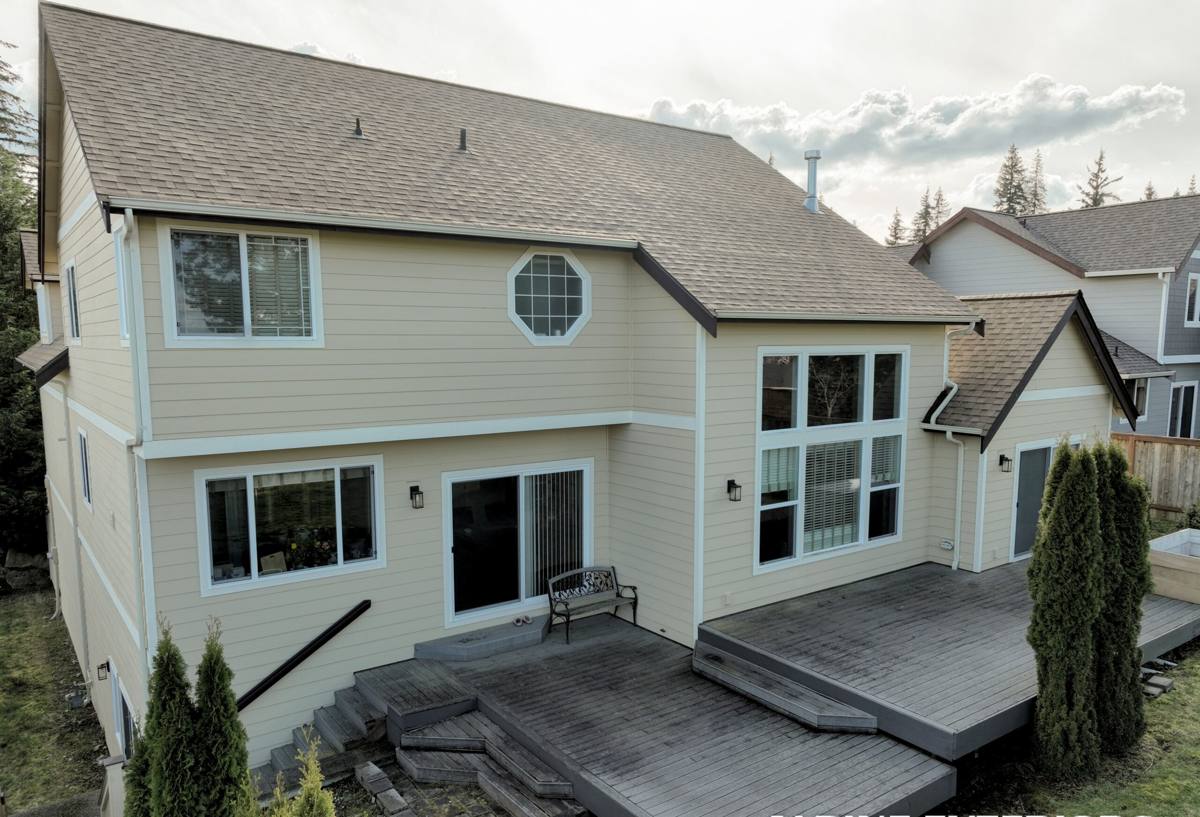
What Salt Air, Rain, and Moss Actually Do to a Deck
Each of these three factors stresses a different part of the deck system:
- Salt-laden air accelerates corrosion on exposed fasteners, joist hangers, and hidden clips. Once a fastener starts rusting, it can streak the decking above it and eventually lose holding strength.
- Driving rain gets pushed under boards and against ledger connections at the house in ways vertical rain doesn't. If flashing and drainage weren't detailed for wind-driven rain, water finds its way into the framing rather than off it.
- Extended moss season means anything that stays damp for long stretches — gaps between boards, low-airflow areas under the deck, north-facing sections that don't get sun — becomes a place where organic growth takes hold and holds moisture against the structure.
None of that is unique to composite decking specifically — wood decks face the same forces, often worse. But composite decking only delivers its low-maintenance promise if the installation respects these conditions. A composite board over a poorly ventilated, poorly flashed substructure just hides a problem instead of preventing one.
Why Composite Makes Sense for This Kind of Weather
We install both wood and composite decking, and we're upfront with clients about the trade-offs rather than pushing one product. For a property in a marine-influenced climate with a long wet season, composite has real advantages:
- It doesn't need annual staining or sealing the way wood does — in a climate where the wet season leaves a narrow window for that kind of maintenance, that matters.
- Capped composite boards resist moisture absorption into the board itself, which limits swelling, cupping, and the freeze-thaw stress that follows a heavy rain season.
- It doesn't feed moss and algae growth the way untreated wood grain does, though it isn't immune — anything left damp long enough will still grow something on the surface.
The trade-off is upfront cost and the fact that composite is less forgiving of installation mistakes — gaps, fastening spacing, and substructure ventilation have to be right the first time because you're not going to sand or refinish your way out of a problem later.
Where Wood Still Makes Sense
Some homeowners prefer the look and feel of real wood, or have a smaller, shaded structure where lower upfront cost outweighs the maintenance commitment. We'll say so plainly if wood is a reasonable fit for a given project — the decision isn't just about the material, it's about how much upkeep a homeowner actually wants to sign up for.
What a Correct Composite Deck Build Involves Here
The board is maybe a third of the job. The rest is substructure and water management, and this is where corners get cut on decks that fail early.
Substructure and Framing
Joists sized and spaced to the manufacturer's composite-specific span tables (composite typically needs tighter joist spacing than wood, especially on diagonal or picture-frame patterns), pressure-treated or coated framing lumber rated for ground contact where applicable, and joist tape or a comparable barrier on top of the joists to keep standing water off bare wood.
Ledger and House Connection
Proper flashing where the deck ties into the house siding or band board is the single most common failure point we see on older decks in this area. Wind-driven rain pushes water up and behind ledger boards that were only flashed for straight-down rain. We flash for the direction the weather actually comes from here, not just the textbook case.
Fasteners and Hardware
Stainless steel or heavily coated, corrosion-rated fasteners and joist hangers throughout — not just at the ledger. In a marine-influenced climate, the cheaper galvanized hardware that might be fine 50 miles inland can start showing rust streaks on light-colored composite boards within a few seasons.
Airflow Underneath
Adequate clearance and skirting design that allows air to move under the deck rather than trapping humidity against the framing — this is a big part of what keeps moss and mildew from colonizing the underside and the low, shaded edges of the structure.
Board Gapping and Fastening Pattern
Composite boards expand and contract with temperature more than most people expect. Gapping has to account for that movement, and hidden fastener systems need to be installed to the manufacturer's exact spec — over-driven or under-driven clips are a common cause of squeaking or board lift later on.
Composite Board Types: A Practical Comparison
Not all composite decking is built the same way, and the differences matter more in a wet climate than in a dry one.
| Board Type | Moisture Behavior | Maintenance | Typical Trade-off |
|---|---|---|---|
| Uncapped composite | Absorbs some moisture at cut edges and surface over time | Occasional cleaning; can fade and grow surface mold if not maintained | Lower cost, but shorter service life in a wet climate |
| Capped composite | Polymer shell resists moisture absorption and staining | Periodic washing; no sealing or staining needed | Higher upfront cost, best fit for this climate |
| PVC/cellular decking | Fully synthetic, minimal moisture absorption | Lowest maintenance of the group | Highest cost; different feel underfoot, some homeowners notice the difference |
For most Cordata-area projects, we steer homeowners toward capped composite as the practical middle ground — it holds up to the rain and salt air without the premium price of full PVC decking, as long as the substructure underneath is done right.
Our Process, Start to Finish
- On-site assessment: we look at drainage around the existing structure, sun/shade exposure, ledger condition if it's a rebuild, and how the deck ties into the house.
- Material selection: we walk through board options, color, and pattern based on budget and how much sun/shade the deck actually gets — darker boards run hotter and show dust differently than lighter ones.
- Structural plan: joist layout, hardware spec, and flashing details are set before any demo or digging starts, not improvised on-site.
- Demo and substructure build: old decking and, if needed, old framing comes out; new substructure goes in to current span and hardware specs.
- Decking installation: boards, fascia, and any railing or stair components installed to manufacturer spec, with attention to gapping and fastening pattern.
- Final walkthrough: we go over basic care with the homeowner before we consider the job done.
Living With a Composite Deck in This Climate
Composite is low-maintenance, not no-maintenance. A little seasonal attention goes a long way toward keeping moss and mildew from getting a foothold during the long wet stretch of the year.
- Sweep off debris regularly, especially in fall — trapped leaves hold moisture against the board surface.
- Rinse the deck periodically, and scrub lightly with a soft brush and mild soap in shaded or low-airflow spots where moss tends to start.
- Keep gutters and downspouts near the deck clear so runoff isn't dumping extra water onto or under the structure.
- Check the underside once a year for airflow blockages — stored items, overgrown plantings, or debris buildup under the deck.
- Avoid pressure-washing at close range or high pressure, which can damage the cap layer on capped composite boards.
Mistakes We See on Older or DIY Decks in This Area
Most of the deck problems we get called out to inspect trace back to a handful of recurring issues:
- Ledger boards flashed for vertical rain only, with no allowance for wind-driven moisture at the house connection.
- Standard galvanized hardware used throughout instead of corrosion-rated fasteners, leading to rust streaking within a few years.
- Joist spacing built to wood standards rather than the tighter spacing composite boards need, causing bounce or long-term sag.
- Skirting installed tight to the ground with no ventilation gaps, trapping humidity and encouraging moss and mildew underneath.
- Boards fastened tight with no expansion gap, leading to buckling or lifted fasteners after a hot stretch or a hard freeze.
What Affects the Cost of a Composite Deck Project
| Factor | Why It Matters |
|---|---|
| Deck size and shape | Complex shapes, angles, and picture-framing use more board and labor per square foot |
| Substructure condition | A full tear-out and rebuild costs more than decking installed over sound existing framing |
| Board tier | Uncapped, capped, and PVC decking span a wide price range per square foot |
| Height and access | Elevated decks need railing, stairs, and often engineered footings, adding cost |
| Site access | Tight lots or backyard-only access can add labor time for material handling |
We give straightforward, itemized estimates rather than a single lump number, so homeowners can see where the cost is actually going and where there's room to adjust the scope if needed.
Why It Matters to Hire a Crew That Already Works This Area
A crew that mostly builds decks in drier parts of the state can still do competent framing work, but they may not default to marine-grade hardware, wind-driven-rain flashing details, or ventilation planning unless they're specifically thinking about it. Working regularly in Whatcom County and the Cordata area means those details aren't an afterthought — they're just how we build here, because we've seen what happens when they're skipped. That local pattern-recognition, more than any single product choice, is what determines whether a composite deck still looks and performs well a decade from now.
If you're planning a new composite deck or replacing an aging one in the Cordata area, we're happy to take a look and give you a straightforward, no-pressure estimate — just fill out the form below and we'll get in touch.