 Ferndale
 Why Decks in Birch Bay Wear Out Differently
Birch Bay sits right up against the water, and that changes how a deck ages compared to one built a few miles inland in Ferndale or elsewhere in Whatcom County. Salt-laden air corrodes fasteners and hardware faster than it does in a sheltered yard. Wind-driven rain off the bay finds its way into joints, end grain, and ledger connections that would stay dry on a more protected lot. And the long, damp shoulder seasons here mean moss and algae get a real foothold on any horizontal wood surface that doesn't drain and dry quickly. None of this means a Birch Bay deck is doomed — it means the replacement has to be built with those specific stresses in mind, not treated like a generic backyard project.
We've replaced decks throughout the Birch Bay area and see the same failure patterns over and over: corroded fasteners letting go before the boards themselves fail, ledger boards rotting from trapped moisture, and joists that were never properly flashed starting to soften from the top down. A correct replacement addresses each of those failure points directly instead of just swapping old boards for new ones on the same bones.
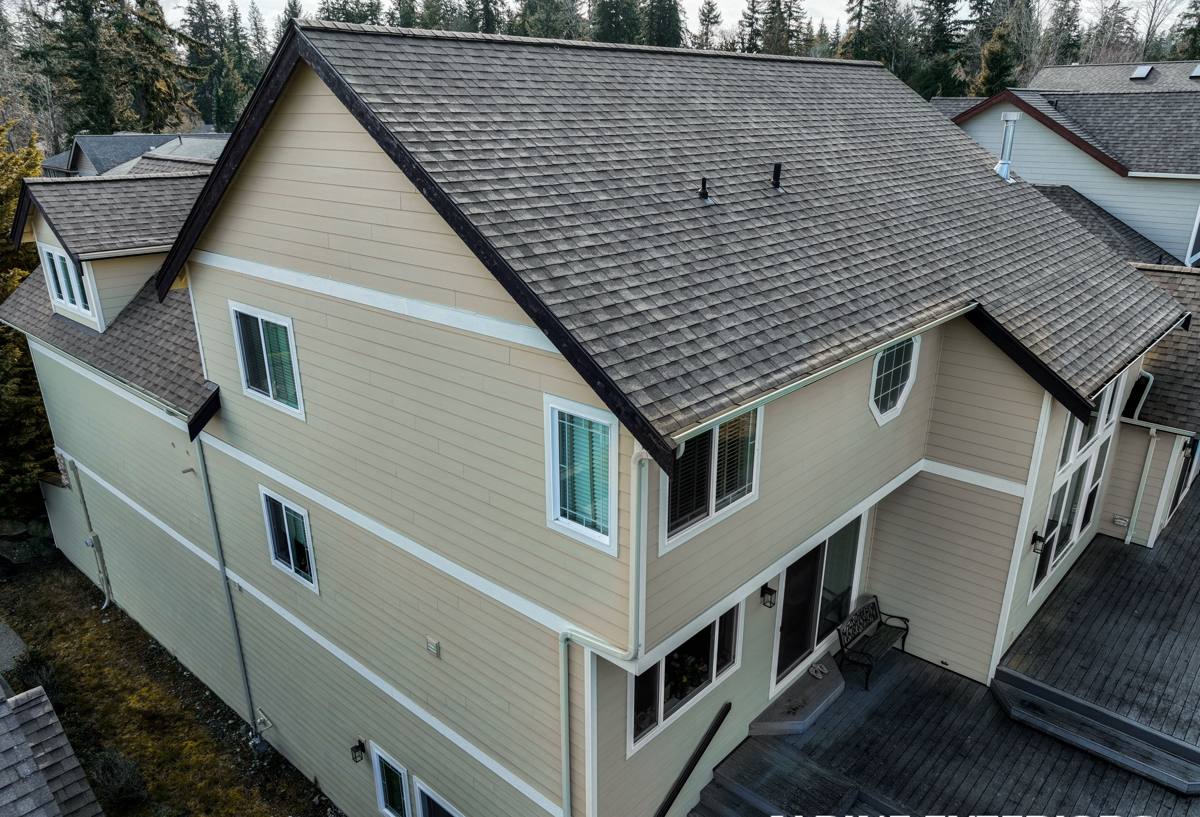
Signs Your Deck Has Reached Replacement, Not Repair
Not every tired-looking deck needs a full teardown. But in a salt-air, high-moisture environment like Birch Bay, some signs mean the structure itself is compromised and repair is a temporary patch at best.
- Soft, spongy, or spring-back decking when you walk across it, especially near the house
- Visible rust streaking or corrosion around fastener heads and joist hangers
- A ledger board that's discolored, soft to a screwdriver test, or separating from the house rim joist
- Support posts with checking, splitting, or soft spots at or below grade
- Persistent green or black growth on the deck surface that returns within weeks of cleaning
- Railings that flex or wobble under normal hand pressure
If you're seeing one or two of these, a partial repair might buy you time. If you're seeing several together, especially structural softness in joists or the ledger, that's usually a sign the frame has been absorbing moisture for years and replacement is the more honest recommendation.
What a Correct Deck Replacement Actually Involves
A deck replacement done right in a coastal Whatcom County location isn't just about the surface boards. It's a full rebuild of every layer that keeps water out and the structure sound.
Footings and Posts
We check existing footings for frost depth compliance and adequate bearing before deciding whether to reuse or replace them. Posts set at or near grade in a damp coastal environment are prime candidates for early rot, so we look closely at post-to-footing connections and use post bases that keep wood off concrete and off standing moisture.
Ledger Attachment and Flashing
The ledger board — where the deck attaches to the house — is the single most common point of hidden water damage on any deck, and it's a bigger concern near the bay where wind pushes rain sideways into that seam. We flash the ledger properly, use structural fasteners rated for the load and for exterior exposure, and make sure the connection sheds water away from the house rather than trapping it against the siding.
Framing and Fasteners
Joists, beams, and hardware all need to be rated for exterior and, ideally, coastal exposure. Standard interior-grade screws and hangers corrode fast in salt air and become the weak point in an otherwise solid frame. We use stainless or coated fasteners and connectors matched to the treated lumber or structural material being used, so the metal doesn't become the reason the deck fails early.
Drainage and Airflow
Water that can't drain or dry out is what feeds moss, mildew, and rot. We build in proper board spacing, joist ventilation, and grading beneath the deck so moisture moves through and away instead of sitting.
Choosing Decking Material for a Birch Bay Climate
Material choice matters more here than it would on a dry, inland lot. Salt air and constant moisture cycling accelerate wear on some products and barely affect others. There's no single right answer for every homeowner — it comes down to budget, maintenance tolerance, and how close the deck sits to open water and prevailing wind.
| Material | How It Handles Salt Air & Moisture | Maintenance | Typical Lifespan |
|---|---|---|---|
| Pressure-treated wood | Good if fasteners and flashing are correct; end grain and fastener corrosion are the weak points | Annual cleaning and re-staining/sealing | 10–15 years in this climate |
| Cedar | Naturally moisture-resistant but softer; benefits from a breathable finish, not a sealed coating | Regular cleaning, periodic finish renewal | 15–20 years with upkeep |
| Composite decking | Resists rot and doesn't absorb moisture like wood, but board and hardware quality still matter near salt air | Periodic washing; no staining or sealing | 25+ years, brand-dependent |
| PVC/capped polymer | Fully resists moisture absorption and salt exposure; the most stable option for waterfront-adjacent lots | Occasional washing | 25–30+ years |
We install both wood and composite/PVC systems and will tell you honestly which one fits your situation. If you want the traditional look and are willing to keep up annual maintenance, quality wood is a legitimate choice. If you'd rather not sand, stain, or reseal every year in a climate that's tough on finishes, composite or PVC decking earns its higher upfront cost over the life of the deck. What we won't do is put a wood-grade fastener or a non-rated hardware set on a composite deck just to save a step — the decking is only as good as what's holding it together underneath.
Our Process From First Look to Final Walkthrough
1. On-Site Assessment
We come out, walk the existing deck, check the ledger and framing where accessible, and talk through what you actually use the space for — entertaining, grilling, direct beach access, quiet mornings — because that shapes size, layout, and material recommendations as much as the climate does.
2. Written Estimate
You get a clear scope: what's being demolished, what's being rebuilt, the material and hardware being used, and a firm price range. No vague allowances that turn into surprise add-ons.
3. Permitting
Most deck replacements in Whatcom County, especially those involving structural changes, new footings, or attached decks over a certain height, require a permit. We handle that process so you're not the one tracking down inspections.
4. Demolition and Rebuild
Old decking, framing, and any compromised footings come out. We rebuild from the ground up with corrosion-resistant hardware, proper flashing, and code-compliant framing before a single new board goes down.
5. Final Walkthrough
We walk the finished deck with you, point out anything you should know for maintenance, and make sure railings, stairs, and fasteners all meet the standard we'd want on our own homes.
Permits and Code Basics in Whatcom County
Deck replacement projects that involve new or modified structural framing, footings, or railings typically fall under the same permitting requirements as new construction, even if the footprint stays the same. Requirements can vary depending on deck height, attachment to the house, and proximity to property lines. We pull the necessary permits and coordinate inspections as part of the job, so the finished deck is both safe and properly documented — which also matters if you ever sell the home or file an insurance claim related to storm or water damage.
Living With a New Deck in a Salt Air, Moss-Prone Climate
A well-built deck still needs some seasonal attention in this environment. The difference is that with correct framing, flashing, and fasteners, that attention is routine maintenance — not a race against hidden rot.
- Sweep debris and standing leaves off the surface regularly, especially going into fall
- Rinse salt residue and grime off the decking a few times a year, more often if the deck faces open water directly
- Check railings and stair connections annually for any looseness
- For wood decking, plan on cleaning and refinishing on the schedule your material calls for — don't wait until it looks bad
- Clear moss promptly with a gentle wash rather than a pressure washer set too aggressively, which can damage board surfaces
- Keep gutters and downspouts near the deck clear so runoff isn't dumping extra water onto or under it
Why Local Experience in Birch Bay Matters
A deck built to a generic inland spec doesn't hold up the same way a few blocks from the water. Contractors who haven't worked this specific stretch of Whatcom County coastline sometimes underestimate how much salt air and driving rain accelerate hardware corrosion and moisture intrusion, and it shows up in fastener failures and ledger rot within a handful of years. We build for the conditions Birch Bay actually has — not the conditions a spec sheet assumes — because we've seen firsthand what holds up here and what doesn't.
If your deck is showing signs of age, feels soft underfoot, or you're just ready to replace an old structure with something built to last in this climate, we're happy to come take a look. Fill out the form below for a free, no-pressure estimate.