 Ferndale
 Storm Damage Roof Repair in Lynden: What Local Roofs Are Up Against
Lynden sits inland from the Strait of Georgia in Whatcom County, but "inland" doesn't mean sheltered. Winter windstorms roll through with gusts strong enough to lift shingles and strip flashing, salt-laden air off the Puget Sound region works its way into fasteners and metal roof components over time, and the long stretch of mild, wet months from October through April keeps roofs damp far longer than most manufacturers' materials are designed for. Add a moss season that can run eight months or more in shaded, north-facing sections of a roof, and you have a climate that damages roofs slowly and quietly right up until a storm finds the weak spot and turns it into a leak.
A storm damage repair in this area isn't just about patching what blew off. It's about understanding what the storm exposed — because in Whatcom County, wind rarely creates damage out of nothing. It usually finds a spot that was already compromised by moisture, age, or a marginal original installation, and finishes the job.
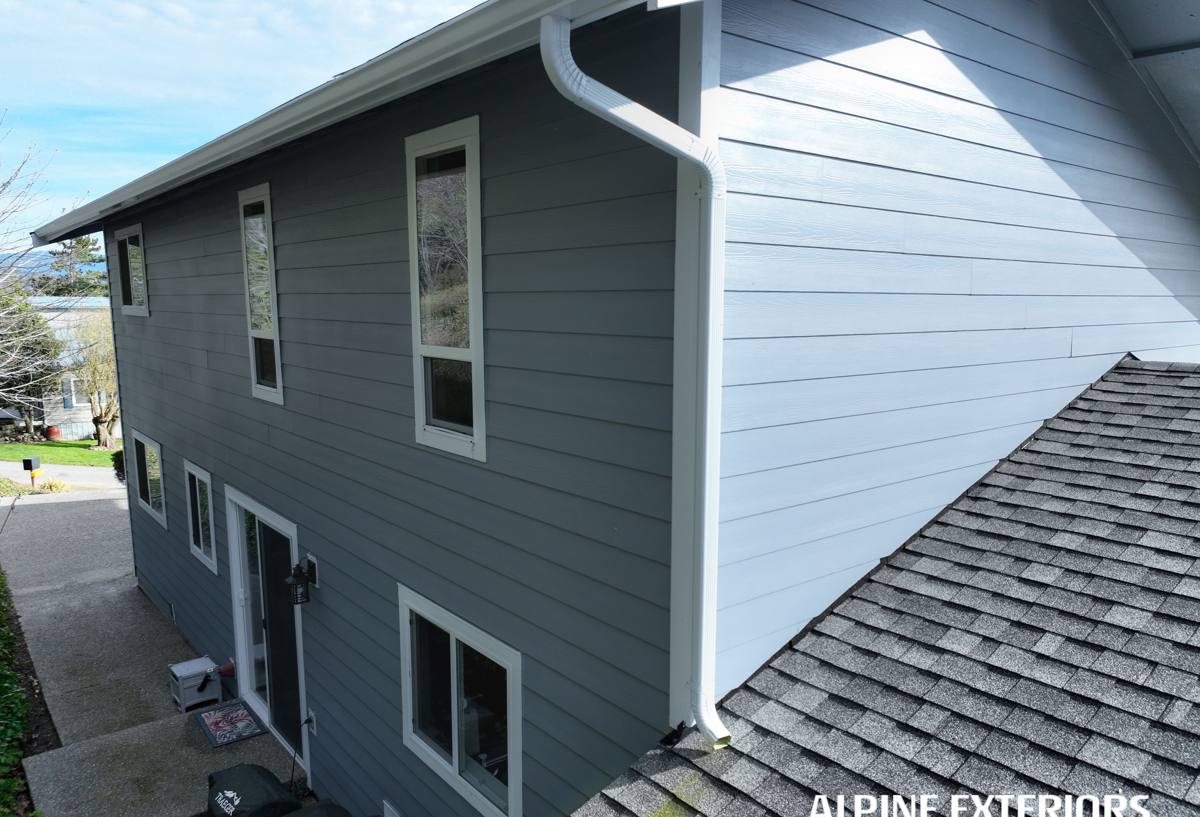
How Whatcom County Storms Actually Damage a Roof
Wind and Wind-Driven Rain
Most storm damage we see in Lynden isn't a single dramatic event — it's wind that catches the edge of a shingle or a ridge cap that was never fully sealed, works it loose, and then drives rain sideways up under the roofing material instead of letting it run off the surface the way it's designed to. Once water gets under shingles or behind flashing during a wind event, it can travel several feet before it shows up as a stain on a ceiling, which is why storm damage often looks worse — or shows up in a different room — than where the actual opening is.
Moss, Trapped Moisture, and Slow Rot
Moss itself doesn't blow a roof apart in a storm, but it sets the stage for damage. Moss holds moisture against the shingle surface and roof deck long after the rest of the roof has dried, which softens shingles, corrodes fasteners, and can rot the plywood or OSB decking underneath over several seasons. A roof in that condition has far less structural margin when a real windstorm hits — nails pull through weakened decking, and shingles that would normally hold tear away instead.
Falling Limbs and Debris Impact
Whatcom County has plenty of mature trees near residential lots, and windstorms bring down limbs and sometimes whole trees. Impact damage is usually obvious — cracked or punctured shingles, dented gutters, damaged fascia — but a limb strike can also crease shingles or knock flashing out of alignment without leaving a hole, which is easy to miss without climbing up and looking closely.
What a Correct Storm Repair Involves (Not Just a Patch)
Emergency Mitigation First
If a roof is actively leaking or has an open section exposed to weather, the first job is stopping water from getting into the house — not the permanent fix. That usually means a properly secured tarp or temporary covering over the damaged area, done in a way that doesn't create new puncture points or trap moisture underneath. Rushing straight to a permanent repair on a wet roof, or skipping mitigation entirely while you wait for scheduling, is how a $400 problem turns into a $4,000 one.
A Full Damage Assessment, Not Just the Obvious Spot
A correct repair starts with checking more than the spot that's visibly damaged. That means inspecting the roof deck for soft spots or rot, checking flashing around chimneys, vents, and valleys (common failure points in wind events), and looking at the condition of surrounding shingles — because shingles adjacent to storm damage have often been stressed by the same wind even if they didn't fail outright. Skipping this step is the single biggest reason storm repairs fail again within a year or two.
Matching Materials and Getting the Flashing Right
A repair should use materials that match the existing roof in type, weight, and where reasonably possible, color and profile — mismatched shingles are more than a cosmetic problem, since different products can shed water and expand/contract differently. Flashing details matter just as much: valley flashing, step flashing at walls, and pipe boots are common leak points after a storm, and a repair that reuses damaged or improperly lapped flashing will leak again the next time wind drives rain uphill against a seam.
Repair or Replace? What Actually Decides It
Not every storm-damaged roof needs to be replaced, and not every roof can be reasonably repaired. The honest answer depends on a few factors we walk through with the homeowner rather than defaulting to the most expensive option.
| Factor | Repair Is Usually the Right Call | Replacement Is Usually the Right Call |
|---|---|---|
| Extent of damage | Isolated area, one slope, or a handful of shingles/flashing points | Multiple areas, or damage scattered across several slopes |
| Roof age | Roof is under roughly two-thirds of its expected lifespan | Roof is near or past its expected service life |
| Decking condition | Deck is sound once damaged shingles are removed | Rot or soft spots found in the deck during inspection |
| Material availability | A close match to existing shingles is available | Original product is discontinued or no longer made |
| Insurance scope | Adjuster's scope covers a defined repair area | Adjuster's scope or code requirements point to full replacement |
We'll always tell you plainly which category your roof falls into and why, including when a repair is genuinely the better choice — a full replacement isn't automatically the "correct" answer just because it's more thorough.
How We Handle a Storm Damage Call in Lynden
- Initial call and triage. We ask about active leaks or visible damage so we know whether this is an emergency tarp situation or a scheduled inspection.
- On-site inspection. We get on the roof (not just look from the ground) to check the deck, flashing, and surrounding material condition, not just the obvious damage point.
- Written scope and photos. You get a clear explanation of what's damaged, what caused it, and what the repair involves — documented well enough to support an insurance claim if you're filing one.
- Mitigation if needed. Tarping or temporary sealing happens before the permanent repair if there's any active exposure.
- The repair itself. Matched materials, proper flashing, and a check of fastening and sealing details before we consider the job done.
- Final walkthrough. We show you what was done and what to watch for going forward, especially if moss or drainage issues contributed to the original damage.
Working With Your Insurance Claim
Wind and storm damage is one of the more straightforward categories for homeowners insurance, but claims still get denied or underpaid when the documentation is thin or when repair work happens before the damage is properly recorded. We provide detailed photos and a written description of the damage and its likely cause, which your adjuster can use directly. We're happy to meet an adjuster on-site and walk the roof with them, but we don't work for the insurance company — our job is to give you an honest, accurate picture of what the roof needs, whether that helps or complicates a claim.
One practical note: many policies have a claim-filing window after a storm event, and some require the damage to be tied to a specific, dated weather event rather than gradual wear. Getting an inspection soon after a storm — even if you're not sure you'll file a claim — gives you documentation while it's still clearly connected to that storm.
Why a Crew That Already Works in Lynden Makes a Difference
After a significant windstorm moves through Whatcom County, roofing crews get busy fast, and homeowners calling contractors based an hour or two away often wait longer for a response — which matters when water is actively getting into a house. A crew that already works in and around Lynden and Ferndale can typically respond faster for emergency tarping, and has a working knowledge of the roof types common to the area, from older farmhouse-style roofs to newer builds, along with the drainage and moss issues that tend to show up on them.
There's also a practical advantage in material sourcing. Local suppliers stock the shingle lines and colors most commonly used in this area, which makes matching existing roofing on a partial repair more realistic than it would be trying to source an exact match from farther away. And because we're not a one-time crew passing through, we have a direct interest in the repair holding up — we're the ones you'll call if it doesn't.
Reducing Storm Damage Risk Before the Next One Hits
Moss and Drainage Maintenance
Since moss and trapped moisture are the underlying weakness that lets wind damage take hold, keeping moss under control and gutters clear is genuinely preventive maintenance, not just cosmetic upkeep. A roof that drains properly and isn't holding moss against the shingles has significantly more resistance to wind uplift because the materials underneath stay sound.
Flashing and Fastener Checks
Flashing seals and fasteners loosen gradually with age and temperature cycling, well before they fail outright. A periodic check — especially after any roof is past the ten-year mark — catches loose flashing and lifted shingle tabs before a storm turns them into an entry point for water.
Tree Management Near the Roofline
Limbs overhanging or close to a roof are both a direct impact risk in windstorms and a source of the debris and shade that feed moss growth. Keeping branches trimped back from the roofline reduces both risks at once.
Storm Damage Checklist: What to Do (and Not Do) After a Storm
- Do a ground-level visual check for obvious missing shingles, damaged gutters, or debris on the roof — don't climb up yourself, especially on a wet or steep roof.
- Check ceilings and attic spaces (if accessible) for new staining, dampness, or light coming through the roof deck.
- Photograph any visible exterior damage from the ground for your records, before any temporary repairs are made.
- Get a tarp or temporary covering placed by a professional if there's an active leak or exposed section — don't leave it open to the next round of rain.
- Call your insurance company to ask about your policy's storm damage and claim-filing timeline, even before you've decided whether to file.
- Schedule a full inspection soon after the storm rather than waiting for a leak to become obvious — early damage is cheaper and easier to repair correctly.
- Avoid DIY roof repairs after a storm; wet, damaged roofing is a real fall hazard and improper patch jobs often trap moisture and cause more damage.
If a recent storm left you with damage — or you're just not sure whether that missing shingle or water stain is something to worry about — we're glad to take a look. Estimates are free and there's no pressure to move forward; we'll tell you plainly what we find and what your options are. The form below is the easiest way to get started.