 Ferndale
 Bellingham's Climate Is Hard on Siding
Bellingham sits on Bellingham Bay in Whatcom County, and that location shapes what happens to a house's exterior over time. Homes closer to the water deal with salt-laden air that accelerates corrosion on fasteners, trim, and any siding material that isn't built to handle it. Add in the region's long wet season — steady, driving rain that comes sideways more often than most homeowners expect — and siding here is under near-constant moisture pressure for months at a time.
Then there's moss. Whatcom County's combination of shade, moisture, and mild temperatures gives moss and algae a long growing season on north- and west-facing walls, in siding laps, and around trim details where water sits instead of draining. On some materials that's a cosmetic nuisance you can pressure-wash away. On others, especially wood-based or wood-look products, sustained moss and moisture contact is how rot gets started underneath a surface that still looks fine from the street.
None of this means Bellingham is a bad place to own a home — it means the siding system has to be chosen and installed with this specific climate in mind, not a generic one.
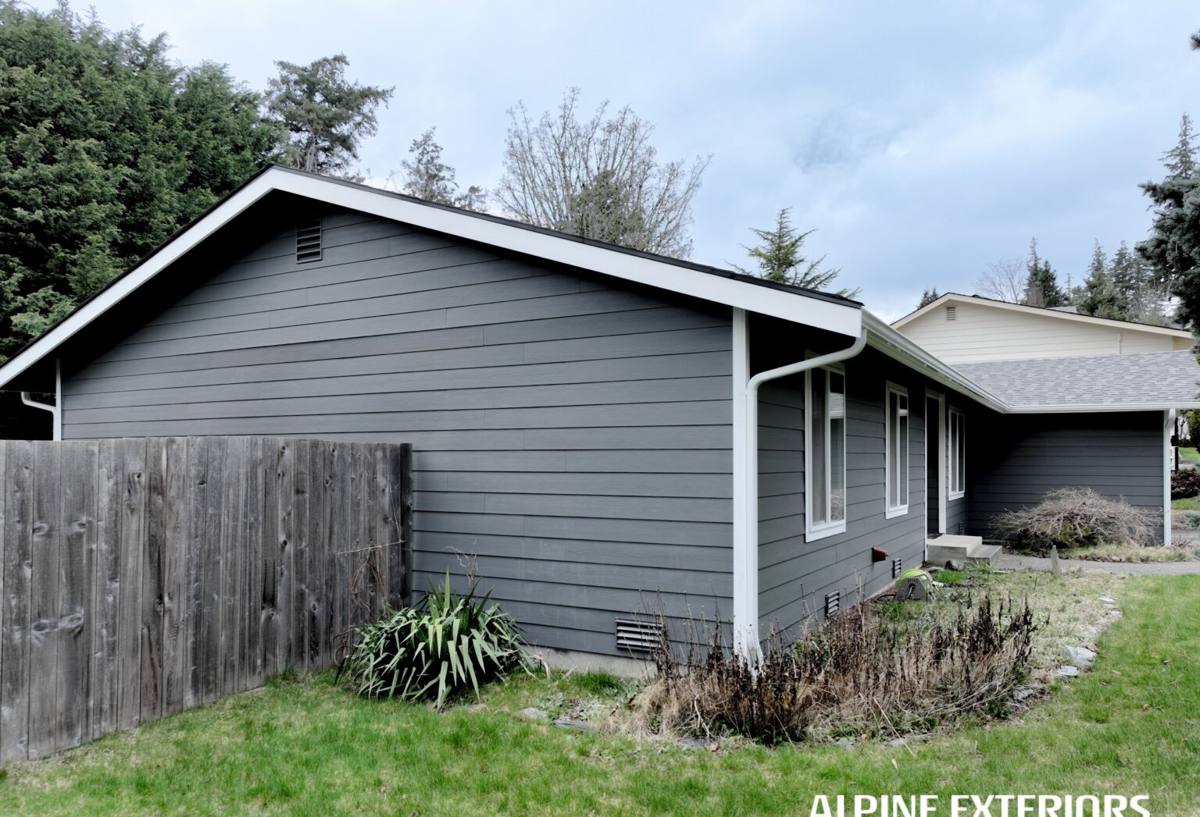
Signs a Bellingham Home Needs Siding Replacement
Siding failure is rarely sudden. It shows up gradually, and by the time it's obvious from the driveway, there's often already moisture damage underneath. Homeowners in this area should watch for:
- Soft or spongy spots when you press on siding, especially near the bottom courses and around windows
- Paint that's bubbling, peeling, or needing repainting far more often than it used to
- Persistent moss, algae, or dark streaking that comes right back a few weeks after cleaning
- Visible warping, cupping, or gaps opening up between boards or panels
- Musty smells or discoloration on interior walls that back up to exterior siding
- Siding that's more than 20-25 years old, particularly if it's wood, hardboard, or an older vinyl product
Any one of these on its own might just mean a repair. Several together, or damage that keeps recurring in the same spots, usually means the siding system as a whole is losing the fight against Bellingham's weather and it's time to replace rather than patch.
What a Correct Siding Replacement Job Actually Involves
Siding replacement isn't just removing old boards and nailing up new ones. In a climate like this, the parts you don't see afterward matter more than the parts you do. A job done right includes:
Full Tear-Off and Inspection
Old siding comes off completely so the sheathing underneath can be inspected. This is where hidden rot, soft sheathing, or past water intrusion gets found and dealt with — not covered over with a new layer of siding on top of a compromised wall, which is a shortcut that causes bigger problems a few years down the road.
Weather-Resistive Barrier
A properly lapped, sealed weather barrier goes over the sheathing before any siding is installed. Given how much wind-driven rain Bellingham sees, this barrier — and how carefully it's integrated with window and door flashing — is one of the biggest factors in whether a wall stays dry over the next 30 years.
Flashing and Drainage Details
Windows, doors, deck ledgers, and roof-to-wall transitions all need flashing that actually directs water out and away from the wall assembly. This is also where a rainscreen gap behind the siding earns its keep — it gives any moisture that does get past the outer layer a path to drain and dry out instead of sitting against the sheathing.
Correct Fastening and Clearances
Fastener type, spacing, and depth all matter, and they're spelled out by the manufacturer for a reason — get them wrong and you void the warranty and create a weak point for water. Siding also needs proper clearance from grade, roof lines, and decks so it isn't sitting in standing water or trapped moisture.
Trim, Caulking, and Paint
The finish details are what actually holds up against salt air and constant damp — quality caulk at the right joints, factory-finished trim where possible, and paint or coating that's rated for a marine-influenced climate rather than a generic interior-grade product.
Why We Only Install James Hardie Fiber Cement
We get asked why we don't offer vinyl, LP SmartSide, or other engineered wood siding options. The honest answer is that we've made a call about what holds up in this climate and what we're willing to put our name behind.
Vinyl siding is affordable and low-maintenance in a lot of parts of the country, but it's a plastic product that expands, contracts, and can warp or crack with temperature swings and impact, and it doesn't offer real fire resistance. Wood-based and engineered wood products can look great initially, but they depend heavily on paint film integrity and correct detailing to keep moisture out — and moisture is exactly what Bellingham has in abundance for much of the year. Once water gets behind or into an engineered wood substrate, deterioration can move faster than it would with a non-organic material.
James Hardie fiber cement is non-combustible, doesn't support the kind of moss and rot cycle that organic-based sidings can, and holds paint and factory-applied ColorPlus finishes far longer than most alternatives. Hardie's HZ5 product line is specifically engineered for wet, marine-influenced climates like ours, with moisture and freeze-thaw performance built into the formulation rather than added on. It's also backed by a strong transferable warranty, which matters to homeowners who plan to sell down the road.
We're not saying every other product is unusable everywhere. We're saying that for what Bellingham and Whatcom County homes go through — salt air, driving rain, and a moss season that doesn't really end — Hardie is the material we're confident standing behind for the long haul.
Our Siding Replacement Process
| Step | What Happens |
|---|---|
| Assessment | On-site inspection of existing siding, sheathing condition, drainage, and trouble spots specific to your home's exposure |
| Estimate | Clear, itemized proposal covering material, tear-off, sheathing repair allowances, and finish details — no vague lump sums |
| Tear-Off | Complete removal of old siding and inspection of the wall assembly underneath |
| Repair & Prep | Any damaged sheathing or framing addressed before new materials go on |
| Weather Barrier & Flashing | Properly lapped barrier, rainscreen gap, and flashing at all penetrations and transitions |
| Hardie Installation | Fiber cement siding and trim installed to manufacturer fastening and clearance specs |
| Final Walkthrough | Site cleanup and a walkthrough so you know exactly what was done and what to expect going forward |
What Affects the Cost of Siding Replacement
Every Bellingham home is different, so we won't quote a number without seeing the house, but the main cost drivers are consistent:
| Factor | Why It Matters |
|---|---|
| Home size and wall complexity | More corners, gables, and dormers mean more cutting, flashing, and labor time |
| Existing sheathing condition | Rot or water damage found during tear-off adds repair scope before new siding can go on |
| Siding profile chosen | Lap width, shingle-style panels, and trim details vary in material and installation time |
| Accessibility | Steep lots, tight side yards, or limited staging space common on some Bellingham properties can affect labor time |
| Trim and finish scope | Full trim replacement versus keeping sound existing trim changes both cost and long-term performance |
Why a Crew That Already Works Bellingham Matters
Siding installation isn't one-size-fits-all across the country, or even across Whatcom County. A crew that regularly works in and around Bellingham already knows how to detail a wall assembly for salt exposure near the bay, how much rainscreen ventilation matters on shaded, moss-prone elevations, and where water tends to collect on the roof and wall styles common to this area. That experience shows up in the small decisions made on-site — flashing laps, fastener choices, where extra caulk joints are worth adding — that a crew unfamiliar with this climate might not think twice about.
It also matters for accountability. A local crew is easy to reach if a question comes up two years after installation, and has a reputation in the community worth protecting.
Before You Hire: A Quick Checklist
- Ask what siding material they install and why — and be wary of anyone who installs "whatever you want" with no professional opinion
- Confirm they tear off old siding and inspect sheathing rather than siding over existing material
- Ask specifically about their weather barrier, flashing, and rainscreen approach for wet climates
- Get a written, itemized estimate — not a single lump-sum number
- Check that fastening and installation will follow the manufacturer's published specs, since that's what keeps the warranty valid
- Ask how they handle moss-prone or shaded walls specifically, not just the house in general
Protecting Your Investment After Installation
Even with the right material and a correct install, a little ongoing attention goes a long way in this climate. Keep gutters clear so water isn't overflowing onto walls, trim back vegetation that's holding moisture against siding, and do a periodic rinse on shaded or north-facing walls where moss tends to establish first. Properly installed James Hardie siding with ColorPlus finish needs far less attention than most alternatives, but "low-maintenance" in a marine climate still means some maintenance — just a lot less than you'd deal with on wood or vinyl.
If your Bellingham home's siding is showing its age, or you just want an honest opinion on whether repair or replacement makes more sense, we're happy to take a look. Reach out for a free, no-pressure estimate using the form below.