 Ferndale
 Birch Bay Is a Different Job Than a Ferndale Street a Few Miles Inland
Birch Bay sits right on the water, and that changes what siding has to survive. A home a few miles inland in Ferndale deals with Whatcom County's rain and moss like everywhere else in the region. A home in Birch Bay deals with all of that plus salt-laden air coming straight off the water, higher sustained winds with nothing to break them, and driving rain that hits walls at an angle instead of falling straight down. Siding that would hold up fine on a sheltered inland lot can fail early out here if it wasn't chosen and installed with the coastal exposure in mind.
This page is specifically about siding installation for Birch Bay homes — what the environment demands, what a correct installation looks like, and why we install only one product system on every job we take in this community.
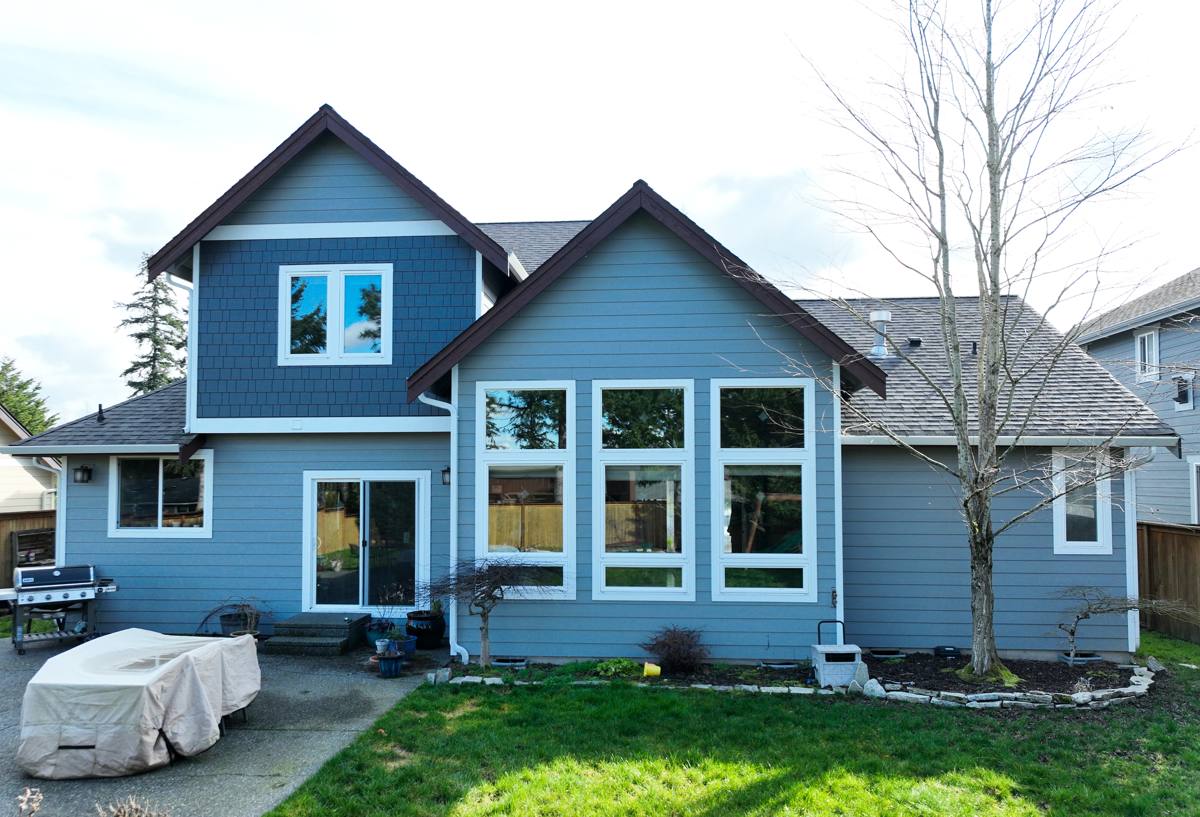
What Salt Air, Wind, and Rain Actually Do to a House
It helps to be specific about the mechanisms, because "coastal exposure" isn't just a vague warning label — it causes particular, predictable problems:
- Salt air accelerates corrosion. Fasteners, flashing, and any exposed metal trim degrade faster near the water than they do inland. Cheap or mismatched fastener material shows rust and staining years before it should.
- Wind-driven rain finds gaps. Straight-down rain mostly sheds off a wall. Rain pushed sideways by wind works into laps, seams, and penetrations that were never designed to hold back water under pressure — which is exactly what happens on an open bay-front or near-water lot.
- Constant moisture feeds moss and mildew. Whatcom County already runs a long wet season; the added humidity near the water extends it. Anything that traps or wicks moisture — porous wood siding, poorly lapped panels, missing rainscreen gaps — gives moss and mold a head start.
- UV and salt together degrade paint film faster. Field-applied paint on siding near the water tends to chalk, fade, and need recoating sooner than the same paint would inland.
None of these are exotic problems. They're the ordinary Pacific Northwest coastal conditions that Birch Bay has always had — but they punish a mediocre siding job faster and more visibly than an inland one would.
Why We Install Only James Hardie Fiber Cement Here
We stopped installing vinyl, LP SmartSide, and other wood-based or engineered-wood siding products years ago, and Birch Bay is one of the clearest examples of why. Fiber cement doesn't absorb water the way wood-based products can, so it doesn't swell, delaminate at cut edges, or feed moss growth the way a damp, organic substrate does. It's also non-combustible, which matters given how many Birch Bay properties are seasonal or lower-maintenance homes where nobody is checking on caulk lines and paint film every few months.
James Hardie's HZ5 product line is engineered specifically for cold, wet, high-moisture climates like ours — it's not a generic product with a marketing label slapped on. Combined with the factory-applied ColorPlus finish (baked-on, not field-brushed), you get a finish that's more consistent and considerably more resistant to the chalking and fading that field paint suffers in salt air. That's a real advantage in a location where recoating a house means driving out to the bay, not just down the block.
We're not going to claim other siding products are junk — some of them are reasonable products for the right situation. But for a Birch Bay exposure specifically, the combination of moisture resistance, non-combustibility, factory finish durability, and a strong transferable warranty is why James Hardie is the only system we put on a home here. It's a standard, not a sales pitch.
What a Correct Installation Involves in This Environment
Hardie siding is only as good as the installation behind it. In a coastal-exposure setting like Birch Bay, a few details matter more than they would on a sheltered inland lot:
Water Management Behind the Siding
A weather-resistant barrier (housewrap) installed correctly, with proper shingle-lap sequencing and taped seams, is the layer that actually keeps water out — the siding itself is the second line of defense, not the only one. With wind-driven rain, sloppy overlaps or missed seams at penetrations are where leaks start, and they can go unnoticed inside a wall cavity for a long time before they show up as a problem.
Fastener and Flashing Material
Given the corrosion risk from salt air, fastener type and flashing material aren't places to cut corners. Using corrosion-resistant fasteners and flashing rated for coastal exposure — and installing them per manufacturer spec, not "close enough" — is what keeps rust streaks and premature failure from showing up in a few years.
Clearances and Drainage
James Hardie's install specs call for minimum clearances from grade, roofing, and horizontal surfaces, plus proper flashing at every horizontal trim piece, window, and door. In a wet, coastal climate those clearances matter more, not less — they're what keeps splash-back, ice, and standing moisture away from the bottom edge of the panels.
Caulking and Joint Treatment
Butt joints and trim transitions need to be treated correctly — sometimes that means quality sealant, sometimes it means a J-channel or flashing detail instead of relying on caulk alone. Caulk is a maintenance item, not a permanent seal, and over-relying on it is a common shortcut that shows up as gaps and staining within a few years.
Our Birch Bay Installation Process
The process itself isn't mysterious, but doing each step correctly — in the right order — is what separates a siding job that lasts decades from one that needs attention in five years.
- On-site assessment. We look at the home's actual exposure — how close to the water, prevailing wind direction, existing moisture or moss issues, condition of the sheathing underneath the current siding.
- Tear-off and substrate check. Removing the old siding lets us see the sheathing and framing directly. Any rot, soft spots, or prior water damage gets addressed before anything new goes up — covering a problem with new siding just hides it.
- Weather barrier installation. Housewrap goes on with correct lapping and taping, especially around windows, doors, and any wall penetrations.
- Flashing and trim. Corrosion-resistant flashing goes in at every horizontal surface — window heads, doors, roof-to-wall transitions — before siding panels go up.
- Hardie panel installation. Panels and trim are installed to manufacturer spec: correct fastener spacing, clearances from grade and roofing, proper lap and seam treatment.
- Final detailing. Caulk joints where appropriate, touch-up paint on any factory-finish cuts, and a walk-through so you know what you're looking at and what (if anything) needs periodic attention.
Moss and the Whatcom County Wet Season
Whatcom County's wet season runs long, and Birch Bay's proximity to the water extends the humidity window even further. Moss doesn't just grow on roofs — it establishes on siding surfaces that stay damp, especially on north-facing walls, under overhangs with poor airflow, and anywhere water is allowed to sit rather than shed.
A correctly installed Hardie system with proper drainage behind it and correct clearances at the bottom edge gives moss far less to work with than a wood-based product or a poorly detailed installation. It's not moss-proof — nothing permanently exposed to this climate is — but it doesn't hold moisture the way porous siding does, and periodic gentle cleaning keeps it looking the way it should.
Cost Factors for a Birch Bay Siding Installation
Every home is different, and we don't quote sight-unseen, but these are the real factors that move a Birch Bay siding project up or down in scope:
| Factor | Why It Matters Here |
|---|---|
| Home size and wall complexity | More corners, dormers, and trim detail means more cutting, flashing, and labor time |
| Substrate condition | Rot or water damage found at tear-off adds repair scope before new siding can go on |
| Exposure level | Bay-front or open-water-facing walls need more careful flashing and fastener attention than a sheltered wall |
| Existing siding type | Removing old wood or vinyl siding is a different scope than siding over an already-prepped wall |
| Trim and color selection | ColorPlus factory finishes and trim profiles vary in cost by product line and style |
| Access and site conditions | Waterfront lots, retaining walls, or limited driveway access can affect staging and labor time |
We'll walk your property, note the specific factors above, and give you a real number in writing — not a rough guess and not a lowball that grows once work starts.
Why a Crew That Already Works Birch Bay Is Worth Choosing
Coastal-exposure installation isn't a different trade, but it does reward experience with the specific conditions. A crew that has worked other homes along the Birch Bay shoreline already knows which walls take the worst of the wind, how far the salt spray typically reaches inland from the water, and where moss tends to establish first on this stretch of coastline. That's not something you can fully learn from a spec sheet — it comes from having actually installed and later revisited siding on homes in this exact area.
When you're vetting a siding contractor for a Birch Bay project, it's fair to ask directly: have they installed James Hardie specifically, do they follow the manufacturer's written installation spec (not just "how we've always done it"), and can they speak to how they handle flashing and fastener choices for a coastal-exposure wall. A contractor who can answer those questions clearly, without dodging, is worth more than one who just quotes a low number.
Simple Maintenance Checklist for Birch Bay Homeowners
A correctly installed Hardie system is low-maintenance, not zero-maintenance. A few minutes of attention a couple times a year keeps it performing the way it should:
- Rinse salt spray and grime off exterior walls periodically, especially on water-facing sides
- Check caulk lines at trim and window/door junctions annually for cracking or gaps
- Keep gutters clear so overflow doesn't run down and pool against siding at the bottom edge
- Trim back vegetation and shrubs so walls get airflow and sunlight, which discourages moss
- Look for any staining, streaking, or soft spots after major storms and address them early rather than waiting
- Touch up any exposed cut edges or fastener heads promptly if paint or coating gets scuffed during other work on the house
If you own a home in Birch Bay and your siding is showing its age — or you're building new and want it done right the first time in this environment — we'd be glad to walk the property with you and give you a straightforward, no-pressure estimate. There's a form below to get that conversation started.