 Ferndale
 Decks Take a Different Kind of Beating in Semiahmoo
A deck in Semiahmoo isn't dealing with the same conditions as one twenty miles inland. This is a waterfront community on the Whatcom County coastline, which means salt-laden air moves across every board, every fastener, and every connection point almost year-round. Add in wind-driven rain coming off the water and a moss season that can run from October well into spring, and you've got a structure that ages faster than most homeowners expect. We've replaced enough decks out here to know the failure patterns are predictable — and preventable, if the replacement is built for this environment instead of a generic one.
This page is specifically about deck replacement — not spot repair, not refinishing — for homes in and around Semiahmoo. If your deck is past the point where sanding and sealing will buy you more time, here's what actually matters.
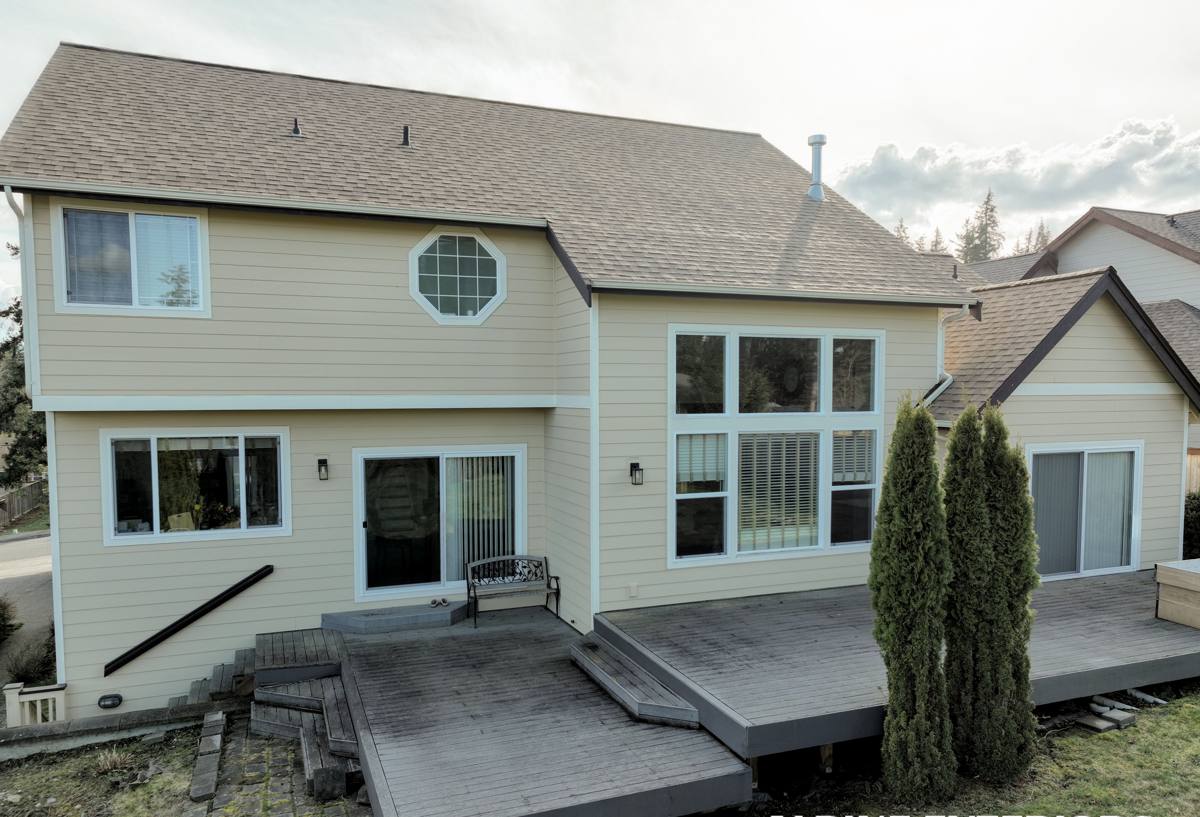
Why Decks Fail Faster Here Than Inland
Salt air and hardware corrosion
Standard deck screws, joist hangers, and bolts that hold up fine in drier, inland parts of Whatcom County will start showing rust streaks and pitting much sooner this close to the water. Once fasteners corrode, they lose holding strength long before the wood around them looks bad — which is why a deck can seem structurally fine on the surface while the connections underneath are quietly failing.
Driving rain and moisture intrusion
Storms off the Salish Sea don't just fall straight down — wind pushes rain sideways, into ledger boards, under railing posts, and into any gap in the flashing. Water that gets behind or underneath decking and doesn't have a clear path to drain is the single biggest cause of premature rot, especially at the point where the deck attaches to the house.
The long moss season
Shaded decks, north-facing decks, and anything under tree cover stay damp for long stretches of the year. Moss and algae hold moisture against the board surface, which accelerates decay in wood decking and can make composite surfaces dangerously slick if they're not detailed for drainage and airflow underneath.
Signs a Deck Needs Replacement, Not Repair
Not every issue means a full tear-off. But in a coastal climate like this, certain signs point to problems that repair alone won't fix:
- Soft, spongy, or spring boards, especially near the house or at stair landings
- Visible rot or discoloration at the ledger board (where the deck meets the house)
- Rust stains bleeding from screw heads or bracket connections
- Post bases that feel loose or show crumbling wood at ground contact
- Persistent moss or algae that returns within weeks of cleaning
- Railings that flex or feel less rigid than they used to
- Gaps between boards that have widened unevenly, signaling framing movement
The ledger board connection deserves special attention. It's the structural link between your deck and your home, and it's also the spot most exposed to trapped moisture if flashing wasn't installed correctly the first time. We check it on every inspection, because a deck can look solid everywhere else and still be unsafe at that one connection.
What a Correct Deck Replacement Actually Involves
Structural framework and ledger flashing
Everything starts with the framing. Joists, beams, and the ledger connection need to be sized correctly and, just as important, flashed so water sheds away from the house rather than pooling against it. This is the step that gets rushed on cheap jobs and is the one that determines whether your new deck lasts 10 years or 25.
Fastener and hardware selection
Given the salt exposure here, we don't treat hardware as an afterthought. Stainless steel or heavily coated, corrosion-rated fasteners and structural connectors cost more up front than standard galvanized hardware, but they're the difference between a deck that holds up and one that needs re-fastening in five years.
Decking material and fastening method
Whether you go with wood or composite, how the boards are attached matters as much as what they're made of. Hidden fastener systems reduce the number of penetration points where water can enter, and proper board spacing lets the deck expand, contract, and drain without cupping or trapping moisture.
Drainage and airflow underneath
A deck built tight to the ground or without ventilation underneath will hold moisture longer, which feeds moss and speeds up rot in the framing. Correct grading, gap spacing, and in some cases under-deck drainage systems keep air moving and water moving out.
Choosing a Decking Material for This Climate
There's no single "right" material for every home — it depends on budget, maintenance tolerance, and how much sun or shade the deck gets. Here's how the common options compare for a salt-air, high-moisture environment like Semiahmoo:
| Material | Moisture/Salt Performance | Maintenance | Typical Lifespan |
|---|---|---|---|
| Pressure-treated wood | Good if sealed regularly; end grain and fastener points are vulnerable | Annual cleaning and re-sealing recommended | 10–15 years with upkeep |
| Cedar | Naturally moisture- and rot-resistant, but surface still needs protection near the water | Periodic cleaning and oil/sealant | 15–20 years with upkeep |
| Capped composite | Excellent — resists moisture absorption and salt staining | Occasional washing, no sealing | 25–30 years |
| PVC decking | Excellent — fully moisture-proof board, best for wet, shaded areas prone to moss | Low; occasional washing | 25–30+ years |
We're honest about trade-offs: wood costs less upfront but demands consistent maintenance to keep pace with this climate, and skipping a season of sealing can undo years of protection. Composite and PVC cost more initially but remove most of the moisture-related maintenance burden, which is worth factoring in for a deck exposed to constant salt air and shade-driven moss.
Our Deck Replacement Process
- On-site assessment — we inspect the existing deck, framing, ledger connection, and post footings to confirm replacement is the right call and identify any hidden moisture damage.
- Design and material selection — we walk through decking, railing, and hardware options based on your home's sun/shade exposure, budget, and maintenance preferences.
- Permit check — we confirm what's required with the local building department before work starts, which matters more for waterfront and near-shoreline properties.
- Demolition and disposal — full removal of the old deck, including hauling away debris.
- Framing and flashing — new structural framework built to code, with ledger flashing detailed to shed water away from the house.
- Decking and railing installation — boards, fasteners, and railing installed with correct spacing and drainage in mind.
- Final walkthrough — we go over the finished deck with you, including care and maintenance specific to the material you chose.
What Affects the Cost
We don't quote prices sight unseen, but these are the factors that move a deck replacement estimate up or down:
| Factor | Why It Matters |
|---|---|
| Deck size and shape | More square footage and multiple levels or angles increase material and labor |
| Decking material | Wood typically costs less upfront; composite and PVC cost more but reduce long-term maintenance |
| Framing condition | Rotted joists, beams, or posts found during demo add structural repair to the scope |
| Height and access | Elevated decks or difficult site access require more labor and safety measures |
| Railing and stairs | Custom railing styles, glass panels, or multiple stair runs add to the total |
| Permit and inspection requirements | Waterfront and elevated structures may require additional engineering or inspections |
Permits and Waterfront Considerations
Because Semiahmoo sits along the water, some deck projects here fall under additional review beyond a standard Whatcom County building permit — shoreline setback and environmental rules can apply depending on the property's exact location relative to the water. We're not going to guess at your specific lot's requirements here; that's something we verify with the county before work begins, and it's one more reason it pays to work with a crew that's already familiar with how these approvals work in this area rather than one seeing it for the first time.
Protecting Your New Deck Going Forward
A well-built deck still needs basic upkeep to reach its full lifespan in this climate. A simple seasonal routine goes a long way:
- Rinse or sweep debris off the deck surface regularly, especially in fall when leaves and needles collect and trap moisture
- Clean moss and algae as soon as it appears rather than waiting until it's established
- Check fastener heads and railing connections once a year for early rust or looseness
- Keep gutters and downspouts near the deck clear so runoff doesn't drain directly onto it
- For wood decks, re-seal on the schedule recommended for your specific product — don't wait for visible graying
- Trim back overhanging vegetation that keeps sections of the deck shaded and damp
Why It Matters to Hire a Crew That Already Works This Area
A deck built to a generic spec sheet can still fail early in Semiahmoo's conditions if the crew hasn't accounted for salt exposure, wind-driven rain, and a moss season longer than most parts of the country deal with. We work throughout Whatcom County and know which details — hardware grade, flashing method, drainage spacing — actually hold up here versus what looks fine on installation day and fails in year three. That local track record is worth as much as any material choice.
If your deck is showing its age or you're just not sure whether it needs repair or full replacement, we're happy to take a look. Fill out the form below for a free, no-pressure estimate.