 Ferndale
 Roof Replacement for Sumas Homes
Sumas sits out at the far northeastern edge of Whatcom County, tucked against the Canadian border in the flat, low-lying farmland of the Sumas Prairie. It's a different setting than the coastal parts of our service area closer to Bellingham Bay, but it still sits inside the same marine-influenced weather system that shapes roofing across this whole corner of Washington. Moist air moves up the valley off the Sound, rain comes in wind-driven rather than falling straight down, and mild, damp conditions give moss a growing season that runs far longer here than in drier parts of the state. Salt-laden air is less of a factor this far inland than it is on a waterfront roof, but the combination of sustained valley moisture, wind exposure, and a long moss season still puts real, steady stress on a roof that a drier climate wouldn't.
We work roofing, siding, windows, and decks, and on a Sumas property the roof takes the first and hardest hit from that climate every year. Whether you're weighing a repair, staring down an aging roof that's clearly done, or want a straight answer on which one you're actually looking at, the approach here starts with understanding what this specific valley climate does to roofing materials over time.
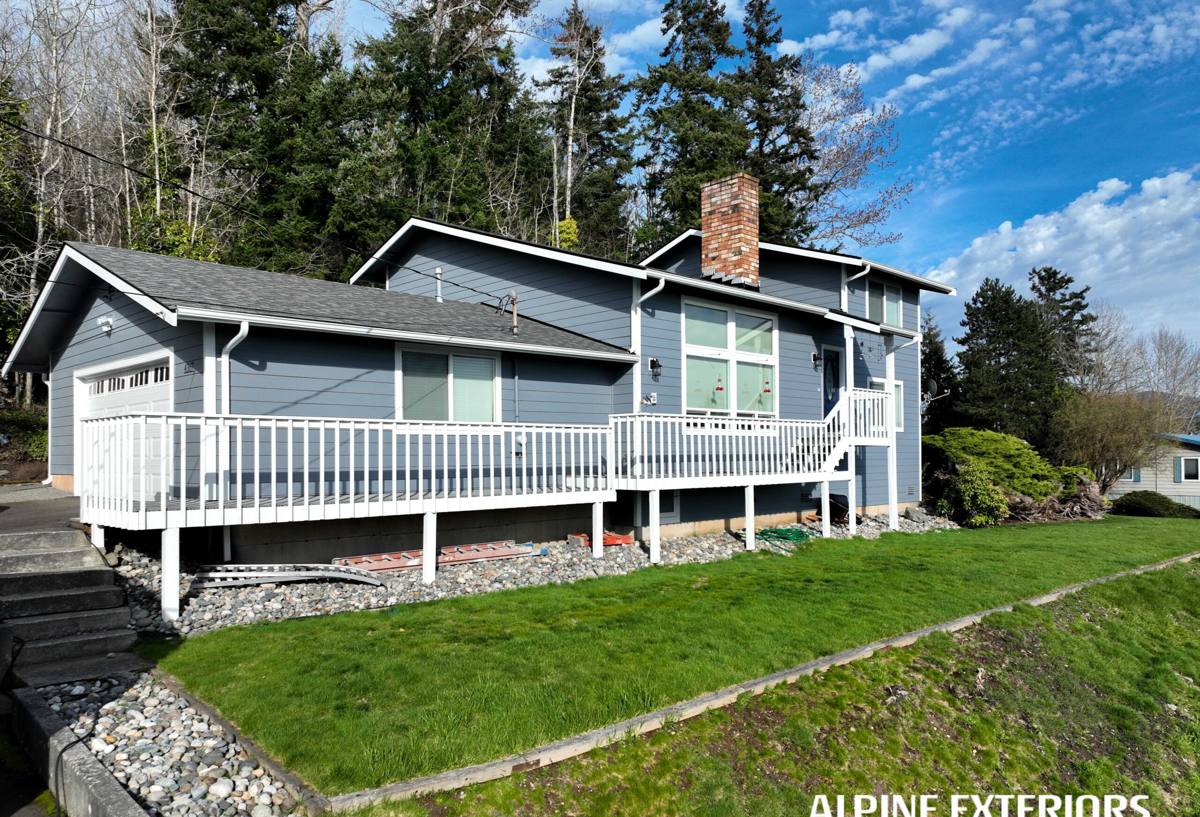
What the Sumas Climate Does to a Roof
Wind-Driven Rain Off the Valley Floor
Sumas sits low, in flat agricultural terrain near the Nooksack River system, and storms moving through the valley push rain sideways into roof valleys, around chimneys and vent pipes, and up under shingle edges rather than letting it run straight off the slope. On a flat, low-lying property, that moisture also has less natural drainage than it would on a hillside lot, so a roof here spends more time genuinely wet than a roof the same age somewhere drier and higher up.
Cold Outflow Wind
Because of its position near the head of the valley by the border, Sumas gets more exposure to cold outflow wind events in winter than towns closer to the water. Those events bring sharp temperature swings and real wind load, and a roof with marginal fastening or aging flashing that's held up fine under ordinary Whatcom County weather can get tested hard when a cold snap rolls through with wind behind it.
A Long Moss Season
Persistent regional dampness and mild temperatures give moss a growing season that stretches across most of the year here, especially on shaded and north-facing roof slopes. Moss does more than look bad on a roof — it holds moisture directly against the shingle surface, works its way under tab edges, and can lift or loosen roofing over time if it isn't kept in check.
Freeze-Thaw Cycling
Sumas sees more frequent hard frosts than the milder coastal parts of the county, which adds a freeze-thaw dimension to any moisture that's already worked its way into a roof deck or underlayment. Water that soaks in and then freezes expands, which accelerates cracking and deterioration faster than a purely wet-but-mild climate would on its own.
Roofing Materials: What Actually Holds Up in Sumas
There's no single "best" roof for every home — it comes down to roof pitch, sun and shade exposure, budget, and how long you plan to stay in the house. What matters is understanding the real trade-offs for a valley climate like this one before deciding.
| Material | Moisture & Moss Behavior | Typical Maintenance | Realistic Lifespan Here |
|---|---|---|---|
| Architectural asphalt shingle | Performs well with proper ventilation and moss-resistant granules | Periodic moss removal, gutter checks | 20-25 years |
| Standing seam metal | Sheds water and resists moss buildup due to a smooth, non-porous surface | Low; occasional fastener and sealant checks | 40-55 years |
| Cedar shake | Absorbs moisture readily; needs airflow underneath to dry between rains | Higher; regular treatment and moss control | 15-20 years with consistent upkeep |
| Composite/synthetic shingle | Resists moisture absorption; performance varies by product quality | Low to moderate | 25-40 years |
We'll walk through which option fits your roof's pitch, exposure, and budget rather than defaulting to whichever is easiest to sell. A steep, sun-exposed roof on an open Sumas lot and a low-slope roof shaded by tree lines along a drainage ditch don't call for the same answer.
What a Correct Roof Replacement Involves
Material choice only gets a Sumas roof halfway there. The rest comes down to what happens underneath the shingles, and in a valley climate that holds moisture longer than well-drained higher ground, cutting corners on any of these steps tends to show up within a wet season or two.
Tear-Off and Deck Inspection
A full tear-off, rather than a shingle-over-shingle overlay, is the only way to actually see the roof deck underneath. On an older Sumas roof that's been holding moisture for years, this is often where soft or delaminated sheathing turns up — and it needs to be replaced before new roofing goes on, not covered up.
Underlayment
A quality synthetic or self-adhered underlayment gives a second line of defense if wind ever drives rain up under a shingle tab, which happens more often on an exposed valley property than in a calmer, sheltered spot.
Flashing
New flashing at every chimney, vent pipe, valley, and roof-to-wall transition — not caulk smeared over old, corroded flashing. This is one of the most common places a corner gets cut on a cheap roof job, and it's exactly where a Sumas roof leaks first once wind-driven rain finds a weak seam.
Ventilation
Proper intake and exhaust ventilation keeps the attic deck dry and helps prevent the moisture buildup that leads to premature sheathing rot, a real risk given how long the wet season runs in this part of the county.
Ice-and-Water Shield
Extra protection at eaves and valleys, where water and debris are most likely to collect and back up during a heavy rain event or an outflow windstorm.
Signs a Sumas Roof Needs Replacing
- Moss buildup in valleys or on shaded slopes that returns quickly after cleaning
- Granules collecting in gutters or at the base of downspouts
- Curling, cupping, cracked, or missing shingles, especially after a windstorm
- Water staining on interior ceilings near exterior walls or around chimneys
- Daylight visible through the roof deck when viewed from inside the attic
- Soft spots or sagging when the roof surface is walked on
- Flashing that looks lifted, rusted, or repeatedly caulked over instead of replaced
Any one of these is worth a professional look. Caught early, most are a repair. Left through another wet valley winter, several of them together usually mean it's time to plan for a full replacement.
Repair or Replace? How We Help You Decide
We don't default to recommending a full replacement just because that's the bigger job. We look at the roof's age, how much of the surface is actually affected, whether the deck underneath has moisture damage, and how many times the roof has already been patched. A localized leak on an otherwise sound roof is usually a straightforward repair. A roof nearing the end of its rated life with moss-related damage spread across multiple slopes, or a deck showing soft spots from long-term trapped moisture, is more honestly addressed with a replacement than another round of patchwork that just delays the same problem. We'll explain what we actually find on your roof and why, in plain terms.
Cost Factors for a Sumas Roof Replacement
| Factor | What It Affects | Why It Matters Here |
|---|---|---|
| Tear-off and deck condition | Labor scope and any decking replacement needed | Long-term valley moisture commonly causes hidden sheathing rot under older roofing |
| Roof pitch and complexity | Labor time, safety equipment, material waste | Steeper or more complex rooflines take longer to flash and detail correctly |
| Wind and fastening spec | Material and labor requirements | Outflow wind events near the border can call for tighter fastening patterns than a sheltered site |
| Material choice | Upfront cost and long-term lifespan | Higher-durability materials cost more upfront but shed moss and moisture better over time |
| Site access | Labor time and equipment staging | Rural and agricultural properties can have longer driveways or wider staging needs than an in-town lot |
Exact costs depend on the specific roof and its exposure, which is why we walk the property in person before giving a real number instead of quoting off a generic price sheet.
Why a Local Crew Matters in Sumas
A crew that works this part of Whatcom County regularly understands how valley damp, wind-driven rain, and freeze-thaw cycling actually behave on real roofs here over a full year, not just how a shingle performs on a data sheet. That experience shapes practical decisions on install day: which roof orientations hold moss longest, where extra flashing attention pays off, and which fastening details are worth the added time so you're not dealing with a callback after the next winter outflow event. Sumas sits far enough inland and close enough to the border that its exposure looks a little different from the rest of Ferndale's service area, and a crew with real local experience treats that difference seriously instead of applying a one-size-fits-all approach built for a milder coastal roof.
What to Expect When You Call Us
- A walk-around and, where safe and useful, an attic check to look at deck condition, ventilation, and flashing together
- An honest assessment of whether you're looking at a repair or a full replacement
- A clear explanation of material options and trade-offs for your roof's pitch and exposure
- A written estimate with no pressure to sign on the spot
If your Sumas roof needs an inspection, a repair, or you're weighing a full replacement, we're glad to take a look and give you a straightforward, honest read on what it actually needs. Reach out using the form below to schedule a free, no-pressure estimate.