 Ferndale
 Roofs Near the Water Wear Differently
A roof on the Lummi Peninsula doesn't age the same way a roof does ten miles inland. Homes here sit close to Bellingham Bay and the open water beyond it, which means salt-laden air is a constant, low-grade attack on fasteners, flashing, and any exposed metal. Add Whatcom County's long stretch of wet months and the tree cover common around Lummi Nation, and you get a roof that's dealing with three separate problems at once: corrosion, water intrusion, and moss. Any one of those will shorten a roof's life. Together, they speed things up considerably if the roof isn't maintained or repaired promptly.
This page is about roof repair specifically — patching, fixing, and extending the life of a roof that still has good years left in it, rather than tearing it off and starting over. Most roofs we look at in this area don't need full replacement. They need the right repair, done correctly, by someone who understands what the local climate is doing to the materials.
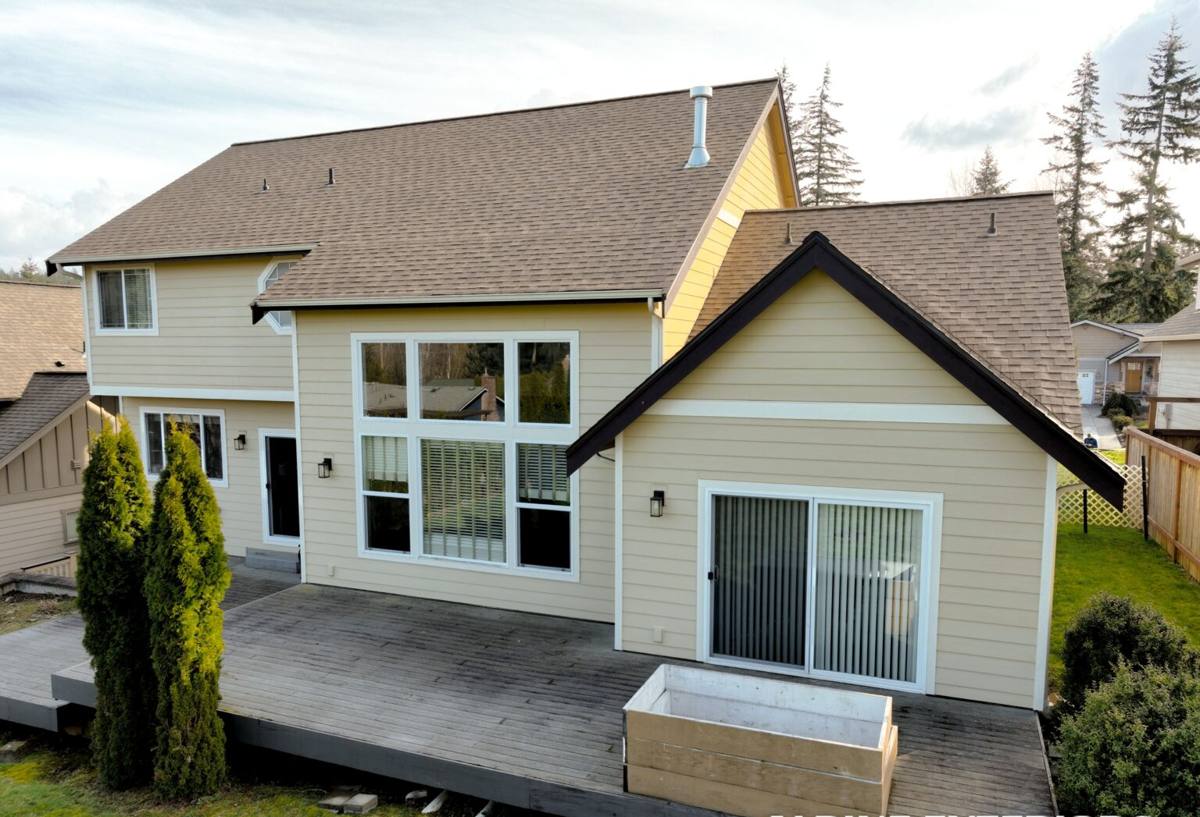
Signs a Lummi Nation Roof Needs Repair
Roof problems here rarely announce themselves with a dramatic leak on day one. They show up as small clues first. Homeowners who catch these early save real money, because a $400 flashing repair now is a lot cheaper than replacing rotted decking later.
- Dark streaking or green-black growth on shaded slopes or north-facing sections
- Granules collecting in gutters or at the base of downspouts
- Soft or spongy spots when walking the roof (a sign of trapped moisture underneath)
- Rust staining running down from nail heads, flashing, or metal vents
- Curling, lifting, or cracked shingle edges, especially on the side that faces prevailing wind and rain
- Water stains on interior ceilings, particularly near chimneys, skylights, or where two roof planes meet
- Daylight visible through the attic at roof valleys or around vent boots
- Sagging along a ridge line or in a valley
If you're seeing two or more of these, it's worth a look before the next heavy rain event, not after.
Why Moss Is a Bigger Deal Here Than Most Homeowners Realize
How It Gets a Foothold
Moss needs shade, moisture, and time to establish, and this part of Whatcom County offers all three for a good chunk of the year. It typically starts on north-facing slopes or under tree cover, where the roof surface stays damp longer between rain events. Once established, moss doesn't just sit on top of shingles — its root structure works into the granule layer and lifts shingle edges, creating small gaps where wind-driven rain can get underneath.
Why Scraping It Off Isn't the Fix
A lot of the roof damage we repair didn't come from the moss itself — it came from someone pressure-washing or aggressively scraping moss off a roof, which strips granules and tears shingle mat right along with it. Correct moss management is gentler: manual removal with the right tools, treatment to slow regrowth, and — where it makes sense — zinc or copper strip installation near the ridge, which lets rain carry trace metal ions down the roof and discourage new growth. That's a maintenance step, not a repair by itself, but it's often part of the conversation when we're already up there fixing something else.
What Salt Air Actually Does to Roofing Materials
Salt air accelerates corrosion on anything metal — nail heads, flashing, drip edge, vent stacks, and the fasteners holding it all together. It doesn't matter that a home isn't directly on the beach; airborne salt travels well inland on wind off the bay, and Lummi Nation's exposure to open water means most homes here get more of it than a typical inland Whatcom County property.
| Material | Behavior in Salt Air / Coastal Exposure |
|---|---|
| Standard galvanized flashing | Prone to rust streaking and pitting over time; needs regular inspection |
| Stainless steel or coated fasteners | Holds up significantly better; worth the small upcharge on repairs near the shoreline |
| Aluminum flashing/trim | Resists rust but can corrode if it stays in direct contact with certain treated woods |
| Copper flashing and valleys | Excellent long-term performance in salt air; develops a protective patina rather than rusting |
| Untreated exposed nail heads | First thing to show rust staining; often a sign of a rushed prior repair |
When we repair a section of roof in this area, the material choice for flashing and fasteners matters as much as the shingle work itself. Using standard hardware because it's what's on the truck is how a "repair" ends up needing another repair in three years.
What a Correct Roof Repair Actually Involves
A repair that lasts isn't just about covering the visible damage. It requires understanding why that spot failed in the first place, or the same problem comes back.
- Diagnose the actual source. A stain on the ceiling doesn't always mean the leak is directly above it — water travels along the underlayment and framing before it shows up inside. We trace it back to the real entry point.
- Check the surrounding area, not just the damaged spot. If moss lifted three shingles, the ones next to them are usually compromised too, even if they look fine from the ground.
- Inspect flashing and penetrations first. Most roof leaks in this region trace back to flashing around chimneys, skylights, vent boots, and valleys — not the field of the roof itself.
- Replace underlayment where it's been exposed to water. Saturated felt or synthetic underlayment doesn't dry out and go back to protecting the deck; it needs to come out.
- Match materials correctly. Shingle color, profile, and age all matter for a repair that doesn't stand out — and for the shingles to seal and perform as a system.
- Address ventilation if it's contributing to the problem. Poor attic ventilation traps moisture, which speeds up moss growth and rot from the underside of the deck.
- Clean up and inspect the whole roof before we leave. A repair call is a good opportunity to flag anything else developing, so nothing gets missed until it's a bigger job.
Common Repair Issues on Homes in This Area
- Cracked or pulled-back pipe boot flashing (rubber boots degrade faster with UV and salt exposure)
- Valley flashing corrosion where two roof planes funnel heavy rain volume
- Wind-lifted shingle tabs from storms coming off open water
- Moss-related granule loss on shaded, low-slope sections
- Chimney and skylight step flashing that was never properly counter-flashed
- Rot at fascia and roof edges from clogged gutters holding water against the roofline
What Roof Repair Costs Depend On
We don't post fixed repair prices because every roof and every problem is different, but the factors that drive cost are consistent. Knowing them helps you understand a quote instead of just seeing a number.
| Factor | Why It Matters |
|---|---|
| Roof pitch and accessibility | Steeper roofs and limited access take longer and require more safety setup |
| Extent of hidden damage | A leak repair can grow once we open it up and find soaked decking or framing |
| Material match | Older or discontinued shingle lines can be harder to match, sometimes requiring a larger repair area |
| Flashing material used | Upgrading to corrosion-resistant flashing near the shoreline costs a bit more upfront but avoids repeat repairs |
| Number of penetrations involved | Chimneys, skylights, and multiple vents each add flashing detail work |
| Moss or debris removal needed first | Heavy moss buildup has to be cleared before the actual repair can even be assessed properly |
Most straightforward repairs — a section of flashing, a handful of shingles, a pipe boot — are a same-day fix. Anything involving rotted decking or a full valley rebuild takes longer, and we'll always explain why before we start.
Why It Matters That We Already Work in Lummi Nation
Roofing crews that mostly work subdivisions further inland don't always have a feel for what this specific stretch of Whatcom County throws at a roof. Knowing that a north-facing slope under fir trees is going to grow moss faster than the same slope on a home five minutes away, or that flashing near the water needs a different fastener spec, comes from having actually worked on roofs out here — not from a general checklist.
There's also the practical side. Some homes in and around Lummi Nation sit on tribal land, and depending on the property, permitting and approval steps can work differently than they do for a standard Whatcom County address. A crew that's already navigated that once doesn't have to figure it out from scratch on your job, which keeps things moving instead of stalling on paperwork nobody expected.
And when a storm rolls in off the water and knocks a section of flashing loose or lifts shingles, having a crew that already knows the area means a faster, more accurate response — not a guess made from a photo texted in.
Simple Maintenance That Extends a Repair's Lifespan
A good repair buys you time, but a few habits stretch that time further, especially given how much moisture and moss this area deals with.
- Clear gutters at least twice a year — clogged gutters back water up under the roof edge
- Trim back tree limbs that overhang the roof to cut down on shade and debris that feed moss
- Do a visual check from the ground after major windstorms for lifted or missing shingles
- Have moss treated before it spreads, rather than waiting until it's covering a full slope
- Check the attic once a year for daylight, damp insulation, or musty smell — early warning signs a repair is needed
- Don't let anyone pressure-wash the roof directly; it strips protective granules
Our Process for a Roof Repair Call
We keep it straightforward. We come out, get on the roof (not just a look from the driveway), and give you a plain-English explanation of what's actually wrong, what caused it, and what fixing it correctly involves. If it's a simple repair, we can often quote it on the spot. If there's hidden damage we need to open up to assess, we'll walk you through that before any work starts — no surprise add-ons once we're already up there. You get a written scope, a fair price, and a repair built to hold up against what this location actually deals with, not a generic patch job.
If your roof has a leak, a soft spot, moss taking over a slope, or you just want an honest opinion on its condition before winter's heavy rains set in, reach out for a free, no-pressure estimate using the form below.