 Ferndale
 Point Roberts Puts Extra Stress on a House's Siding
Point Roberts sits out on its own peninsula at the edge of Whatcom County, surrounded by water on three sides and cut off from the rest of the U.S. mainland except by boat or by driving through Canada. That geography is part of what makes it a beautiful place to own a home, and it's also exactly why siding here wears differently than it does a few miles inland in Ferndale or Bellingham. Homes on this stretch of coastline take a steady diet of salt-laden air, wind-driven rain off the Strait of Georgia, and long stretches of the year when shaded or north-facing walls barely dry out between storms. Add in the region's extended moss and algae season, and you've got a set of conditions that will find every weak point in a siding system faster than it would almost anywhere else in Whatcom County.
None of that means Point Roberts homes are doomed to constant repair. It means the repair work has to be done correctly, with the right diagnosis and the right materials, or the same problem comes back within a season or two.
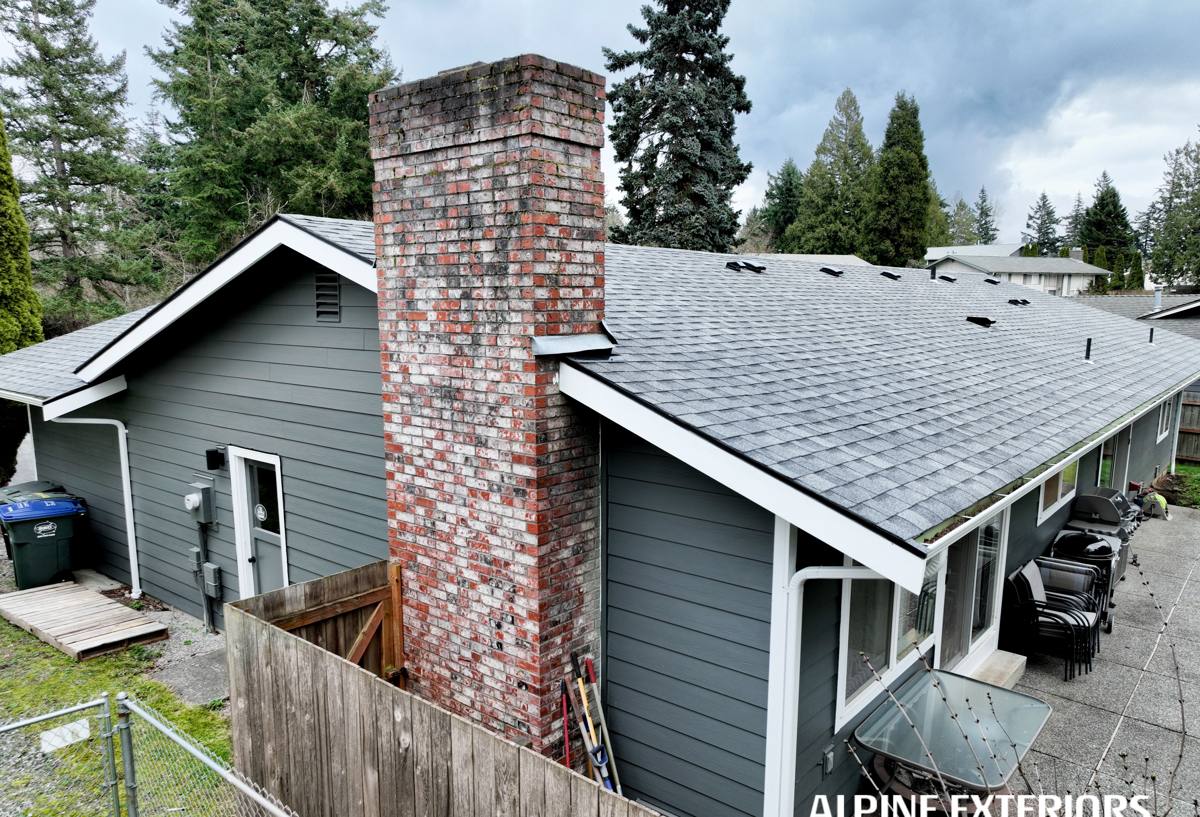
What "Correct" Siding Repair Actually Means
Diagnosing before patching
The biggest mistake in siding repair isn't a bad caulk job — it's fixing what's visible without figuring out what's actually happening behind it. A cracked or stained board is usually a symptom, not the problem itself. Moisture that's gotten behind the cladding, a flashing detail that was never installed correctly, or a fastener pattern that's letting water track inward will keep causing damage even after the surface looks fine again. Real repair work starts with pulling back enough material to see what's underneath: the house wrap or weather-resistive barrier, the flashing at windows, doors, and trim, and the condition of the sheathing itself.
Matching materials the right way
Patching a repair with the wrong product — a different thickness, a mismatched profile, or a material that expands and contracts at a different rate than what's already on the wall — creates a new failure point right where you just fixed the old one. Getting the reveal, the fastening pattern, and the finish right matters as much as getting the moisture source stopped.
The Failure Points We See Most Often on Point Roberts Homes
The specific damage we're called out for on this peninsula tends to follow a pattern shaped by its exposure:
- Fastener and trim corrosion: Salt air accelerates rust on exposed or improperly coated fasteners and metal trim, which then stains and weakens the siding around them.
- Moss and algae buildup: North- and west-facing walls that stay shaded and damp longer than the rest of the house grow moss and algae that hold moisture against the surface and speed up decay underneath.
- Caulk and sealant breakdown: Sun, salt, and constant moisture cycling break down sealants at joints and penetrations faster than a manufacturer's rated lifespan would suggest, opening a path for water.
- Wind-driven rain intrusion: Storms off the water don't just fall straight down — they push rain sideways into butt joints, trim edges, and anywhere flashing was cut short, which is a very different failure mode than simple rainfall exposure.
Repair or Replace? How We Make That Call
Not every damaged section needs a full re-side, and not every "small" repair should stay small. We look at the extent of the damage, what's driving it, and how much of the wall system is affected before recommending either option.
| Factor | Points Toward Repair | Points Toward Replacement |
|---|---|---|
| Extent of damage | Isolated to one wall section or a few boards | Recurring across multiple walls or elevations |
| Underlying moisture barrier | Intact once opened up | Compromised, torn, or missing in multiple areas |
| Age and material of existing siding | Sound material, isolated failure | Aging or discontinued product that's hard to match |
| Cause of damage | A single fixable detail (flashing, caulk, one impact) | Systemic exposure issue affecting the whole assembly |
| Sheathing condition | Dry, solid wood underneath | Soft, delaminated, or water-stained sheathing |
Our Point Roberts Siding Repair Process
- On-site assessment: We inspect the affected area and the surrounding wall, checking for moisture intrusion beyond what's visible from the outside.
- Opening up the problem area: Where damage suggests moisture behind the siding, we remove enough material to inspect the barrier, flashing, and sheathing directly rather than guessing.
- Addressing the actual cause: Failed flashing gets corrected, damaged wrap gets patched or replaced, and any soft sheathing gets addressed before anything new goes back on.
- Matching and installing materials: We match profile, reveal, and finish as closely as the existing siding allows, and fasten and flash it correctly rather than just fast.
- Final sealing and cleanup: Joints and penetrations get properly sealed, and the work area is cleaned up before we call the job done.
Why We Repair and Rebuild With James Hardie Materials
We install and repair with James Hardie fiber cement siding exclusively. We don't carry vinyl, LP SmartSide, primed wood, or other fiber cement brands, and that standard applies to repair work too. In a coastal environment like Point Roberts, the material doing the patching matters almost as much as the workmanship. Fiber cement doesn't feed moss the way wood-based products can, it's not attractive to pests, and it holds up to sun and salt exposure without the warping or rotting that shortens the life of other claddings. James Hardie's factory-applied ColorPlus finish also means a well-matched repair blends in and weathers evenly with the rest of the wall, rather than becoming a visibly different patch a year or two later. If your home currently has non-Hardie siding, we'll still assess and repair what's there honestly — but when a section needs full replacement rather than a patch, Hardie is what we recommend and install.
Why It Matters to Hire a Crew That Already Works in Point Roberts
Point Roberts' isolation isn't just a geography fact — it's a real logistical factor in getting siding work done right. Materials, equipment, and crews all have to travel through a border crossing to reach the peninsula, which means scheduling has to account for that in a way it wouldn't for a job in Ferndale proper. A contractor who hasn't worked out that logistics ahead of time can turn a two-day repair into a week of delays waiting on a forgotten tool or a missing piece of trim. Beyond logistics, a crew that's already repaired siding on this stretch of coastline knows what to expect before they even pull up: which elevations take the worst of the wind-driven rain, how aggressively moss establishes itself on the shaded sides, and where corrosion tends to show up first. That familiarity shortens the diagnostic phase and helps us catch problems a first-time visitor might miss.
Signs Your Siding Needs Attention
Most siding problems give some warning before they turn into a bigger repair. Worth checking for:
- Soft or spongy spots when you press on the siding near the bottom of walls or under windows
- Visible cracking, buckling, or gaps at seams and trim joints
- Persistent moss or algae growth that keeps returning after cleaning
- Rust streaking below fasteners or metal trim pieces
- Peeling or bubbling paint, or a chalky, uneven finish
- Interior signs like musty smells, peeling wallpaper, or stains near exterior walls
- Caulk that's cracked, shrunk away from the joint, or missing altogether
What Repair Costs Depend On
Every repair is different, but the same handful of factors drive the cost on most jobs:
| Cost Factor | Why It Matters |
|---|---|
| Extent of hidden moisture damage | Damaged sheathing or barrier material found once the wall is opened adds scope beyond the visible repair |
| Material matching | Matching an existing profile, reveal, or finish can require special ordering versus using stock material |
| Wall accessibility | Height, obstructions, and access around the home affect labor and equipment needs |
| Number of affected areas | Multiple isolated repairs across a home cost differently than one contained section |
| Underlying cause | Correcting a flashing or drainage detail adds work beyond simply replacing boards |
We'll always walk you through exactly what we found and why a repair costs what it does before any work begins — no guessing, no surprises added on afterward.
If you're seeing any of these warning signs on a Point Roberts home, or just want a second opinion on siding that's been giving you trouble, we're happy to take a look. Reach out for a free, no-pressure estimate using the form below.