 Ferndale
 Composite Decking Built for Kendall's Weather, Not Against It
Kendall sits back from the water, but it doesn't escape Whatcom County's weather. The same marine system that pushes damp, salt-tinged air off Bellingham Bay through Ferndale still reaches inland — it just arrives as long stretches of driving rain, heavy cloud cover, and the kind of persistent humidity that never quite lets a deck dry out. Add in the tree canopy that shades a lot of Kendall properties and you get a deck environment that's tougher on materials than most homeowners expect: shade plus moisture plus organic debris is exactly the recipe moss and algae need.
Composite decking exists to handle that combination better than wood does. It doesn't absorb water the way a cedar or fir board does, it won't splinter or cup as it ages, and it doesn't need annual staining to keep from graying and checking. That doesn't mean any composite deck holds up automatically — how it's framed, fastened, and ventilated underneath matters as much as the boards themselves. This page covers what a composite deck actually needs to perform in Kendall's climate, what our install process looks like, and what to watch for whether you're planning a new deck or replacing an aging one.
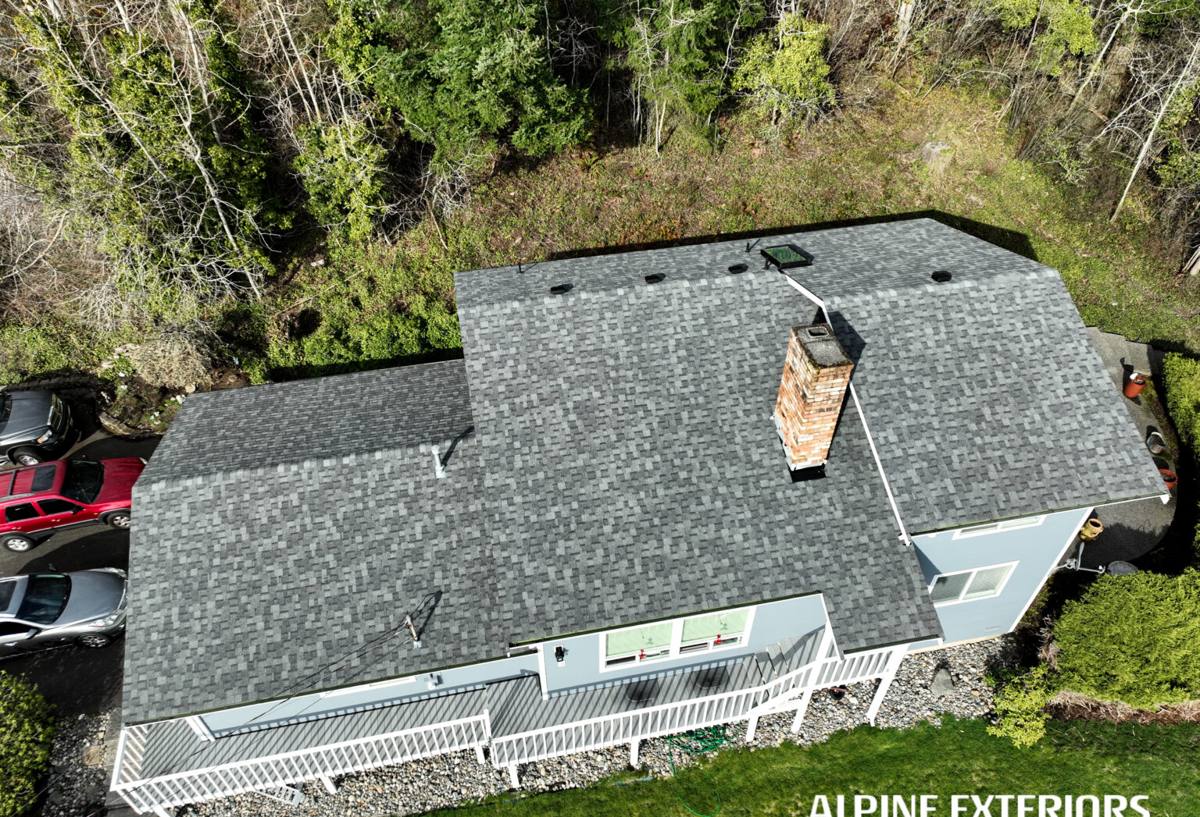
What Kendall's Climate Actually Does to a Deck
Moisture and Moss
A long moss season is the defining fact of decking in this part of Whatcom County. Wood decks in shaded, tree-covered yards can grow a slick green film within a season or two if they're not power-washed regularly, and that moss holds moisture against the board surface long after a rain event has passed. Composite boards resist moss growth far better because the surface doesn't wick water the way wood fibers do, but they're not immune — pollen, needle litter, and standing water in low spots will still let algae take hold if the deck can't drain and dry between rains.
Temperature Swings and UV
Kendall gets more temperature variation than the immediate coastline — colder overnight lows in winter, and warmer, sunnier stretches in summer when the marine layer burns off. Composite boards expand and contract with temperature more than people expect, which is why gapping and fastening details at installation matter: get them wrong and you'll see buckling, squeezing at the ends, or fasteners popping loose a year or two in.
Tree Cover and Debris
Wooded lots mean falling needles, leaves, and seed litter collecting in board gaps and against the house. Left alone, that debris holds moisture right where a deck's substructure is most vulnerable — at the ledger board and along the perimeter joists. A deck built without attention to drainage and airflow underneath will trap that moisture regardless of what the top boards are made of.
Composite vs. Wood vs. PVC: What Actually Fits This Climate
| Factor | Pressure-Treated Wood | Capped Composite | PVC/Cellular |
|---|---|---|---|
| Moisture resistance | Absorbs water, needs sealing | Very good — capped shell resists absorption | Excellent — fully synthetic |
| Moss/algae resistance | Poor without regular treatment | Good | Good to excellent |
| Upkeep | Annual stain/seal, regular washing | Occasional wash, no sealing | Occasional wash, no sealing |
| Upfront cost | Lowest | Mid-range | Highest |
| Feel underfoot | Warm, natural | Solid, wood-like | Can run hotter in direct sun |
| Typical lifespan | 10–15 years before major repair | 25–30+ years | 25–30+ years |
For most Kendall homes, capped composite hits the right balance — it holds up to the moisture and shade problems this area creates without the premium cost of full PVC. Where a deck sits in near-constant shade or close to grade with limited drying time, PVC's fully synthetic makeup is worth the extra cost. We'll walk the site and give you an honest read on which one fits your specific lot rather than defaulting to whatever's easiest to sell.
What a Correct Composite Deck Install Actually Involves
Framing and Substructure
Composite boards are only as good as what's underneath them. Joist spacing needs to match the manufacturer's span rating for the board profile you're using — undersized framing is the single biggest cause of bounce and long-term sagging in composite decks we're asked to fix. We use joist tape or an equivalent moisture barrier on top of the framing so the composite boards aren't the only thing keeping water off untreated wood.
Fasteners and Hardware
Everything below deck height needs to be rated for treated lumber and coastal-influenced humidity — that means hot-dip galvanized or stainless structural hardware, not standard zinc-coated fasteners that corrode within a few seasons in this climate. Board fastening itself uses hidden clip systems sized for the specific composite product, spaced to allow for the expansion and contraction Kendall's temperature swings create.
Ventilation and Drainage
Low decks or decks built close to grade need real airflow underneath — blocked or minimal ventilation is what turns a wet week into a moisture problem that sits under the boards for months. Ledger board flashing where the deck meets the house has to be done correctly the first time; it's the single most common source of hidden rot on any deck in this region, composite or not, because a poorly flashed ledger lets water track directly into the house framing.
Board Layout and Expansion Gaps
Every composite manufacturer specifies minimum gapping between boards and at end cuts to account for thermal movement. Skipping or shrinking those gaps to make a deck look tighter on installation day is a common shortcut — and it's exactly what causes buckled boards and popped fastener heads once summer heat and winter cold start working on the material.
Our Process, Start to Finish
- Site walk and assessment — we look at drainage, tree cover, existing structure (if replacing a deck), and how the deck ties into the house.
- Honest product recommendation — capped composite or PVC, sized and spec'd for your actual site conditions, not a one-size answer.
- Written estimate — scope, materials, and price before anything starts, no surprise change orders for things we should have caught up front.
- Demo and framing — old decking removed if applicable, substructure inspected and corrected before a single composite board goes down.
- Flashing and moisture barrier work — done to code, not skipped to save a day.
- Board installation — hidden fastening, correct gapping, clean cuts and edges.
- Final walkthrough — we go over care basics with you before we call the job done.
Maintenance You'll Actually Need to Do
One of the real advantages of composite decking is how little upkeep it needs compared to wood — but "little" isn't "none," especially under Kendall's tree cover.
- Sweep off needles, leaves, and seed debris regularly, especially in fall — trapped organic matter is what feeds moss and algae on any deck surface.
- Rinse or wash the deck a couple of times a year with mild soap and water; a pressure washer on a wide, low-pressure setting works, but avoid narrow tips that can scar the board surface.
- Keep gutters and downspouts near the deck clear so runoff isn't dumping directly onto or under the decking.
- Check that furniture, planters, and grills aren't sitting in one spot long enough to trap moisture underneath — move them periodically.
- Look under the deck once a year for standing water or debris buildup around the ledger board and posts.
- Never use bleach-based cleaners on composite boards — they can discolor the capped surface over time; stick to manufacturer-approved or mild soap solutions.
Common Problems We See on Existing Decks in This Area
When we're called out to look at an aging deck in Kendall, the same handful of issues show up again and again: ledger boards flashed poorly or not at all, framing hardware that's rusted through because it was never rated for the moisture load, boards installed with tight or no expansion gaps that have buckled, and ventilation blocked by skirting or grading changes made after the original build. Almost all of it traces back to shortcuts taken at framing and fastening — the parts of the job nobody sees once the decking is down, which is exactly why they matter most.
Why Hire a Crew That Already Works in Kendall
Decking details that work fine in a dry inland climate don't automatically work here. A crew that builds mostly in places without Whatcom County's rain totals, humidity, and moss pressure can get the visible parts of a deck right and still miss the framing, flashing, and drainage details that determine whether it's still solid in ten years. We work this specific climate — the tree cover, the long wet stretches, the way moisture behaves on a shaded lot versus an open one — and we build accordingly, not off a generic spec sheet.
That local knowledge also means straight answers about what your particular lot needs. A deck on an open, sunny part of a Kendall property doesn't need the same drainage attention as one tucked under fir trees on the shaded side of the house, and we'll tell you honestly which situation you're dealing with rather than upselling the same package to everyone.
Get a Straight Answer for Your Property
If you're planning a new composite deck or trying to figure out whether an existing one is worth repairing or replacing, we're happy to take a look and give you an honest assessment — no pressure, no upsell. Fill out the form below for a free estimate, and we'll walk your property with Kendall's climate and your specific site in mind.