 Ferndale
 Fairhaven's Marine Climate Puts Real Stress on Siding
Fairhaven sits along Bellingham Bay, which means homes here take on a different set of exterior challenges than houses further inland in Whatcom County. Salt-laden air off the bay works on fasteners, trim, and paint film year-round. Driving rain off the water finds every weak seam, gap, and unsealed joint. And the long stretch of overcast, damp weather common to this part of the Pacific Northwest keeps moss and algae established on north- and shade-facing walls for much of the year. None of this is unusual for the area, but it does mean siding decisions that work fine in a drier climate can fail early here.
Siding on a Fairhaven home isn't just a cosmetic layer — it's the first line of defense against moisture that, if it gets behind the cladding and stays there, leads to sheathing rot, mold, and structural repair costs that dwarf the price of doing the siding right the first time.
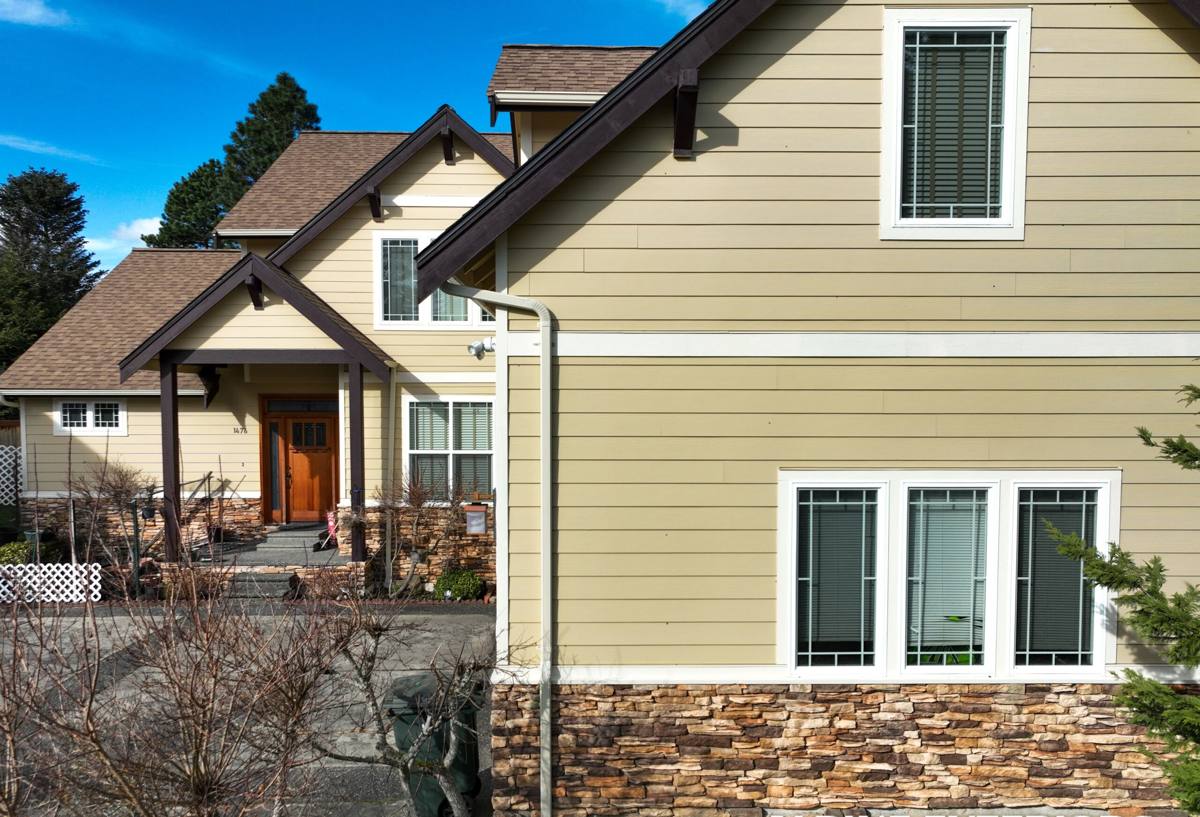
Why We Install Only James Hardie Fiber Cement Siding
We don't install vinyl, cedar, primed spruce, LP SmartSide, or other fiber cement brands. That's a deliberate standard, not a lack of options. James Hardie siding is made from cement, sand, and cellulose fiber — a composition that doesn't absorb water the way wood-based products do, doesn't feed moss and mildew the way bare or lightly finished wood can, and won't ignite or contribute fuel to a fire the way wood and some engineered wood products will.
James Hardie also builds region-specific product lines. The HZ5 line is engineered for climates like ours — colder, wetter, with more freeze-thaw cycling than the Southeast or Southwest lines are built for. Combined with the factory-applied ColorPlus finish, which is baked on under controlled conditions rather than field-painted on site, you get a finish that holds color and resists chipping and fading far longer than a job-site paint job on wood or engineered wood siding. For a bay-facing property, that combination of moisture resistance, non-combustibility, and a factory finish built to survive UV and salt exposure is why Hardie is the only product we put on a house.
What a Correct Installation Actually Involves
Fiber cement siding is only as good as the assembly behind it. In a driving-rain, high-moisture environment like Fairhaven, the details most homeowners never see are the ones that determine whether the siding lasts twenty years or fails in five.
Rain Screen and Weather-Resistive Barrier
A drainage gap between the siding and the weather-resistive barrier lets any water that does get past the cladding drain and dry out instead of sitting against the sheathing. On a home exposed to regular wind-driven rain off the bay, this gap is not optional — it's the difference between a wall assembly that manages incidental moisture and one that traps it.
Flashing and Clearance
Every point where siding meets a roof, window, door, or the ground is a place water wants to get in. Correct installation means proper kick-out flashing at roof-to-wall intersections, head flashing above windows and doors, and a minimum clearance between the bottom of the siding and grade or roofing so splash-back and standing water don't sit against the material.
Fasteners and Nailing Pattern
Salt air accelerates corrosion on the wrong fastener. We use corrosion-resistant fasteners and follow James Hardie's specified nailing pattern and fastener spacing exactly — over-driven or under-driven nails are one of the most common causes of early siding failure, and it's a detail that's invisible once the job is finished but shows up in blistering or cracking within a few years if it's done wrong.
Joints and Sealant
Butt joints, trim transitions, and penetrations need the right sealant, applied correctly, with expansion room built in per manufacturer spec. A caulked joint that's packed too tight or uses the wrong product will crack and open a path for water within a season or two of Fairhaven's wet winters.
James Hardie Compared to Other Siding Options
Homeowners in Fairhaven often ask how James Hardie stacks up against the other materials they see advertised. Here's an honest comparison based on how each performs in a marine, high-moisture climate when installed correctly.
| Factor | James Hardie Fiber Cement | Vinyl | Cedar / Wood | LP SmartSide (Engineered Wood) |
|---|---|---|---|---|
| Salt air / moisture resistance | Strong — cement-based, doesn't absorb water like wood | Doesn't rot, but can warp and get brittle with age | Absorbs moisture; needs consistent maintenance to resist it | Wood-strand core; engineered to resist swelling but still wood-based |
| Moss / algae resistance | Better than untreated wood; factory finish sheds growth more easily | Resists moss itself but seams and laps can trap moisture | Moss and algae readily take hold on shaded, damp faces | Better than raw wood but the cut edges need ongoing sealing |
| Fire resistance | Non-combustible | Combustible; can melt/deform near heat sources | Combustible | Combustible |
| Maintenance | Low — factory ColorPlus finish, occasional wash | Low, but color fades and can't be easily refinished | High — regular staining/painting and moisture checks | Moderate — edges and cut ends need re-sealing |
| Typical lifespan (correct install) | Multiple decades | Multiple decades, but seams and fasteners degrade sooner | Shorter without diligent, ongoing maintenance | Shorter than fiber cement in consistently wet climates |
| Warranty structure | Strong, transferable manufacturer warranty on both substrate and finish | Varies widely by manufacturer and thickness | Typically no manufacturer warranty on the material itself | Manufacturer warranty, but historically more claims tied to moisture |
This isn't a knock on every alternative — vinyl and engineered wood both have legitimate uses. It's why, for the climate Fairhaven homes actually sit in, we standardized on one product rather than offering several and hoping the homeowner picks the right one.
Signs Your Fairhaven Home's Siding Needs Attention
Because moisture damage often starts behind the siding before it's visible on the surface, it helps to know what to watch for:
- Moss or algae staining that comes back quickly after cleaning, especially on north-facing or shaded walls
- Soft spots, sponginess, or visible flex when you press on a wall section
- Paint that's bubbling, peeling, or cracking, particularly on walls exposed to direct rain or sun
- Gaps opening up at trim boards, window edges, or corner boards
- Visible warping, cupping, or separation at seams and joints
- A musty smell near exterior walls or unexplained increases in heating costs
Our Process, Start to Finish
- Free on-site evaluation — we walk the exterior, check for existing moisture damage, and assess what's actually going on behind the current siding.
- Written scope and product selection — HZ5 profile, plank width or panel style, and ColorPlus color, laid out clearly before any work starts.
- Removal and sheathing inspection — old siding comes off and we inspect the sheathing underneath for rot or damage, repairing or replacing anything compromised before new siding goes up.
- Weather barrier and rain screen installation — the drainage layer that lets any incidental moisture escape rather than sit against the wall.
- Siding installation to manufacturer spec — correct fastener type and pattern, proper flashing at every penetration, and clearance from grade and roof lines.
- Sealant, trim work, and final walkthrough — joints sealed correctly, trim finished, and a walkthrough with the homeowner before we consider the job done.
Why Hiring a Crew That Already Works Fairhaven Matters
A lot of siding problems in coastal Whatcom County neighborhoods trace back to installation crews applying a generic approach that doesn't account for the local conditions. A crew that regularly works homes in and around Fairhaven already knows how the driving rain moves across bay-facing walls, how aggressively moss establishes on the shaded sides of older homes in this area, and how to sequence a tear-off and install around the region's wet stretches so sheathing isn't left exposed longer than necessary. That familiarity shows up in fewer callbacks and siding that actually performs the way it's supposed to for the next few decades, not just the next few years.
What Affects the Cost of a James Hardie Project
Every home is different, so we don't quote a price without seeing the house, but the main cost drivers on a Fairhaven job are consistent:
| Factor | Why It Matters |
|---|---|
| Total square footage and wall height | More surface area and multi-story sections increase material and labor time |
| Condition of existing sheathing | Rot found during tear-off requires repair before new siding can go on |
| Trim and detail complexity | Corner boards, window trim, and architectural detail add labor beyond flat wall runs |
| Siding profile and color | Plank width, panel style, and ColorPlus color selection affect material cost |
| Site accessibility | Tight lots, landscaping, or limited staging area can affect labor time |
We give a written, itemized estimate before any work begins, so there's no guessing about what's included.
If your Fairhaven home's siding is showing its age or you're planning ahead of the next wet season, we're happy to take a look and walk you through what we see — no pressure, no obligation. Request a free estimate below and we'll get back to you with straight answers.