 Ferndale
 Why Everson Roofs Take a Different Kind of Beating
Everson sits inland in the Nooksack River valley, but the same marine weather that moves off Bellingham Bay and the Strait of Georgia still reaches this far into Whatcom County. That combination — damp, salt-tinged air working into shingle mat and flashing seams, months of driving rain, and long stretches of shade and humidity that let moss take hold — adds up to a slower, quieter kind of roof failure. Most roofs in this area don't fail because of one bad storm. They fail because water and moss find the same weak spots year after year until something finally gives.
That reality shapes how we approach every roof replacement we do in Everson. It's not just about swapping old shingles for new ones. It's about building a roof system that can shed constant moisture, breathe properly, and resist moss regrowth for the long haul.
Signs an Everson Roof Is Ready for Replacement
Roofs in this climate rarely announce themselves with a dramatic leak on day one. The warning signs usually show up gradually, and homeowners often live with them longer than they should because nothing seems urgent — until it is.
- Shingles that are curling, cupping, or losing granules faster on north-facing or shaded slopes
- Thick moss or algae streaking on the roof surface, especially along ridges and valleys
- Soft or spongy spots when walking the roof, which usually means the decking underneath is compromised
- Daylight visible through the attic roof boards, or damp insulation after a heavy rain
- Granules collecting in gutters, a sign the shingles are past their protective life
- A roof that's 20+ years old, even if it "looks fine" from the ground
- Repeated patch repairs in the same areas that keep reappearing after a season or two
Any one of these on its own might just mean a repair. Several at once usually means the underlying system — decking, underlayment, and ventilation — has reached the point where patching is throwing money at a problem that keeps coming back.
What a Correct Roof Replacement Actually Involves
A roof replacement done right is a full system rebuild, not a cosmetic layer. Skipping steps to save time is where most premature roof failures in this region start.
Tear-Off and Deck Inspection
We remove the old roofing down to bare decking. This is the only way to actually see what's underneath — soft plywood, rot around old flashing, or gaps that have let moisture in for years. Any damaged decking gets replaced before anything new goes down. Roofing over a compromised deck just hides the problem and shortens the life of the new roof.
Underlayment and Ice-and-Water Shield
In a climate with this much sustained rainfall, the underlayment matters as much as the shingles themselves. We use synthetic underlayment across the field of the roof for better water resistance and tear strength than old-style felt, and self-adhering ice-and-water shield at eaves, valleys, and around penetrations — the spots where wind-driven rain is most likely to work its way underneath the shingle layer.
Flashing and Penetrations
Chimneys, vents, skylights, and wall-to-roof transitions are where the majority of roof leaks actually originate — not the open field of shingles. We replace flashing rather than reuse or caulk over old pieces, and we make sure step flashing, counter-flashing, and pipe boots are installed to shed water correctly, not just sealed and hoped for.
Shingles, Field Layout, and Ridge
Shingles get installed to manufacturer nailing and exposure specs, not just "close enough," because that's what keeps warranties valid and wind ratings intact. Ridge caps and hip caps are finished with proper overlap and fastening, since these are high-exposure areas that take the brunt of driving rain.
Choosing a Roofing System for This Climate
Most Everson homes are well served by architectural asphalt shingles, but the right choice depends on the roof's exposure, slope, and how much shade and moss pressure it deals with. Here's how the common options compare for a home in this part of Whatcom County.
| Roofing Option | Moss/Moisture Resistance | Typical Lifespan Here | Trade-Offs |
|---|---|---|---|
| 3-Tab Asphalt Shingle | Lower — thinner mat holds moisture longer | 15–20 years | Lowest upfront cost, shorter service life in a wet climate |
| Architectural (Laminate) Shingle | Good, especially with algae-resistant granules | 25–30 years | Best balance of cost, durability, and appearance for most homes |
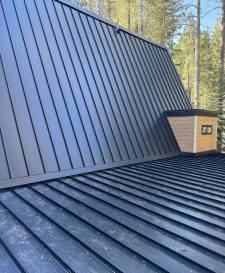
| Standing Seam Metal | Excellent — sheds moisture and moss can't anchor | 40–50+ years | Higher upfront cost, requires specialized installation |
| Cedar Shake | Requires ongoing maintenance to resist moss and rot | 20–30 years with upkeep | Traditional look, but maintenance burden is real in this climate |
We're upfront that some materials that look great on paper create more maintenance headaches in a climate like this. Cedar shake, for example, can be a beautiful roof — but it needs regular cleaning and treatment to keep moss and moisture from shortening its life here, and that's a real ongoing cost homeowners should weigh before choosing it, not something we'll sell you without saying so.
Ventilation and Moss: The Two Things That Determine How Long a Roof Lasts Here
You can install the best shingles available and still get a short-lived roof if ventilation is wrong. Attics need balanced intake at the eaves and exhaust at the ridge so moist air escapes instead of condensing against the underside of the decking. Poor ventilation traps humidity, and in a climate that's already damp for months at a time, that trapped moisture accelerates rot and shingle deterioration from below — often before any problem is visible from the ground.
Moss is the other half of the equation. It doesn't just sit on the surface — its root structure holds moisture against the shingle mat and works into seams over time, which is why moss-covered ridges and valleys are so often where leaks start. As part of a replacement, we address the conditions that let moss take hold in the first place: proper ventilation, shingle products with algae-resistant granules where it makes sense, and, where a roof has heavy tree cover, recommending zinc or copper strip installation along the ridge to slow regrowth going forward. That's a maintenance conversation, not a one-time fix — moss control in this county is ongoing, and we tell homeowners that honestly rather than promising a permanent solution.
Our Roof Replacement Process
- On-site inspection and estimate — we walk the roof, check the attic for ventilation and moisture issues, and give you a written scope and price, not a vague verbal number.
- Material selection — we go over the options that make sense for your roof's slope, shade exposure, and budget, including honest trade-offs for each.
- Scheduling and permitting — we handle the permit process and schedule around weather windows, since a dry stretch matters for a proper tear-off and dry-in.
- Tear-off and deck repair — old roofing comes off, decking is inspected, and any compromised sections are replaced before we move forward.
- Underlayment, flashing, and ice-and-water shield installation — the moisture barrier system goes down correctly at every eave, valley, and penetration.
- Shingle or material installation — installed to manufacturer spec for proper wind rating and warranty coverage.
- Final walkthrough — we inspect the finished roof with you, clean up the site, and go over care and maintenance specific to your roof.
Permits, Timeline, and What to Expect During the Job
A typical residential roof replacement in Everson takes one to three days on-site once materials are staged, depending on roof size and complexity. We build in flexibility for weather, since rushing a tear-off into a rain system risks water getting into an open deck — something we won't do just to hit a schedule. Permitting requirements are handled as part of the job so you're not left tracking down paperwork on your own. Expect some noise, debris in the driveway during the work, and a magnetic sweep of the yard afterward to clear stray nails.
Why Hiring a Crew That Already Works in Everson Matters
A roof replacement is only as good as the details most homeowners never see once the shingles are down — the flashing behind a chimney, the underlayment lapped correctly at a valley, the ventilation balance in the attic. A crew that regularly works roofs in Everson and the rest of Whatcom County has already seen how this specific climate breaks down roofs that were built for drier regions, and builds accordingly instead of applying a generic approach and hoping it holds up. That local pattern recognition — knowing which details actually matter here versus which ones are just upsells — is what separates a roof that lasts through the next few decades of Pacific Northwest winters from one that needs attention again in five years.
If your roof is showing its age or you just want a straight answer on whether repair or replacement makes sense, we're happy to take a look. Fill out the form below for a free, no-pressure estimate — we'll walk the roof, tell you what we actually find, and give you a clear scope and price before any work begins.