 Ferndale
 Why Lynden Decks Wear Out Faster Than People Expect
Lynden homeowners tend to be surprised by how much abuse a deck takes over a Whatcom County winter. It's not one dramatic event — it's months of driving rain soaking into end grain, followed by damp, low-light stretches where moss and algae get a foothold on any surface that doesn't dry out quickly. Add in the freeze-thaw cycles that hit the Nooksack Valley in a hard winter, and you've got a structure that's constantly expanding, contracting, and absorbing moisture it can't always shed fast enough.
None of this means a deck is doomed. It means a deck built or repaired without this climate in mind will fail years before it should. Ledger boards rot from the house side out, hidden joists lose strength under boards that still look fine on top, and fasteners corrode long before homeowners notice a problem. Deck repair done right in this area isn't cosmetic work — it's about getting ahead of moisture before it becomes structural.
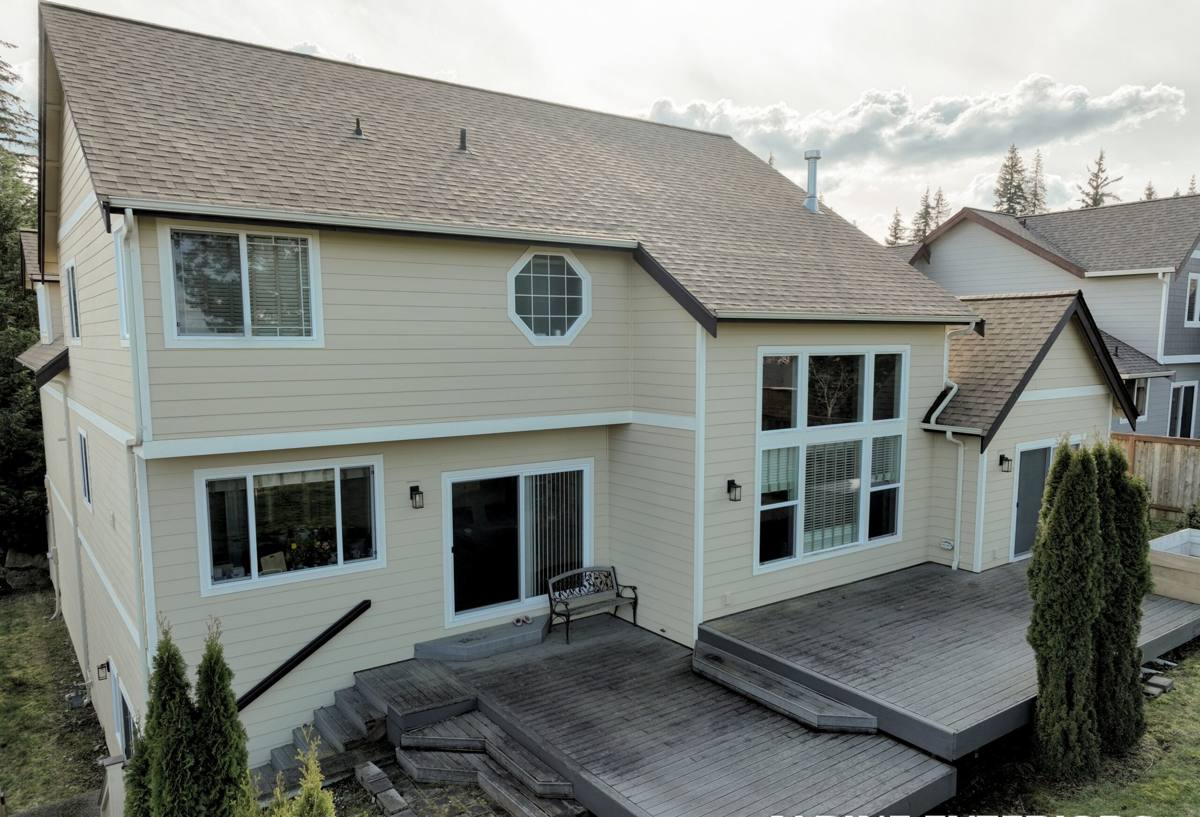
What "Deck Repair" Actually Covers
Repair sits between routine maintenance and full replacement, and the line between those three isn't always obvious from the surface. A deck can look tired — faded boards, a little bounce underfoot, some algae staining — and still have a sound frame worth saving. Or it can look presentable and be hiding a compromised ledger connection or rotted joist that needs to be dealt with before anyone uses it again.
Real deck repair work generally falls into a few categories:
- Replacing individual rotted or split deck boards without disturbing the rest of the surface
- Sistering or replacing damaged joists and beams found during inspection
- Re-securing or rebuilding a failing ledger board connection to the house
- Fixing loose, wobbly, or improperly spaced railings and posts
- Replacing corroded fasteners and hardware with proper exterior-rated materials
- Rebuilding or leveling stairs that have shifted or settled
- Addressing moss, algae, and mildew buildup along with the moisture source that's feeding it
The goal of an honest repair job is to fix what's actually failing, not to talk a homeowner into a full rebuild when the frame is still sound — or to patch over a problem that's going to come back in two years.
The Problems We See Most Often in Lynden
Moisture-Driven Rot
Long stretches of gray, wet weather mean decks in this area rarely get a full, fast dry-out between rain events. Moisture works into end cuts, screw holes, and anywhere two boards meet tightly enough to trap water. That's where rot starts, usually invisible until a board flexes or a screw pulls out with no resistance.
Moss and Algae Buildup
A long moss season isn't just a slip hazard — moss and algae hold moisture against the wood surface far longer than bare boards would on their own. Left untreated, that constant dampness accelerates the exact rot problem it's sitting on top of.
Ledger Board Failure
The ledger board — where the deck attaches to the house — takes on water runoff from siding, gutters, and flashing gaps. It's one of the most common failure points we find, and one of the most serious, since it's part of what holds the whole structure to the house.
Corroded Fasteners
Older decks built with standard fasteners instead of coated, exterior-rated hardware often show rust streaking and weakened screw or nail connections well before the wood itself has failed.
Our Deck Repair Process
We approach every Lynden deck repair the same structured way, whether it's a single board swap or a more involved structural fix:
- Full inspection first. We check the frame, ledger connection, joists, fasteners, and surface — not just the parts that look obviously damaged. Problems hide under boards that still look fine.
- Honest scope, in writing. We tell you what actually needs repair, what's still sound, and what to watch going forward — no upselling a rebuild the frame doesn't need.
- Remove and assess. Damaged boards, railings, or framing members come out so we can see exactly what's underneath before anything goes back in.
- Repair the structure before the surface. Joists, beams, and the ledger connection get addressed first — cosmetic repairs mean nothing on a weak frame.
- Rebuild with the right materials and fasteners. Exterior-rated, corrosion-resistant hardware throughout, matched to whatever decking material is already in place or being upgraded.
- Address the moisture source, not just the symptom. If poor drainage, gutter runoff, or grading is what caused the damage, we flag it — repairing wood without fixing the water source just resets the clock.
Repair or Replace? Weighing the Real Factors
This is the question almost every homeowner asks, and the honest answer depends on more than age. Here's how we think through it:
| Factor | Leans Toward Repair | Leans Toward Replacement |
|---|---|---|
| Frame condition | Joists and beams are solid; damage is isolated | Rot or damage found in multiple structural members |
| Ledger connection | Sound, properly flashed | Compromised or improperly attached originally |
| Extent of surface damage | A handful of boards affected | Widespread cupping, splitting, or soft spots |
| Age of decking material | Mid-life, no widespread failure pattern | Original material nearing or past typical service life |
| Design or layout issues | Layout works fine, just needs upkeep | Poor drainage or moisture pockets built into the original design |
In a lot of cases the honest answer is a hybrid: repair the frame now, and plan a surface or railing upgrade on your own timeline once the structure underneath is solid.
Materials That Hold Up in This Climate
What a deck is repaired with matters as much as the repair itself. We favor materials and hardware chosen for how they hold up through a wet Whatcom County winter, not just how they look on day one:
- Fasteners and hardware: corrosion-resistant, exterior-rated hardware on every repair — standard interior-grade screws and nails corrode fast under constant moisture and moss cover.
- Framing lumber: properly rated pressure-treated lumber for any structural repairs, since untreated or under-rated lumber is exactly what leads to the rot we're called out to fix.
- Decking boards: we'll work with whatever material a deck already has — wood or composite — and can talk through the honest maintenance trade-offs of each if a section is being upgraded rather than just repaired. Wood offers a natural look and lower material cost but needs regular sealing and cleaning to shed moss and moisture; composite costs more up front but sheds water differently and needs less recoating, though it still needs proper ventilation underneath to avoid trapped moisture.
- Flashing and connectors: proper ledger flashing and structural connectors at every point where the deck meets the house, since that joint takes the most water exposure of any part of the structure.
Keeping a Repaired Deck in Good Shape
A repair is only as good as the upkeep that follows it. After we've fixed the structural and surface issues, a little seasonal attention goes a long way toward not needing another repair call in a few years:
- Sweep debris and standing water off the surface regularly during the wet months
- Clean moss and algae off boards and railings before it builds up thick enough to trap moisture
- Check that gutters and downspouts near the deck are directing water away, not onto it
- Look underneath once or twice a year for early signs of moisture staining or soft wood
- Re-seal or re-stain wood decking on the schedule the product actually calls for, not just when it starts looking faded
- Tighten or replace any hardware that shows early rust streaking before it weakens the connection
Why Local Experience with Lynden Decks Matters
A deck repair crew that regularly works homes in and around Lynden already knows where the trouble spots tend to show up on decks built to the same conditions — the same rain patterns, the same moss season, the same freeze-thaw stretches. That's not a small thing when it comes to catching a problem before it's a safety issue rather than after. It also means a repair plan built for what actually happens to wood and hardware here, not a generic checklist.
Whatcom County permitting and structural expectations apply the same way to a deck repair as they do to new construction when the work is structural — replacing a ledger connection or rebuilding framing isn't just a matter of preference, it needs to be done to hold up and to meet the same standards a new deck would. A crew that works this area regularly already has that part sorted out.
Get a Straight Answer on Your Deck
If your deck has a soft spot, a wobble, moss that won't quit, or you're just not sure whether it needs a repair or a rebuild, we're happy to take a look and give you a straight, no-pressure assessment. There's a form below — reach out for a free estimate and we'll tell you honestly what your deck actually needs.