 Ferndale
 Building Decks for Birch Bay's Marine Climate
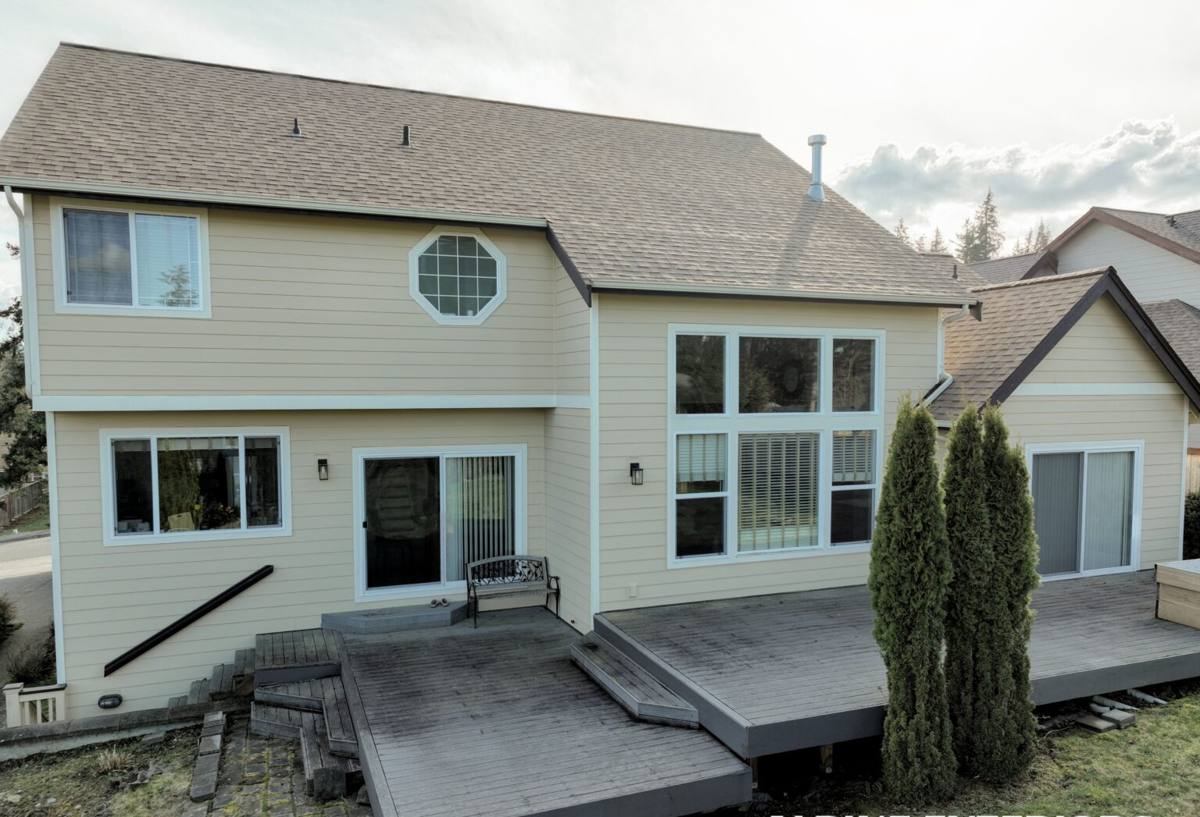
Birch Bay sits right on the water, which is exactly why people want a deck out here — and exactly why a deck out here takes more punishment than one built ten miles inland. Salt-laden air off the Strait of Georgia, driving rain that comes in sideways during winter storms, and a moss season that can stretch from October through April all work against a deck that wasn't built with this specific coastline in mind. We build and repair custom decks for Birch Bay properties, and every material and fastener choice on the job accounts for what this stretch of Whatcom County actually does to outdoor structures.
A deck built to a generic spec — the kind you'd see in a big-box how-to guide written for a dry climate — will show problems here within a few seasons: corroding hardware, moss creeping into the deck boards, and soft spots where water sat instead of draining. A deck built for Birch Bay specifically holds up for decades instead.
What Salt Air and Driving Rain Actually Do to a Deck
It helps to understand the failure points before talking about the fix.
Salt Air and Metal
Airborne salt accelerates corrosion on anything metal — nails, screws, joist hangers, bolts, and railing hardware. Standard electro-galvanized fasteners that are fine in most of the country will start rusting and staining within a couple of years this close to the water. Once a fastener corrodes, it loses holding strength, and a deck's structural integrity depends entirely on its fasteners and connectors doing their job for the life of the structure.
Driving Rain and Water Intrusion
Wind-driven rain off the water doesn't just fall on a deck — it gets pushed sideways and upward, finding its way behind ledger boards, under railing posts, and into any gap that wasn't properly flashed or sealed. Where that water can't drain and dry out, you get rot, hidden framing decay, and eventually a deck that looks fine on the surface but isn't structurally sound underneath.
Moss and Constant Dampness
A long moss season means anything horizontal — deck boards, stair treads, railing caps — stays damp far more of the year than in drier parts of the state. Moss and algae hold moisture against the wood surface, make boards slippery, and accelerate surface wear. Deck orientation, board spacing, and material choice all affect how much of this problem you're signing up for.
Choosing the Right Decking Material for a Birch Bay Property
There's no single "best" decking material — the right choice depends on how much maintenance you want to do, your budget, and how close to the water your specific lot sits. Here's how the common options actually perform in this climate, honestly, based on what we see in the field.
| Material | Moisture & Moss Behavior | Maintenance | Typical Lifespan Here |
|---|---|---|---|
| Pressure-treated fir/hemlock | Prone to moss and graying without upkeep; needs proper drainage gaps | Annual cleaning, re-staining every 2-3 years | 15-20 years with upkeep |
| Cedar | Naturally more rot- and insect-resistant, but still needs sealing near salt air | Cleaning plus sealant every 2-3 years | 20-25 years with upkeep |
| Composite decking | Doesn't absorb water or rot; still needs periodic cleaning to prevent surface moss/algae | Occasional washing, no staining or sealing | 25-30+ years, manufacturer-warrantied |
| PVC decking | Fully water-resistant; best resistance to salt-air staining | Lowest maintenance of the group | 25-30+ years, manufacturer-warrantied |
We install all of these. For properties with direct water exposure or heavy wind-driven rain, we usually steer homeowners toward composite or PVC boards specifically because they don't absorb moisture the way natural wood does — that one property difference does more to prevent long-term problems than any stain or sealant schedule. That said, plenty of Birch Bay homeowners want the look and feel of real wood, and a well-built cedar deck with a disciplined maintenance routine will serve you well too. We'll walk through the honest trade-offs for your specific site rather than pushing one product line.
What a Correctly Built Deck Involves
The visible decking boards are the least important part of whether a deck lasts in this climate. What matters is underneath and behind them.
Ledger Board Flashing
Where a deck attaches to the house, the ledger board is one of the most common failure points in the entire structure if it's not flashed correctly. Proper flashing directs water away from the house's wall assembly instead of letting it pool and wick into the framing — this is non-negotiable on a coastal property.
Joist Protection
Every cut end and exposed face of a joist is an entry point for moisture. We use joist tape or an equivalent protective barrier on top of the joists before decking goes down, which keeps water from sitting in the wood fibers where fasteners penetrate.
Drainage and Airflow Underneath
A deck built low to the ground with poor airflow underneath stays damp longer after every rain, which is exactly the condition moss and rot need. Proper joist spacing, board gapping, and where possible some clearance underneath all help the structure dry out between storms instead of staying wet.
Footings and Post Bases
Concrete footings need to sit below frost depth and be sized for the soil conditions on your specific lot. Post bases should hold the post above the concrete and any standing water, not embedded directly in it, which is a common shortcut that leads to premature post rot.
Our Process for a Custom Deck Build
- On-site assessment. We look at your lot's exposure to wind and water, existing drainage, and how the deck will connect to your home before recommending materials or layout.
- Design and material selection. We walk through decking, railing, and fastener options with honest trade-offs for your budget and how much maintenance you want to take on.
- Permitting. We handle the permit application with Whatcom County or the applicable jurisdiction, including any required setback or structural review.
- Framing and flashing. Ledger attachment, footings, joists, and flashing go in first — this is the stage that determines how the deck holds up over the next 20 years.
- Decking, railing, and finish work. Boards, railings, stairs, and any lighting or finish details go in last.
- Final walkthrough. We go over care and maintenance specific to the material you chose before we consider the job done.
Railings, Fasteners, and Hardware Built for Salt Air
Fastener choice matters as much as decking choice this close to the water. We use stainless steel or coated fasteners rated for coastal/marine exposure rather than standard-grade hardware — the cost difference is small relative to the whole project, and it's the difference between hardware that lasts the life of the deck and hardware that's visibly rusting and weakening within a few years. The same logic applies to joist hangers, structural screws, and railing brackets. On railings, we also account for wind load given the open exposure many Birch Bay lots have toward the water.
Deck Maintenance Checklist for Birch Bay Conditions
Whatever material you choose, a little seasonal attention goes a long way in this climate. A basic routine:
- Sweep debris and standing leaves off the deck regularly, especially going into fall
- Rinse or scrub off moss and algae buildup before it gets a foothold, particularly on shaded or north-facing sections
- Check railing posts and stair connections annually for any looseness
- Inspect fastener heads for rust staining, which is an early warning sign worth addressing before it spreads
- For wood decks, re-stain or reseal on the schedule appropriate to the product — don't wait until the wood looks dry and gray
- Confirm gaps between boards stay clear so water keeps draining instead of pooling
- After major windstorms, do a quick visual check of railings and ledger flashing
Permits and Local Considerations
Most deck projects in unincorporated Whatcom County, including Birch Bay, require a building permit, and larger or elevated decks typically need structural plans reviewed before construction starts. Setback requirements can also come into play depending on your lot's proximity to property lines or shoreline regulations, which are worth checking early since shoreline-adjacent properties sometimes carry additional review. We handle this permitting process as part of the job so you're not tracking down requirements on your own.
Why a Crew That Already Works Birch Bay Matters
A deck built by someone unfamiliar with this specific stretch of coastline often looks fine on day one and starts showing problems by year three — corroding fasteners, moss taking hold in low-airflow spots, a ledger board that wasn't flashed for wind-driven rain. We work throughout Whatcom County and see how decks actually age out here season after season, which shapes every material and construction decision we make. That local track record is worth more than a lower bid from a crew building to a generic spec.
If you're planning a new deck or need an existing one repaired or replaced in Birch Bay, we're happy to walk your property and give you a straightforward, no-pressure estimate using the form below.