 Ferndale
 Siding Replacement for Cordata-Area Homes Near Ferndale
Homes in and around Cordata sit in one of the more demanding exterior environments in Whatcom County. You're close enough to the water to catch salt-laden air, far enough north to get long, wet winters, and shaded enough by mature trees and cloud cover that moss and algae get a real head start every year. Siding here doesn't fail because it's old — it fails because it was never matched to this climate in the first place, or it was installed in a way that let moisture get in and stay in.
This page is about one job, done right, in one area: replacing siding on a home that has to hold up to salt air, driving rain, and a moss season that can run eight months or more. If you're deciding whether to repair, patch, or fully replace your siding, this is the information you need before you call anyone.
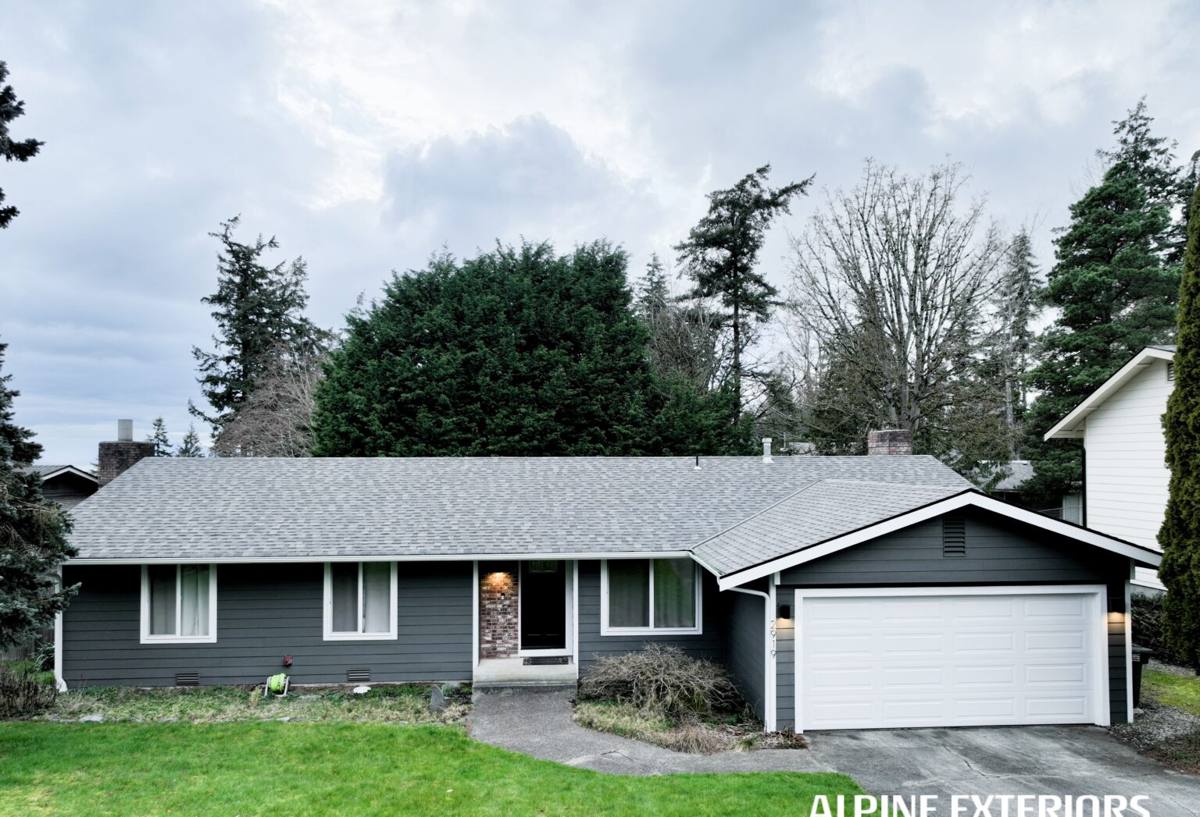
Why This Climate Is Harder on Siding Than It Looks
Whatcom County doesn't get extreme weather in the way a hurricane zone or a high-desert freeze zone does. What it gets instead is duration — rain that falls for days at a time, humidity that never fully clears, and salt air that slowly works into any gap, seam, or crack in a wall system. That combination is quietly harder on siding than a single big storm would be, because it doesn't give the wall a chance to dry out between events.
Salt Air
Airborne salt accelerates corrosion on fasteners, flashing, and any exposed metal trim. It also tends to hold moisture against a surface longer than dry inland air would, which matters most at butt joints, corners, and anywhere caulk has started to fail.
Driving Rain
Wind-driven rain doesn't just wet a wall — it pushes water sideways and upward, testing every lap, seam, and penetration. A siding system that only sheds water straight down will eventually leak here. This is a wall-assembly problem as much as a siding-material problem.
Moss and Algae Season
Shaded, north-facing, and tree-covered walls in this area can stay damp for most of the year. Moss and algae aren't just cosmetic — sustained organic growth holds moisture against the siding surface, which is exactly the condition that rots wood-based products and lifts paint film on anything not engineered for it.
What "Correct" Actually Means on a Siding Replacement
Replacing siding is not just removing old boards and nailing up new ones. Done correctly, a full replacement addresses the whole wall assembly, not just the visible surface.
- Full tear-off, not overlay: installing new siding over old siding traps moisture and hides existing damage instead of fixing it.
- Sheathing inspection: once the old siding is off, the sheathing gets checked for soft spots, rot, or prior water damage — this is the point where hidden problems get found and fixed, not covered up.
- Weather-resistive barrier (WRB): a correctly lapped and taped house wrap behind the siding is the actual waterproofing layer; the siding itself is the first line of defense, not the only one.
- Flashing at every penetration: windows, doors, hose bibs, vents, and any place trim meets trim need proper flashing, not just caulk. Caulk fails; flashing sheds water even after the caulk eventually does.
- Rainscreen or drainage gap where called for: in a climate this wet, a small air gap behind the siding lets incidental moisture drain and dry instead of sitting against the wall.
- Correct fastening schedule: nail placement, spacing, and depth matter more than most homeowners realize — over-driven or misplaced fasteners are one of the most common causes of early siding failure.
Skip any of these steps and the new siding may look fine for a year or two while the underlying problem keeps working. This is the difference between a crew that installs siding and a crew that replaces a wall system.
Why We Install Only James Hardie Fiber Cement
We don't install vinyl, LP SmartSide, primed spruce, cedar, or other fiber cement brands. That's a deliberate standard, not a sales preference, and it comes down to how each product behaves in exactly the conditions Cordata-area homes deal with.
| Material | How it holds up here | Why we don't install it |
|---|---|---|
| Vinyl | Doesn't rot, but expands/contracts with temperature and can warp or crack in wind-driven rain and impact | Seams and butt joints are the weak point for water intrusion; limited color/finish life |
| Wood-based composite (LP SmartSide) | Engineered wood core; performs fine if perfectly maintained, but the core is still wood | Sustained moss/algae moisture and driving rain are the exact conditions engineered wood is most sensitive to at cut edges and seams |
| Primed spruce / cedar | Traditional look, but requires the most upkeep of any option in this climate | Repainting cycles are short here; end grain and knots are entry points for the moisture this area holds onto for months |
| James Hardie fiber cement | Non-combustible, dimensionally stable, engineered moisture and climate lines | This is what we install — it's built for exactly this weather pattern |
James Hardie's ColorPlus factory-applied finish also matters more here than in a drier climate — a factory-baked finish resists the fading and peeling that field-applied paint struggles with under constant damp and UV cycling. Combined with a strong transferable warranty and product lines engineered for wet regions, it's the product we're willing to stand behind on a home that's going to face salt air and rain for the next several decades.
Our Siding Replacement Process
- On-site assessment: we walk the exterior, check for soft sheathing, existing moisture damage, and problem areas — especially shaded and north-facing walls where moss has had the most time to work.
- Written estimate: a clear scope covering tear-off, sheathing repair allowances, house wrap, flashing details, and the specific Hardie product and color.
- Tear-off and inspection: old siding comes off, sheathing is inspected and repaired as needed before anything new goes up.
- Weather barrier and flashing: WRB installed and lapped correctly, flashing set at every window, door, and penetration.
- Hardie installation to spec: correct fastening, clearances, and joint treatment following manufacturer installation requirements — this is what keeps the warranty valid and the wall performing.
- Final walkthrough: we go over the finished work with you before calling the job done, not after.
Signs a Cordata-Area Home Needs Replacement, Not Repair
- Siding that stays visibly damp or moss-covered for days after rain stops, especially on shaded walls
- Soft or spongy spots when you press on the siding near the bottom courses or under windows
- Paint or finish that's failing across large sections rather than one isolated spot
- Visible warping, cupping, or separation at seams and corners
- Interior signs — musty smell, staining, or soft drywall — near exterior walls
- Siding that's original to a home built before modern house-wrap and flashing standards were common
One or two of these might mean a targeted repair is enough. Several at once, especially combined with sheathing damage, usually means repair is just delaying a full replacement.
What Affects the Cost of a Replacement Here
| Factor | Why it moves the price |
|---|---|
| Sheathing condition | Rot or soft sheathing found after tear-off has to be repaired before new siding goes on — this is the most common source of a price change mid-job |
| Home size and wall complexity | More corners, gables, and trim details mean more cutting, flashing, and labor time |
| Existing siding type | Some materials come off faster and cleaner than others; asbestos-era siding requires special handling |
| Hardie product line and profile | Lap siding, shingle-style, and panel systems carry different material and labor costs |
| Trim and accessory scope | Fascia, soffit, and trim replacement done at the same time affects total scope but avoids paying for access twice |
| Access and site conditions | Steep grades, mature landscaping, or tight lot lines around the home add labor time |
We won't quote a number without seeing the home, but these are the variables that actually move the estimate — not guesswork.
Why It Matters That the Crew Already Works This Area
A crew that regularly works Ferndale and the surrounding Whatcom County communities has already seen how salt air, sustained rain, and moss behave on real walls in this exact climate — not a generic weather zone. That shows up in small but important decisions: where to expect hidden moisture damage before the tear-off even starts, which wall orientations need extra attention to drainage and flashing, and how to sequence a job around this area's rain patterns so the wall isn't left exposed longer than it needs to be. It also means straightforward, local logistics — material delivery, permitting familiarity, and scheduling — without the coordination overhead of a crew traveling in from outside the region.
After Installation: Keeping It Performing
One advantage of switching to James Hardie in this climate is how little ongoing maintenance it asks for compared to wood-based siding. It won't rot, and the factory finish holds up far longer than field-applied paint. That said, a couple of habits go a long way in an area with this much moss and algae pressure:
- Periodically rinse shaded or north-facing walls to keep moss and algae from establishing
- Keep landscaping trimmed back from the siding so walls can dry out between rain events
- Check caulking at trim joints and penetrations every year or two, even though the siding itself doesn't need it as often as wood
If you're weighing whether your current siding has more life left in it, or you already know it's time for a full replacement, we're glad to take a look and give you a straightforward, no-pressure estimate — no obligation, just an honest read on what your home actually needs.