 Ferndale
 Siding Built for the Bellingham Corridor
Bellingham sits close enough to Ferndale that the two communities share the same weather problems: salt-laden air rolling in off Bellingham Bay and the Strait of Georgia, long stretches of driving rain from fall through spring, and shaded, damp yards where moss and algae get a head start every year. A siding job that isn't specified for this exact combination of conditions tends to show its age early — chalking, staining, soft spots at the bottom courses, and paint that needs redoing well before it should. We install siding for homes in this corridor regularly, and the material and installation choices we make are built around what actually happens to a wall assembly here, not what works in a drier climate.
This page is about one thing: siding installation for Bellingham-area homes, done by a crew based in Ferndale who already understands the local building stock and the local weather. We're not going to cover every siding product on the market — we install James Hardie fiber cement, exclusively, and we'll explain why later in this page. What we want to walk through first is what a Bellingham home actually needs from its siding, and what separates a correct installation from one that just looks fine on the day it's finished.
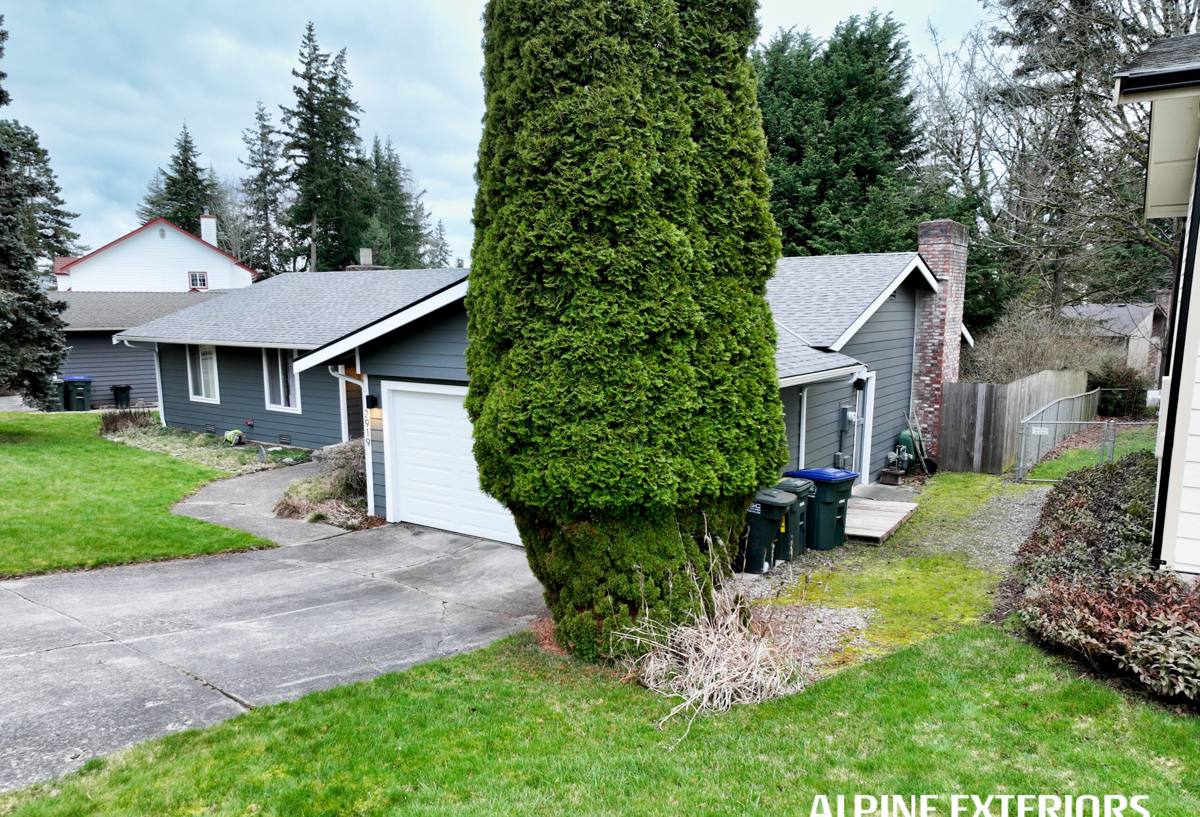
What Bellingham's Climate Does to Siding
Salt Air and Corrosion
Homes closer to the water deal with airborne salt that settles on exterior surfaces and accelerates corrosion of fasteners, flashing, and any exposed metal trim. Over years, this shows up as rust streaking, failed fastener heads, and premature failure of hardware that wasn't rated for a marine-influenced environment. Siding material itself needs to tolerate this exposure without degrading, and the fasteners and flashing behind it matter just as much as the panel or plank you see.
Driving Rain and Wind-Driven Moisture
Whatcom County gets rain that doesn't just fall straight down — winter storms push it sideways against west- and south-facing walls. That means water is testing every seam, every joint, and every penetration in your siding system, not just sitting on the surface. A siding system that isn't detailed correctly at laps, corners, and around windows and doors will eventually let water behind the cladding, where it causes rot in sheathing and framing long before anyone notices a problem from the outside.
Moss, Algae, and Prolonged Dampness
Shaded lots, tree cover, and a long wet season mean siding here stays damp longer than it does in sunnier parts of the state. That extended dampness is exactly what moss and algae need to take hold, especially on north-facing walls and anywhere siding sits close to landscaping or overhangs that block airflow. Materials that absorb moisture swell, hold that moisture against paint film, and become a better host for organic growth than materials engineered to resist it.
What a Correct Installation Actually Involves
Good siding starts before the first plank goes up. The water-resistive barrier, flashing details, and drainage plane behind the siding are what actually keep a wall dry — the siding itself is the first line of defense, not the only one. On a Bellingham-area home, we pay particular attention to:
- A continuous, properly lapped weather-resistive barrier with all penetrations flashed and sealed
- Rainscreen or drainage gap detailing where the wall assembly benefits from it, so any moisture that gets behind the siding can drain and dry
- Correct flashing at window and door heads, kick-out flashing at roof-to-wall intersections, and proper counterflashing at deck ledgers
- Fastener selection and placement matched to the manufacturer's specifications — not just "close enough"
- Proper clearance between the bottom of the siding and grade, decks, patios, and roof surfaces to prevent wicking and splash-back
- Correctly sized and caulked joints, with expansion allowed for where the manufacturer calls for it
Skipping or rushing any one of these doesn't usually cause a visible problem in year one. It shows up in year five or six, as rot at a window sill, a soft spot near the bottom of a wall, or paint failure that keeps coming back no matter how many times it's touched up. The siding material gets blamed, but the installation is very often the actual cause.
Why James Hardie Fiber Cement Is What We Install
We install James Hardie siding exclusively — no vinyl, no LP SmartSide, no Cemplank or Allura fiber cement, no primed spruce or cedar. That's a deliberate standard, not a limitation of what we're capable of installing, and it's worth explaining honestly.
Vinyl siding is affordable and low-maintenance in mild conditions, but it can become brittle in cold snaps, it expands and contracts more than fiber cement, and it doesn't hold up well against direct impact. It also isn't the product to reach for if fire resistance matters to you, since it's a combustible plastic. LP SmartSide is an engineered wood product — it performs reasonably well when installed and maintained exactly to spec, but it depends on paint film integrity and careful edge-sealing to keep moisture out of the wood strand core, which is a harder standard to maintain over decades in a climate this wet. Primed cedar or spruce siding gives you a natural wood look, but real wood in a marine, high-moisture climate means an ongoing commitment to repainting, caulking, and moisture monitoring that most homeowners underestimate when they choose it.
James Hardie fiber cement is non-combustible, doesn't support moss and algae growth the way wood-based products can, and holds up to wind-driven rain and salt air without the swelling or rot risk of wood-fiber products. Hardie's ColorPlus factory finish is baked on under controlled conditions, which gives a more consistent, longer-lasting finish than field-applied paint and comes backed by its own finish warranty. The HZ5 product line is engineered specifically for climates with freeze-thaw cycles and sustained moisture exposure, which describes Whatcom County well. Between the material properties and the transferable warranty backing it, it's the product we're willing to put our name behind.
Siding Material Comparison for This Climate
| Factor | James Hardie Fiber Cement | Vinyl | Wood / LP SmartSide |
|---|---|---|---|
| Moisture resistance | High — doesn't absorb and swell | High, but seams can trap moisture | Moderate — depends on paint film integrity |
| Salt air / coastal durability | Strong long-term performance | Adequate, but can chalk and fade | Weaker without diligent maintenance |
| Moss/algae resistance | Better resistance, especially with ColorPlus finish | Can host growth in damp, shaded areas | More prone to growth if moisture gets in |
| Fire resistance | Non-combustible | Combustible | Combustible |
| Finish longevity | Factory-baked ColorPlus, warrantied | Color molded in, can fade/chalk over time | Field-applied paint, needs recoating |
| Long-term maintenance | Low — occasional wash and inspection | Low, but limited repair options if damaged | Higher — repainting and caulk renewal cycle |
Our Process for Bellingham-Area Projects
Assessment and Estimate
We start with an on-site look at the existing siding, sheathing, and any trouble spots — areas with visible staining, soft trim, or moss buildup usually tell us something about how the wall has been performing. We'll talk through what we find, what a correct installation looks like for your specific home, and give you a straightforward estimate.
Tear-Off and Sheathing Check
Once old siding comes off, we inspect the sheathing underneath before anything new goes up. This is the point where hidden moisture damage, if any exists, gets caught and addressed — not covered over. It's also the stage where we confirm the weather-resistive barrier and flashing plan for your home.
Weather Barrier and Flashing Installation
We install a continuous drainage plane, flash every penetration and transition, and set up kick-out flashing and window/door detailing before a single piece of Hardie siding goes on. This step is invisible once the job is finished, but it's the part that determines whether the wall stays dry for the next few decades.
Hardie Siding Installation
Siding goes up to Hardie's fastening and clearance specifications, with attention to proper gapping, caulking, and trim details. We follow manufacturer installation guidelines closely because that's what keeps the material warranty intact and what actually determines how the finished product performs against Whatcom County weather.
Final Walkthrough
We walk the finished job with you, point out the details we handled, and answer any questions about care and what to expect going forward.
Why a Local Crew Matters for This Job
Siding installation isn't just about the product — it's about knowing how a specific region's weather stresses a wall assembly over time. A crew that works Ferndale, Bellingham, and the surrounding Whatcom County communities regularly has already seen how homes in this area age: which walls take the worst of the driving rain, where moss tends to establish first, and which older installations are failing because of a shortcut that wasn't obvious at the time. That local pattern recognition is hard to substitute with a crew that doesn't work here consistently.
There's also a practical side to hiring local: warranty service, follow-up questions, and any future work on your home are easier when the crew that installed your siding is a short drive away rather than based somewhere out of the area entirely.
Signs Your Current Siding Needs Attention
- Paint that's peeling, bubbling, or needs repainting more often than every several years
- Soft or spongy spots when you press on the siding, especially near the bottom courses or below windows
- Visible gaps, warping, or buckling at seams and corners
- Persistent moss or algae growth that returns shortly after cleaning
- Staining or streaking that suggests water is tracking down from a flashing point
- Rising energy bills that may point to a compromised weather barrier behind aging siding
Cost Factors for a Bellingham-Area Siding Project
Every home is different, but the same general factors drive the scope and cost of a siding installation project in this area:
| Factor | Why It Matters |
|---|---|
| Home size and wall complexity | More corners, dormers, and trim detail mean more labor and material |
| Condition of existing sheathing | Any rot found during tear-off needs repair before new siding goes on |
| Siding profile and trim selection | Lap width, trim style, and accessory choices affect material cost |
| Access and site conditions | Steep lots, tight setbacks, or landscaping can affect labor time |
| Flashing and drainage upgrades | Bringing an older wall assembly up to current best practice adds scope but improves longevity |
We'll walk through your home's specific factors during the estimate rather than quoting blind, so you know exactly what's driving the number.
If you're in Bellingham or elsewhere in the Ferndale service area and your siding is showing its age — or you're planning ahead before it gets worse — we'd be glad to take a look. Reach out for a free, no-pressure estimate using the form below.